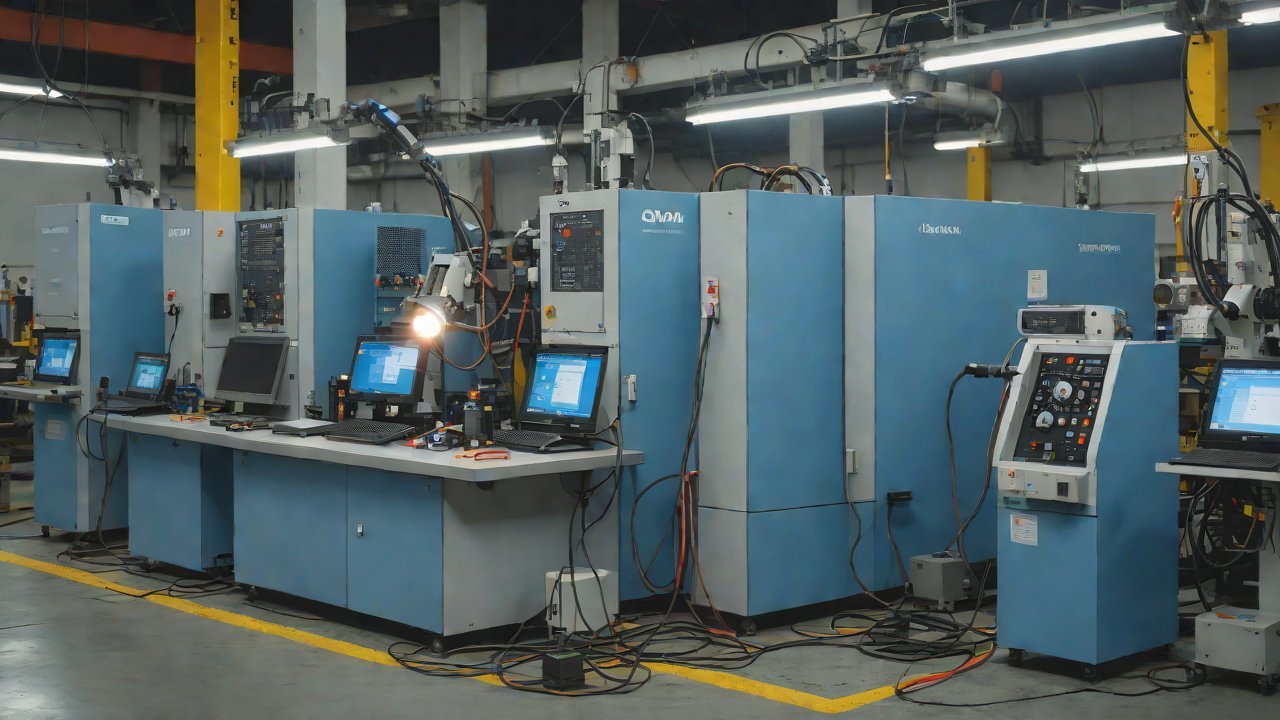
Can edge-side feature engineering reduce the transmission of raw data to the cloud?
The ever-growing landscape of data-driven applications is driving an unprecedented demand for processing and analysis capabilities at scale. However, this drive for scalability often comes at a cost: massive amounts of raw data are transmitted to the cloud for processing, resulting in significant latency, costs, and security concerns. Edge-side feature engineering has emerged as a potential solution to mitigate these issues by offloading computational tasks from the cloud to edge devices. This report explores whether edge-side feature engineering can indeed reduce the transmission of raw data to the cloud.
1. The Problem with Raw Data Transmission
Raw data is transmitted to the cloud for processing and analysis due to its sheer volume, complexity, or both. However, this approach has several drawbacks:
- Latency: Transmitting large datasets to the cloud introduces latency, which can be detrimental in applications requiring real-time responses.
- Cost: Cloud services often come with a hefty price tag, making them unsustainable for resource-constrained organizations.
- Security: The transmission of sensitive data over public networks raises security concerns and compliance issues.
2. Edge-Side Feature Engineering: A Viable Solution?
Edge-side feature engineering involves performing computations on edge devices, such as smartphones, IoT sensors, or edge servers. By doing so, the need to transmit raw data to the cloud is significantly reduced:
- Reduced Latency: Processing occurs closer to the source of data, minimizing latency and enabling real-time applications.
- Cost Savings: Edge-side feature engineering can reduce cloud computing costs by minimizing the amount of data transmitted and processed.
- Enhanced Security: Data remains on-premises or within a secure edge environment, reducing the risk of data breaches.
3. Market Trends and Adoption
The market for edge computing is growing rapidly:
| Year | Edge Computing Market Size (USD Billion) |
|---|---|
| 2020 | 2.8 |
| 2025 | 13.9 |

Major players, such as Amazon Web Services (AWS), Microsoft Azure, and Google Cloud Platform (GCP), are investing heavily in edge computing solutions.
4. Technical Perspectives
From a technical standpoint, edge-side feature engineering is feasible with the following technologies:
- Edge Computing Platforms: AWS IoT Greengrass, Azure Edge Zones, GCP Cloud IoT Core
- Machine Learning Frameworks: TensorFlow Lite, PyTorch Mobile, Core ML
- Programming Languages: Java, Python, C++, JavaScript
5. Case Studies and Success Stories
Several organizations have successfully implemented edge-side feature engineering:
| Organization | Industry | Edge-Side Feature Engineering Solution |
|---|---|---|
| Siemens | Industrial Automation | Real-time monitoring and predictive maintenance using AWS IoT Greengrass and TensorFlow Lite |
| Bosch | Automotive | In-car computer vision using Azure Edge Zones and PyTorch Mobile |

6. Conclusion
Edge-side feature engineering has the potential to significantly reduce the transmission of raw data to the cloud by offloading computational tasks from the cloud to edge devices. With growing market adoption, technical feasibility, and success stories, this approach is poised to become a standard practice in data-driven applications.
However, several challenges remain:
- Scalability: Edge-side feature engineering can be complex to scale due to varying edge device configurations and network connectivity.
- Standardization: Lack of standardized edge computing platforms and frameworks hinders widespread adoption.
Addressing these challenges will be crucial for the widespread adoption of edge-side feature engineering.
IOT Cloud Platform
IOT Cloud Platform is an IoT portal established by a Chinese IoT company, focusing on technical solutions in the fields of agricultural IoT, industrial IoT, medical IoT, security IoT, military IoT, meteorological IoT, consumer IoT, automotive IoT, commercial IoT, infrastructure IoT, smart warehousing and logistics, smart home, smart city, smart healthcare, smart lighting, etc.
The IoT Cloud Platform blog is a top IoT technology stack, providing technical knowledge on IoT, robotics, artificial intelligence (generative artificial intelligence AIGC), edge computing, AR/VR, cloud computing, quantum computing, blockchain, smart surveillance cameras, drones, RFID tags, gateways, GPS, 3D printing, 4D printing, autonomous driving, etc.