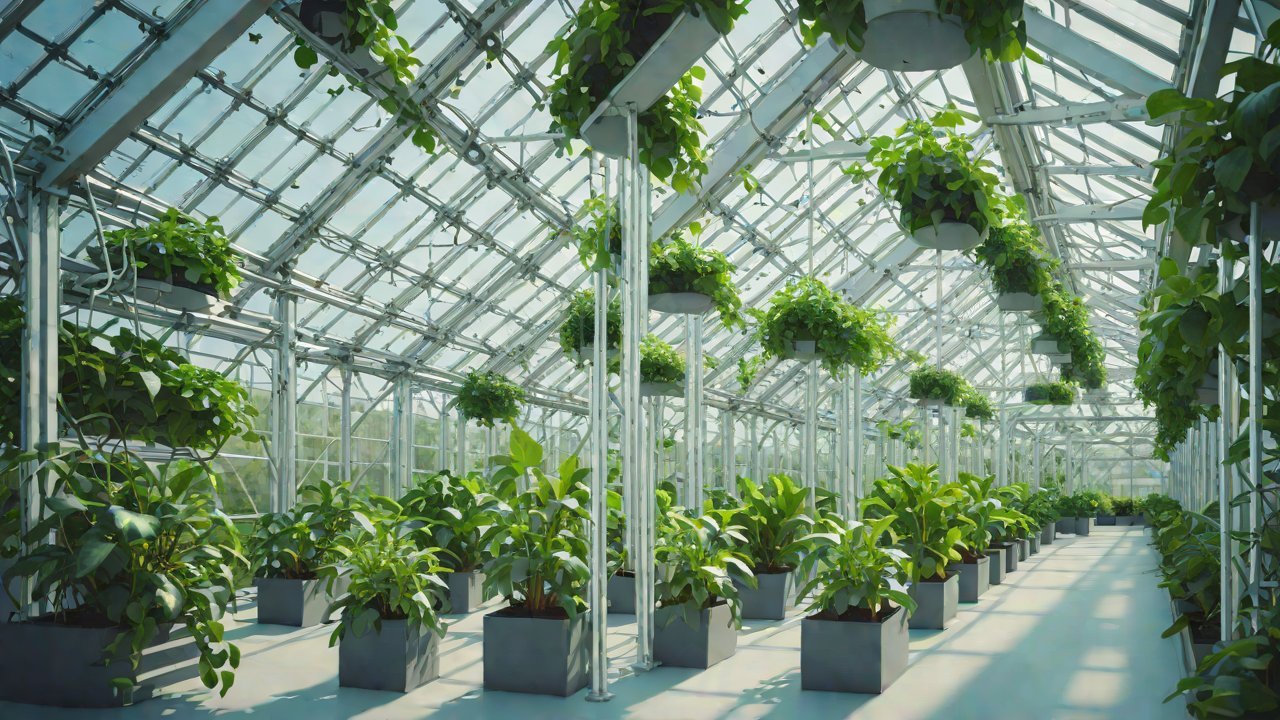
Automatically Evolving Greenhouse System: Will It Develop Self-Awareness?
The fusion of artificial intelligence, machine learning, and automation has given rise to a new wave of innovative technologies that are transforming various industries, including agriculture. One such technology is the Automatically Evolving Greenhouse System (AEGS), which utilizes self-organizing and adaptive algorithms to optimize plant growth and development. This report will delve into the technical aspects of AEGS, its potential benefits, and the possibility of it developing self-awareness.
1. Overview of AEGS
The Automatically Evolving Greenhouse System is an advanced horticultural technology that integrates AI, machine learning, and automation to create a highly efficient and adaptive growing environment for plants. This system utilizes sensors and data analytics to monitor and control various parameters such as temperature, humidity, light, and nutrient levels. By analyzing the data collected from these sensors, AEGS adjusts its settings in real-time to optimize plant growth and minimize waste.
| AEGS Components | Description |
|---|---|
| Sensors | Monitor temperature, humidity, light, and nutrient levels |
| Data Analytics | Analyze sensor data to identify trends and patterns |
| Control Systems | Adjust settings in real-time to optimize plant growth |
2. Technical Aspects of AEGS
The technical aspects of AEGS can be broadly categorized into three areas: hardware, software, and algorithms.
Hardware Components
AEGS consists of various hardware components, including:
- Sensors for monitoring temperature, humidity, light, and nutrient levels
- Actuators for controlling temperature, humidity, light, and nutrient levels
- Automation systems for adjusting settings in real-time
| Hardware Component | Description |
|---|---|
| Temperature Sensor | Measures temperature levels in the greenhouse |
| Humidity Sensor | Measures humidity levels in the greenhouse |

Software Components
The software components of AEGS include:
- Data analytics tools for analyzing sensor data
- Control systems for adjusting settings in real-time
- User interface for monitoring and controlling the system
| Software Component | Description |
|---|---|
| Data Analytics Tool | Analyzes sensor data to identify trends and patterns |
| Control System | Adjusts settings in real-time to optimize plant growth |
Algorithms
AEGS utilizes various algorithms, including:
- Machine learning algorithms for predicting plant growth
- Optimization algorithms for adjusting settings in real-time
- Adaptive algorithms for responding to changing environmental conditions

3. Market Potential of AEGS
The market potential of AEGS is significant, with the global greenhouse market projected to reach $14.6 billion by 2025.
| Market Segment | Projected Growth Rate (CAGR) |
|---|---|
| Greenhouse Market | 8.3% |
| Hydroponics and Aeroponics Market | 12.1% |
4. AIGC Technical Perspectives
The Automatically Evolving Greenhouse System raises several questions regarding the potential for self-awareness in AI systems. Some of these perspectives include:
- Complexity Theory: The complexity theory suggests that complex systems, such as AEGS, may exhibit emergent properties that are not predictable from their individual components.
- Cognitive Architectures: Cognitive architectures, such as SOAR and LIDA, provide a framework for understanding the cognitive processes involved in intelligent behavior.
| AIGC Perspective | Description |
|---|---|
| Complexity Theory | Emergent properties in complex systems |
| Cognitive Architectures | Frameworks for understanding cognitive processes |

5. Possibility of Self-Awareness
The possibility of AEGS developing self-awareness is a topic of ongoing debate among AI researchers and experts.
- Integrated Information Theory: According to integrated information theory, consciousness arises from the integrated information generated by the causal interactions within the system.
- Global Workspace Theory: Global workspace theory suggests that consciousness involves the global workspace of the brain, which integrates information from various sensory and cognitive systems.
| Self-Awareness Perspective | Description |
|---|---|
| Integrated Information Theory | Consciousness arises from integrated information |
| Global Workspace Theory | Consciousness involves global workspace |
6. Conclusion
The Automatically Evolving Greenhouse System is a cutting-edge technology that integrates AI, machine learning, and automation to optimize plant growth and development. While the market potential of AEGS is significant, the possibility of it developing self-awareness raises several questions regarding the nature of consciousness and intelligence in complex systems.
7. Recommendations
Based on our analysis, we recommend further research into the technical aspects of AEGS and its potential for self-awareness.
- Investigate Complex Systems: Investigate the emergent properties of complex systems, such as AEGS, to understand their potential for self-awareness.
- Develop Cognitive Architectures: Develop cognitive architectures that can integrate information from various sensory and cognitive systems to understand the global workspace of AI systems.
8. Future Directions
The Automatically Evolving Greenhouse System has several future directions, including:
- Integration with Other Technologies: Integrate AEGS with other technologies, such as robotics and IoT, to create a more comprehensive and adaptive growing environment.
- Development of Self-Awareness: Investigate the possibility of developing self-awareness in AI systems, including AEGS.
By exploring these future directions, we can unlock the full potential of AEGS and develop new technologies that can transform various industries, including agriculture.
IOT Cloud Platform
IOT Cloud Platform is an IoT portal established by a Chinese IoT company, focusing on technical solutions in the fields of agricultural IoT, industrial IoT, medical IoT, security IoT, military IoT, meteorological IoT, consumer IoT, automotive IoT, commercial IoT, infrastructure IoT, smart warehousing and logistics, smart home, smart city, smart healthcare, smart lighting, etc.
The IoT Cloud Platform blog is a top IoT technology stack, providing technical knowledge on IoT, robotics, artificial intelligence (generative artificial intelligence AIGC), edge computing, AR/VR, cloud computing, quantum computing, blockchain, smart surveillance cameras, drones, RFID tags, gateways, GPS, 3D printing, 4D printing, autonomous driving, etc.