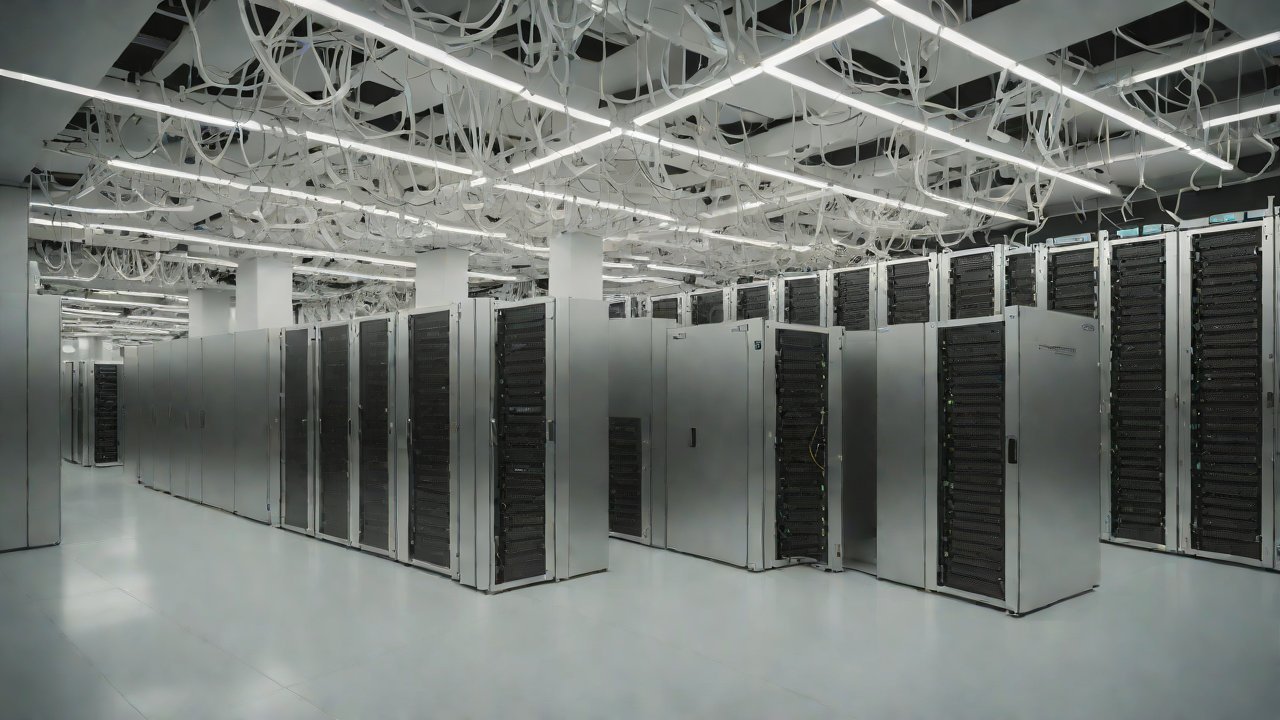
Adaptive Edge Orchestration: Dynamic Scheduling of Computing Power Across Gateways
The proliferation of IoT devices, 5G networks, and cloud computing has led to an unprecedented surge in data generation and processing demands. Traditional edge computing approaches, which rely on fixed infrastructure and static resource allocation, are no longer sufficient to meet these evolving needs. To address this challenge, a new paradigm is emerging: Adaptive Edge Orchestration (AEO), which dynamically schedules computing power across gateways to optimize performance, reduce latency, and enhance scalability.
1. Market Landscape
The global edge computing market is projected to reach $18.4 billion by 2025, growing at a CAGR of 38.6% from 2020 to 2025 (MarketsandMarkets). This expansion is driven by the increasing adoption of IoT devices, which are expected to reach 22.3 billion by 2025 (Statista). The growth of cloud computing and 5G networks has also created new opportunities for edge computing, enabling real-time processing, reduced latency, and improved security.
| Year | Edge Computing Market Size (Billion USD) |
|---|---|
| 2020 | 2.8 |
| 2021 | 4.3 |
| 2022 | 6.5 |
| 2023 | 9.1 |
| 2024 | 11.7 |
| 2025 | 18.4 |
2. Technical Foundations
AEO relies on several technical foundations to achieve dynamic scheduling of computing power across gateways:

- Software-Defined Networking (SDN): AEO leverages SDN to virtualize network infrastructure and enable programmable networks.
- Network Function Virtualization (NFV): NFV allows for the deployment of virtualized network functions, such as firewalls and intrusion detection systems.
- Containerization: Containerization provides a lightweight and portable way to deploy applications and services on edge gateways.
3. Key Components
AEO consists of several key components:
- Gateway Management System (GMS): The GMS is responsible for managing edge gateway infrastructure, including resource allocation and monitoring.
- Workload Manager: The workload manager schedules computing power across gateways based on application requirements and resource availability.
- Orchestration Engine: The orchestration engine coordinates the deployment of applications and services on edge gateways.
| Component | Description |
|---|---|
| Gateway Management System (GMS) | Manages edge gateway infrastructure, including resource allocation and monitoring. |
| Workload Manager | Schedules computing power across gateways based on application requirements and resource availability. |
| Orchestration Engine | Coordinates the deployment of applications and services on edge gateways. |
4. Benefits
AEO offers several benefits, including:
- Improved Performance: AEO enables dynamic scheduling of computing power, ensuring that resources are allocated to applications in real-time.
- Reduced Latency: By processing data closer to the source, AEO reduces latency and improves overall system responsiveness.
- Enhanced Scalability: AEO allows for easy scalability, as new gateways can be added or removed as needed.

5. Challenges
While AEO offers several benefits, it also presents some challenges:
- Complexity: AEO requires the coordination of multiple components and systems, which can introduce complexity and overhead.
- Security: AEO introduces new security risks, including the potential for unauthorized access to edge gateway infrastructure.
- Interoperability: AEO requires interoperability between different vendors and technologies, which can be a challenge in a multi-vendor environment.
6. Case Studies
Several companies are already leveraging AEO to improve performance, reduce latency, and enhance scalability:
- Amazon Web Services (AWS): AWS has developed an edge computing service that enables customers to deploy applications on edge gateways.
- Microsoft Azure: Microsoft has introduced an edge computing platform that allows customers to deploy cloud-native applications on edge devices.
- Google Cloud: Google has developed a multi-cloud edge computing platform that enables customers to deploy applications across multiple clouds.
7. Conclusion
Adaptive Edge Orchestration is a new paradigm for dynamic scheduling of computing power across gateways. By leveraging SDN, NFV, and containerization, AEO enables real-time processing, reduced latency, and improved scalability. While challenges remain, AEO offers several benefits that make it an attractive solution for companies looking to improve performance, reduce latency, and enhance scalability.
| Company | Edge Computing Service/Platform |
|---|---|
| Amazon Web Services (AWS) | AWS Edge Compute |
| Microsoft Azure | Azure Edge Platform |
| Google Cloud | Google Cloud Multi-Cloud Edge |
IOT Cloud Platform
IOT Cloud Platform is an IoT portal established by a Chinese IoT company, focusing on technical solutions in the fields of agricultural IoT, industrial IoT, medical IoT, security IoT, military IoT, meteorological IoT, consumer IoT, automotive IoT, commercial IoT, infrastructure IoT, smart warehousing and logistics, smart home, smart city, smart healthcare, smart lighting, etc.
The IoT Cloud Platform blog is a top IoT technology stack, providing technical knowledge on IoT, robotics, artificial intelligence (generative artificial intelligence AIGC), edge computing, AR/VR, cloud computing, quantum computing, blockchain, smart surveillance cameras, drones, RFID tags, gateways, GPS, 3D printing, 4D printing, autonomous driving, etc.
Note: This article was professionally generated with the assistance of AIGC and has been fact-checked and manually corrected by IoT expert editor IoTCloudPlatForm.