9 Sensors for Agricultural IoT
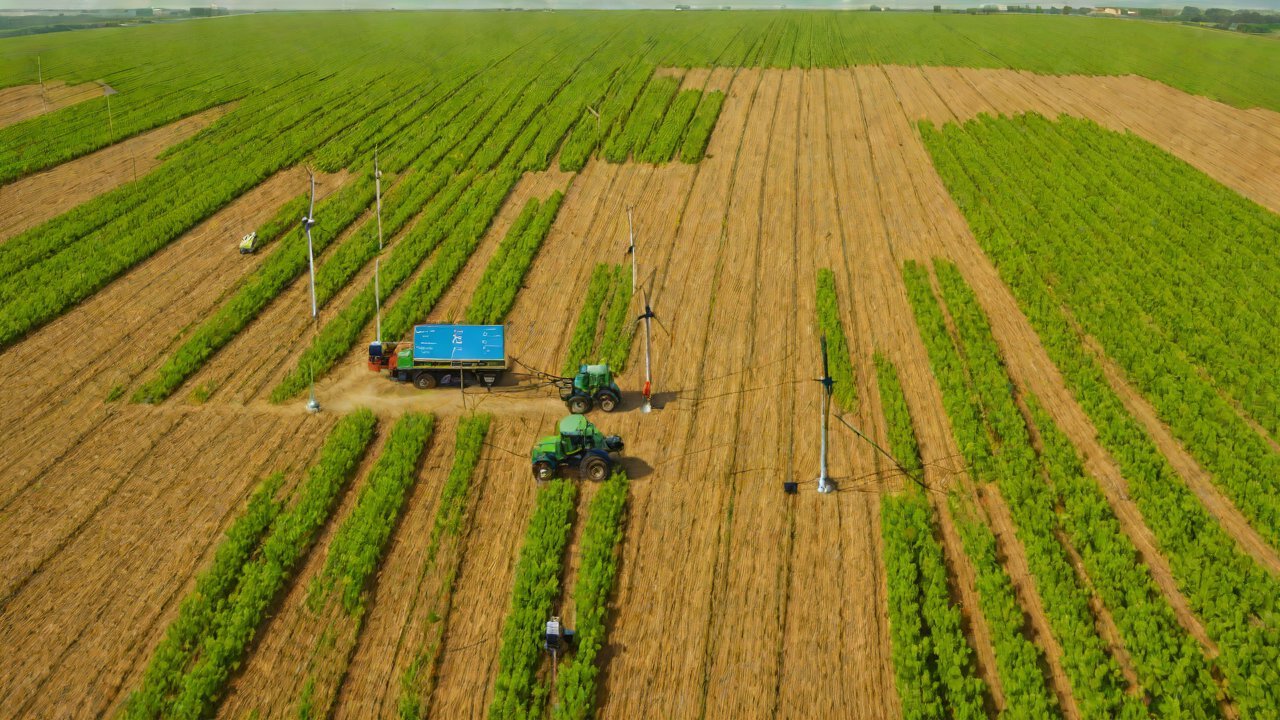
The integration of Internet of Things (IoT) technology into agriculture has revolutionized the way crops are grown, monitored, and harvested. One crucial aspect of this transformation is the use of sensors to collect data on various parameters that affect crop growth. These sensors enable farmers and agricultural professionals to make informed decisions about irrigation, fertilization, pest control, and other critical aspects of farming.
The current market for agricultural IoT sensors is rapidly growing, driven by increasing demand from farmers seeking to improve crop yields, reduce water and fertilizer usage, and minimize environmental impact. The global agricultural IoT market was valued at USD 3.5 billion in 2020 and is expected to reach USD 13.4 billion by 2027, growing at a CAGR of 21.1% during the forecast period.
1. Soil Moisture Sensors
Soil moisture sensors are one of the most critical components of agricultural IoT systems. These sensors measure the water content in the soil and provide real-time data to farmers on the moisture levels. This information is essential for optimizing irrigation schedules, reducing water waste, and preventing overwatering or underwatering.
| Sensor Type | Description |
|---|---|
| Capacitance Sensors | Measure changes in capacitance due to variations in soil moisture |
| Resistive Sensors | Detect changes in resistance caused by soil moisture fluctuations |
| Thermal Conductivity Sensors | Monitor changes in thermal conductivity as a result of varying soil moisture |
2. Temperature and Humidity Sensors
Temperature and humidity sensors are used to monitor environmental conditions that affect crop growth. These sensors measure temperature, relative humidity (RH), and sometimes dew point.
| Sensor Type | Description |
|---|---|
| Thermistors | Measure temperature using a thermistor sensor |
| Thermocouples | Detect temperature changes using thermocouple sensors |
| Hygroscopic Sensors | Monitor RH levels in the soil or air |
3. pH and EC Sensors
pH and Electrical Conductivity (EC) sensors are essential for monitoring soil nutrient levels, acidity, and alkalinity.
| Sensor Type | Description |
|---|---|
| pH Electrodes | Measure soil pH using a pH electrode sensor |
| EC Sensors | Detect changes in electrical conductivity caused by varying nutrient levels |
4. Light Intensity Sensors
Light intensity sensors are used to monitor sunlight exposure, which affects photosynthesis and plant growth.
| Sensor Type | Description |
|---|---|
| Photodiodes | Measure light intensity using a photodiode sensor |
| Photoresistors | Detect changes in resistance caused by varying light levels |
5. Water Quality Sensors
Water quality sensors are used to monitor water parameters such as turbidity, pH, and EC.
| Sensor Type | Description |
|---|---|
| Turbidity Sensors | Measure water clarity using a turbidity sensor |
| pH Sensors | Detect changes in water pH using a pH sensor |
6. Crop Yield Estimation Sensors
Crop yield estimation sensors are used to monitor crop growth parameters such as leaf area, stem diameter, and fruit size.
| Sensor Type | Description |
|---|---|
| Camera-based Systems | Estimate crop yield based on image analysis of plant growth |
| LiDAR (Light Detection and Ranging) | Measure crop height, density, and other growth parameters |
7. Soil Nutrient Sensors
Soil nutrient sensors are used to monitor nutrient levels such as nitrogen, phosphorus, and potassium.
| Sensor Type | Description |
|---|---|
| Spectroscopy-based Systems | Estimate soil nutrient levels based on spectral analysis of plant reflectance |
| Ion-selective Electrodes | Detect changes in ion concentrations caused by varying nutrient levels |
8. Weather Station Sensors
Weather station sensors are used to monitor environmental conditions such as temperature, humidity, wind speed, and precipitation.
| Sensor Type | Description |
|---|---|
| Anemometers | Measure wind speed using an anemometer sensor |
| Rain Gauges | Detect changes in rainfall levels using a rain gauge sensor |
9. Machine Vision Sensors
Machine vision sensors are used to monitor crop health by analyzing images of plant growth and detecting anomalies.
| Sensor Type | Description |
|---|---|
| Camera-based Systems | Estimate crop health based on image analysis of plant growth |
| Object Detection | Detect specific objects such as weeds, pests, or diseases |
In conclusion, the use of sensors in agricultural IoT systems has revolutionized the way farmers grow crops. By monitoring various parameters that affect crop growth, farmers can make informed decisions about irrigation, fertilization, pest control, and other critical aspects of farming. The market for agricultural IoT sensors is rapidly growing, driven by increasing demand from farmers seeking to improve crop yields, reduce water and fertilizer usage, and minimize environmental impact.
As the global population continues to grow, the need for sustainable agriculture practices becomes increasingly important. The use of sensors in agricultural IoT systems will play a crucial role in meeting this challenge, enabling farmers to optimize crop growth while minimizing their environmental footprint.
IOT Cloud Platform
IOT Cloud Platform is an IoT portal established by a Chinese IoT company, focusing on technical solutions in the fields of agricultural IoT, industrial IoT, medical IoT, security IoT, military IoT, meteorological IoT, consumer IoT, automotive IoT, commercial IoT, infrastructure IoT, smart warehousing and logistics, smart home, smart city, smart healthcare, smart lighting, etc.
The IoT Cloud Platform blog is a top IoT technology stack, providing technical knowledge on IoT, robotics, artificial intelligence (generative artificial intelligence AIGC), edge computing, AR/VR, cloud computing, quantum computing, blockchain, smart surveillance cameras, drones, RFID tags, gateways, GPS, 3D printing, 4D printing, autonomous driving, etc.