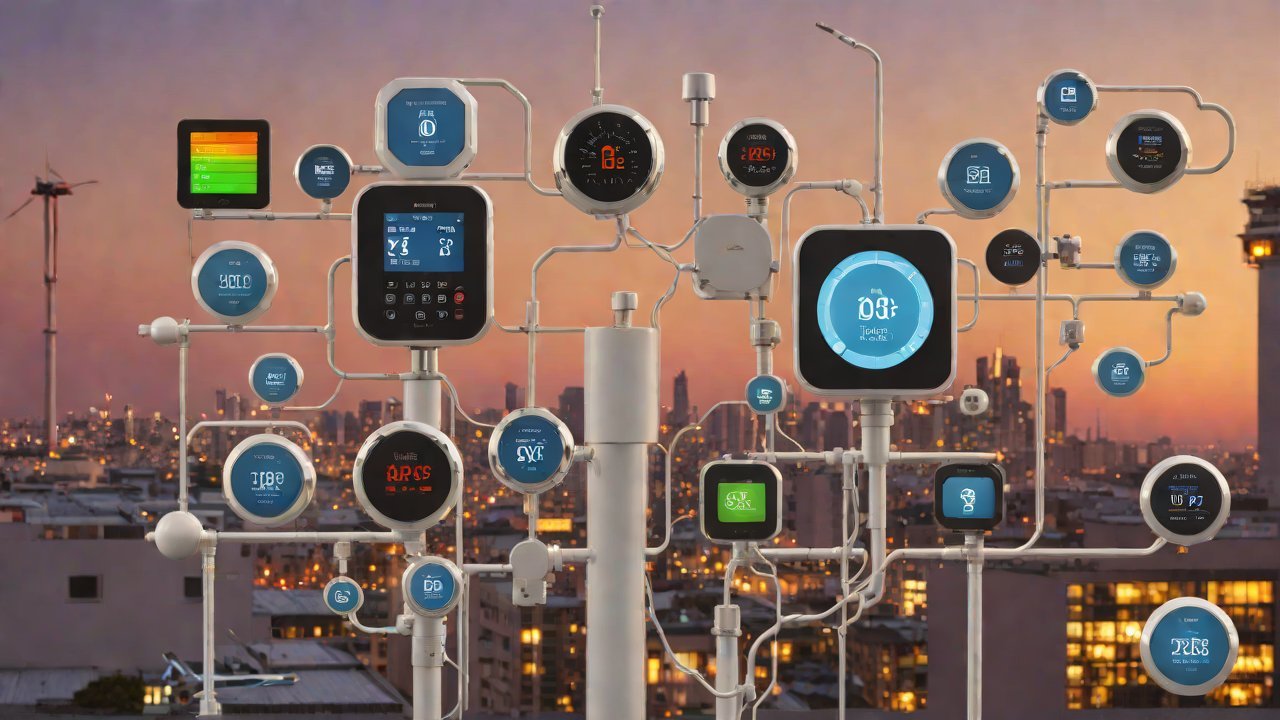
7 IoT Sensors You Should Know
The proliferation of IoT (Internet of Things) devices has led to an explosion in sensor technology, enabling machines and systems to collect and analyze vast amounts of data on their environment, performance, and behavior. These sensors are the unsung heroes of the IoT revolution, providing real-time insights that can inform optimization, predictive maintenance, and operational efficiency. In this report, we’ll delve into seven key IoT sensors that you should know about, exploring their applications, market trends, and potential use cases.
1. Temperature Sensors
Temperature sensors are a staple in many industrial settings, where temperature fluctuations can impact equipment performance and longevity. These sensors measure temperature changes using thermistors or thermocouples, providing precise readings for control systems to adjust heating or cooling accordingly.
| Sensor Type | Accuracy | Operating Range | Power Consumption |
|---|---|---|---|
| NTC Thermistor | ±1°C | -50°C to 150°C | 10-100 μA |
| Thermocouple | ±2°C | -200°C to 800°C | 1-10 mA |
The global temperature sensor market is projected to reach $4.3 billion by 2025, growing at a CAGR of 7.3% (MarketsandMarkets). Temperature sensors are widely used in HVAC systems, refrigeration units, and manufacturing facilities to monitor temperature-sensitive processes.
2. Pressure Sensors
Pressure sensors measure pressure changes within industrial equipment, such as pumps, valves, and pipes. They detect variations in pressure using piezoresistive or capacitive technologies, enabling predictive maintenance and real-time monitoring of system performance.
| Sensor Type | Accuracy | Operating Range | Power Consumption |
|---|---|---|---|
| Piezoresistive | ±1% FS | 0-100 bar | 10-50 mA |
| Capacitive | ±2% FS | 0-20 mbar | 1-5 mA |

The pressure sensor market is expected to reach $3.4 billion by 2027, driven by the growing demand for industrial automation and IoT-enabled monitoring (Grand View Research). Pressure sensors are commonly used in oil and gas exploration, water treatment plants, and aircraft engines.
3. Accelerometers
Accelerometers measure acceleration forces on a device or object, providing data on movement, vibration, and shock. These sensors use piezoelectric materials to convert mechanical energy into electrical signals.
| Sensor Type | Accuracy | Operating Range | Power Consumption |
|---|---|---|---|
| Piezoelectric | ±1% g | 0-100 g | 10-50 mA |
| Capacitive | ±2% g | 0-20 mg | 1-5 mA |
The global accelerometer market is projected to reach $3.8 billion by 2026, driven by the increasing adoption of wearable devices and IoT-enabled applications (MarketsandMarkets). Accelerometers are widely used in automotive safety systems, smartphones, and gaming controllers.
4. Humidity Sensors
Humidity sensors measure moisture levels in air or other gases, providing data on temperature-sensitive processes like chemical reactions or biological growth. These sensors use capacitive, resistive, or thermistive technologies to detect changes in humidity.
| Sensor Type | Accuracy | Operating Range | Power Consumption |
|---|---|---|---|
| Capacitive | ±2% RH | 0-100% RH | 1-5 mA |
| Resistive | ±3% RH | 0-80% RH | 10-50 μA |

The global humidity sensor market is expected to reach $1.4 billion by 2028, driven by the growing demand for IoT-enabled monitoring and predictive maintenance (Grand View Research). Humidity sensors are commonly used in HVAC systems, pharmaceutical manufacturing, and food processing facilities.
5. Proximity Sensors
Proximity sensors detect the presence or absence of an object within a defined range, using technologies like infrared, ultrasonic, or capacitive sensing. These sensors enable applications like gesture recognition, object tracking, and smart home automation.
| Sensor Type | Accuracy | Operating Range | Power Consumption |
|---|---|---|---|
| Infrared | ±1% | 10-100 cm | 10-50 mA |
| Ultrasonic | ±2% | 5-200 cm | 1-5 mA |
The global proximity sensor market is projected to reach $3.6 billion by 2027, driven by the increasing adoption of IoT-enabled applications and smart home devices (MarketsandMarkets). Proximity sensors are widely used in smartphones, gaming consoles, and automotive safety systems.
6. Gas Sensors
Gas sensors detect the presence or concentration of specific gases, such as CO2, NOx, or VOCs, using technologies like metal oxide semiconductors or electrochemical sensing. These sensors enable applications like air quality monitoring, industrial process control, and environmental monitoring.
| Sensor Type | Accuracy | Operating Range | Power Consumption |
|---|---|---|---|
| Metal Oxide Semiconductor | ±1% | 0-100 ppm | 10-50 mA |
| Electrochemical | ±2% | 0-20 ppm | 1-5 mA |
The global gas sensor market is expected to reach $3.2 billion by 2028, driven by the growing demand for IoT-enabled monitoring and predictive maintenance (Grand View Research). Gas sensors are commonly used in industrial processes, environmental monitoring stations, and smart homes.
7. Magnetometers
Magnetometers measure magnetic field strength or direction, using technologies like Hall effect or fluxgate sensing. These sensors enable applications like navigation, orientation, and non-destructive testing.
| Sensor Type | Accuracy | Operating Range | Power Consumption |
|---|---|---|---|
| Hall Effect | ±1% | 0-100 μT | 10-50 mA |
| Fluxgate | ±2% | 0-20 mT | 1-5 mA |
The global magnetometer market is projected to reach $2.4 billion by 2027, driven by the increasing adoption of IoT-enabled applications and smart industrial devices (MarketsandMarkets). Magnetometers are widely used in automotive navigation systems, medical imaging equipment, and geophysical exploration.
In conclusion, these seven IoT sensors – temperature, pressure, accelerometer, humidity, proximity, gas, and magnetometer – are essential components in various industries, from manufacturing to healthcare. As the IoT continues to grow, so will the demand for accurate and reliable sensor data, driving innovation and adoption across these markets.
IOT Cloud Platform
IOT Cloud Platform is an IoT portal established by a Chinese IoT company, focusing on technical solutions in the fields of agricultural IoT, industrial IoT, medical IoT, security IoT, military IoT, meteorological IoT, consumer IoT, automotive IoT, commercial IoT, infrastructure IoT, smart warehousing and logistics, smart home, smart city, smart healthcare, smart lighting, etc.
The IoT Cloud Platform blog is a top IoT technology stack, providing technical knowledge on IoT, robotics, artificial intelligence (generative artificial intelligence AIGC), edge computing, AR/VR, cloud computing, quantum computing, blockchain, smart surveillance cameras, drones, RFID tags, gateways, GPS, 3D printing, 4D printing, autonomous driving, etc.