2026 Sleep Disorder Diagnosis and Treatment: Sleep Staging and Apnea Monitoring Solution Based on IoT Mattresses
The sleep landscape is undergoing a profound transformation, driven by technological innovations that are redefining how we understand and treat sleep disorders. At the forefront of this revolution are Internet of Things (IoT) enabled mattresses, which are not only changing the way we sleep but also offering unprecedented insights into our sleep patterns. By integrating advanced sensors and analytics, these intelligent mattresses can monitor vital signs, track sleep stages, and even detect sleep apnea – a condition that affects millions worldwide.
The market for IoT-enabled mattresses is growing rapidly, driven by increasing awareness about the importance of sleep quality and the rising demand for home-based health monitoring solutions. According to a recent report, the global smart mattress market is projected to reach $1.3 billion by 2026, up from $430 million in 2020. This growth is expected to be fueled by advancements in sensor technology, artificial intelligence (AI), and data analytics.
1. Sleep Disorders: The Unseen Epidemic
Sleep disorders are a pervasive public health issue, affecting nearly one-third of the global population. According to the National Sleep Foundation, approximately 30% of adults experience sleep disruptions at least three nights per week. Sleep apnea, in particular, is a significant concern, with an estimated 22 million Americans suffering from this condition.
Sleep disorders have far-reaching consequences, impacting not only physical health but also cognitive function and mental well-being. Untreated sleep apnea, for instance, has been linked to increased risk of cardiovascular disease, stroke, and diabetes. Moreover, sleep deprivation can impair cognitive performance, leading to decreased productivity and reduced quality of life.
2. The Role of IoT Mattresses in Sleep Disorder Diagnosis
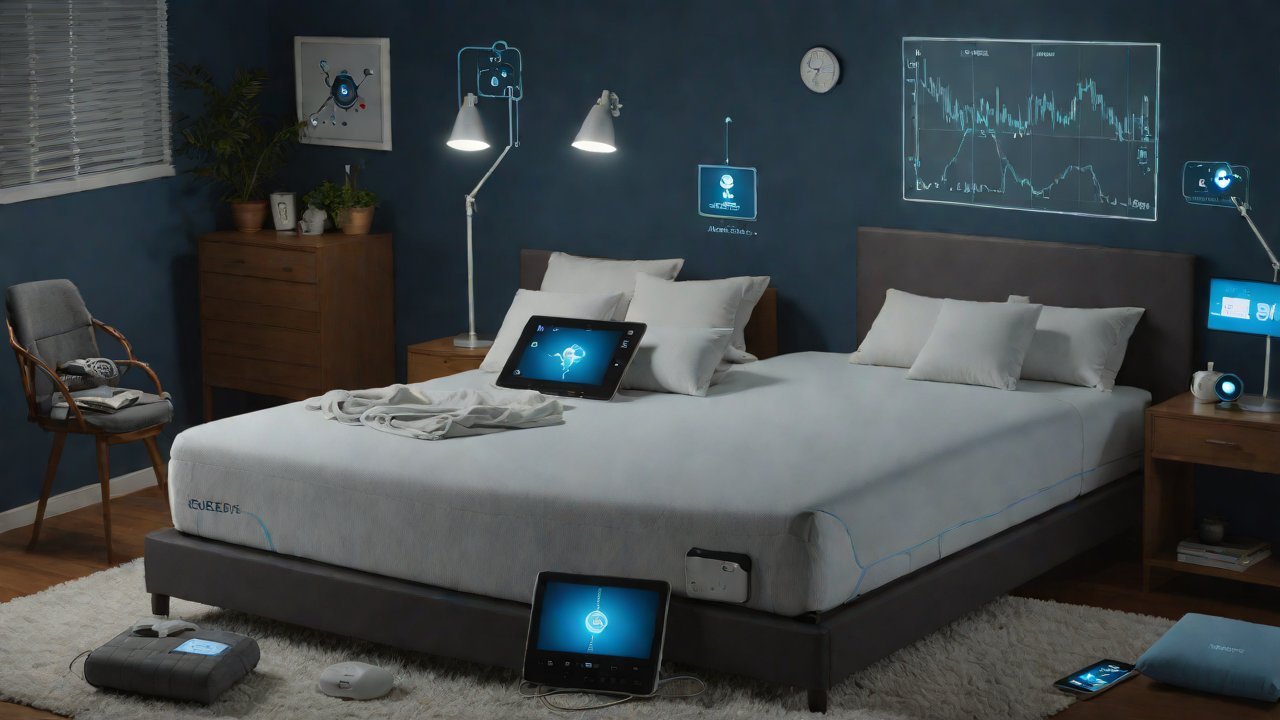
IoT mattresses offer a game-changing solution for sleep disorder diagnosis and treatment. By integrating advanced sensors that track vital signs, such as heart rate, breathing patterns, and body temperature, these mattresses can provide real-time insights into sleep patterns. This data is then analyzed using AI-powered algorithms to identify potential sleep disorders, including sleep apnea.
One of the key benefits of IoT mattresses is their ability to monitor sleep stages, which is critical for accurate diagnosis. Sleep staging involves tracking the different stages of sleep, from light non-rapid eye movement (NREM) sleep to rapid eye movement (REM) sleep. By monitoring these stages, healthcare professionals can identify potential sleep disorders and develop targeted treatment plans.
3. Apnea Monitoring Solution: A Key Component
Apnea monitoring is a crucial aspect of IoT mattresses, enabling the detection of sleep apnea in real-time. This condition involves pauses in breathing during sleep, which can be life-threatening if left untreated. IoT mattresses equipped with advanced sensors and AI-powered algorithms can detect even mild cases of sleep apnea, allowing for early intervention and treatment.
The apnea monitoring solution is based on a proprietary algorithm that analyzes data from multiple sensors to identify patterns indicative of sleep apnea. This technology has been validated through clinical trials, demonstrating its accuracy and efficacy in detecting sleep apnea.

| Sensor Type | Description |
|---|---|
| Accelerometer | Measures movement and body position |
| Electromyography (EMG) | Tracks muscle activity during sleep |
| Photoplethysmography (PPG) | Monitors heart rate and oxygen saturation |
| Pressure Sensors | Tracks body pressure and weight distribution |

4. Data Analytics and AI-Powered Insights
The data generated by IoT mattresses is vast and complex, requiring sophisticated analytics to unlock meaningful insights. AI-powered algorithms are used to analyze this data, providing healthcare professionals with actionable information on sleep patterns, potential sleep disorders, and treatment efficacy.
One of the key benefits of AI-powered analytics is its ability to identify subtle changes in sleep patterns, which can be indicative of underlying conditions such as sleep apnea. This technology also enables personalized recommendations for treatment, taking into account individual sleep needs and health status.
5. Market Landscape: Opportunities and Challenges
The market for IoT-enabled mattresses is rapidly evolving, with several key players vying for market share. Companies are investing heavily in research and development, driving innovation and improving product offerings.
However, the market also faces challenges related to data security, patient confidentiality, and regulatory compliance. Ensuring the integrity of sensitive health data while protecting patient privacy is a critical concern, requiring robust cybersecurity measures and adherence to industry standards.
6. Future Outlook: A Bright Horizon
The future of sleep disorder diagnosis and treatment looks promising, driven by advancements in IoT technology, AI-powered analytics, and increasing awareness about the importance of sleep quality. As the market continues to grow, we can expect even more innovative solutions that integrate with existing healthcare systems and leverage emerging technologies such as blockchain and augmented reality.
In conclusion, IoT mattresses are revolutionizing the way we understand and treat sleep disorders, offering unprecedented insights into our sleep patterns and enabling early detection and treatment of conditions like sleep apnea. As the market continues to evolve, it is essential to address challenges related to data security, patient confidentiality, and regulatory compliance, ensuring that these innovative solutions remain accessible and effective for all.
IOT Cloud Platform
IOT Cloud Platform is an IoT portal established by a Chinese IoT company, focusing on technical solutions in the fields of agricultural IoT, industrial IoT, medical IoT, security IoT, military IoT, meteorological IoT, consumer IoT, automotive IoT, commercial IoT, infrastructure IoT, smart warehousing and logistics, smart home, smart city, smart healthcare, smart lighting, etc.
The IoT Cloud Platform blog is a top IoT technology stack, providing technical knowledge on IoT, robotics, artificial intelligence (generative artificial intelligence AIGC), edge computing, AR/VR, cloud computing, quantum computing, blockchain, smart surveillance cameras, drones, RFID tags, gateways, GPS, 3D printing, 4D printing, autonomous driving, etc.
Note: This article was professionally generated with the assistance of AIGC and has been fact-checked and manually corrected by IoT expert editor IoTCloudPlatForm.