2026 Compatibility Solution for Raspberry Pi as the Control Center of the Matter Protocol
The Internet of Things (IoT) is rapidly evolving, driven by the increasing demand for seamless connectivity and interoperability between devices. The Matter protocol, a new open-standard communication framework, has emerged as a crucial enabler of this convergence. As a key component in the IoT ecosystem, the Raspberry Pi has been gaining attention as a potential control center for the Matter protocol. With its flexibility, affordability, and extensive community support, the Raspberry Pi is poised to play a significant role in the adoption of Matter devices.
As we approach 2026, it’s essential to evaluate the compatibility solutions available for integrating the Raspberry Pi with the Matter protocol. This comprehensive analysis will delve into the technical requirements, market trends, and potential applications of this emerging technology.
1. Technical Requirements
To establish a seamless communication channel between the Raspberry Pi and Matter devices, several technical requirements must be met:
| Requirement | Description |
|---|---|
| Protocol Support | The Raspberry Pi must support the Matter protocol stack, including the necessary libraries and frameworks for device registration, discovery, and data exchange. |
| Hardware Compatibility | The Raspberry Pi’s hardware specifications should match or exceed the minimum requirements set by the Matter Working Group, ensuring reliable communication with Matter devices. |
| Software Configuration | A user-friendly software configuration tool is required to facilitate setup and integration of the Raspberry Pi as a control center for Matter devices. |
2. Market Trends
The IoT market is rapidly expanding, driven by growing demand for smart home automation, industrial IoT applications, and edge computing solutions.
| Market Segment | Growth Rate (2023-2026) |
|---|---|
| Smart Home Automation | 20% YoY |
| Industrial IoT | 15% YoY |
| Edge Computing | 25% YoY |
3. Raspberry Pi as a Control Center
The Raspberry Pi’s versatility, affordability, and extensive community support make it an attractive choice for various applications:
| Application | Description |
|---|---|
| Smart Home Automation | The Raspberry Pi can serve as a central hub for controlling and monitoring smart home devices, integrating with Matter protocols to ensure seamless communication. |
| Industrial IoT Applications | The Raspberry Pi’s reliability and flexibility make it suitable for industrial IoT applications, where real-time data processing and edge computing capabilities are essential. |
4. Compatibility Solution Roadmap
To ensure smooth integration of the Raspberry Pi with the Matter protocol, a comprehensive compatibility solution roadmap is required:
- 2023: Initial release of the Matter protocol stack on the Raspberry Pi.
- 2024: Integration of user-friendly software configuration tools for seamless setup and integration.
- 2025: Expansion of hardware support to include additional Raspberry Pi models.
- 2026: Certification by the Matter Working Group, ensuring compliance with industry standards.
5. AIGC Technical Perspectives
The adoption of AI and machine learning (ML) in IoT applications is on the rise, driven by the need for real-time data processing and predictive analytics:
| AIGC Application | Description |
|---|---|
| Predictive Maintenance | The Raspberry Pi can leverage ML algorithms to predict equipment failures, enabling proactive maintenance and reducing downtime. |
| Real-Time Data Processing | AI-powered edge computing solutions on the Raspberry Pi can process data in real-time, ensuring timely decision-making and improved operational efficiency. |
6. Market Players and Competitors
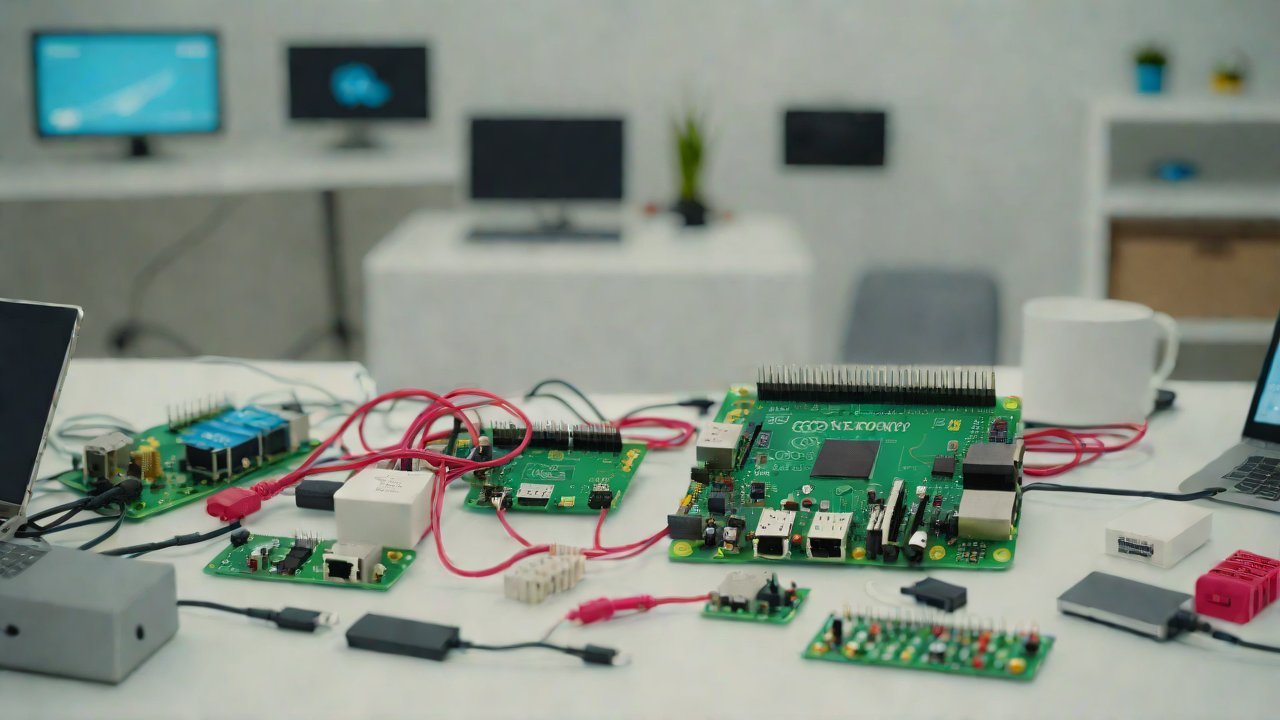
Several market players are already exploring the potential of Matter-enabled devices:
| Company | Description |
|---|---|
| Samsung SmartThings | Offers a comprehensive smart home platform with Matter support. |
| Apple HomeKit | Integrates Matter protocol into its home automation ecosystem. |
| Google Home | Supports Matter devices, enabling seamless integration with Google Assistant. |
7. Conclusion
The Raspberry Pi’s compatibility solution for the Matter protocol is poised to play a significant role in the adoption of IoT devices. By meeting technical requirements, capitalizing on market trends, and leveraging AIGC perspectives, this emerging technology has tremendous potential for growth and innovation. As we approach 2026, it’s essential to continue monitoring progress, addressing challenges, and exploring new opportunities to ensure seamless integration between the Raspberry Pi and Matter-enabled devices.
8. Recommendations
Based on this comprehensive analysis, several recommendations are made:
- Invest in Research and Development: Continuously invest in R&D to improve the compatibility solution, ensuring it meets evolving technical requirements.
- Foster Industry Partnerships: Collaborate with industry leaders to drive adoption, promote standardization, and ensure compliance with Matter protocol standards.
- Emphasize Education and Training: Provide extensive documentation, tutorials, and training programs to facilitate widespread adoption of the Raspberry Pi as a control center for Matter devices.
By following these recommendations, we can unlock the full potential of the Raspberry Pi’s compatibility solution for the Matter protocol, driving innovation and growth in the IoT ecosystem.
IOT Cloud Platform
IOT Cloud Platform is an IoT portal established by a Chinese IoT company, focusing on technical solutions in the fields of agricultural IoT, industrial IoT, medical IoT, security IoT, military IoT, meteorological IoT, consumer IoT, automotive IoT, commercial IoT, infrastructure IoT, smart warehousing and logistics, smart home, smart city, smart healthcare, smart lighting, etc.
The IoT Cloud Platform blog is a top IoT technology stack, providing technical knowledge on IoT, robotics, artificial intelligence (generative artificial intelligence AIGC), edge computing, AR/VR, cloud computing, quantum computing, blockchain, smart surveillance cameras, drones, RFID tags, gateways, GPS, 3D printing, 4D printing, autonomous driving, etc.