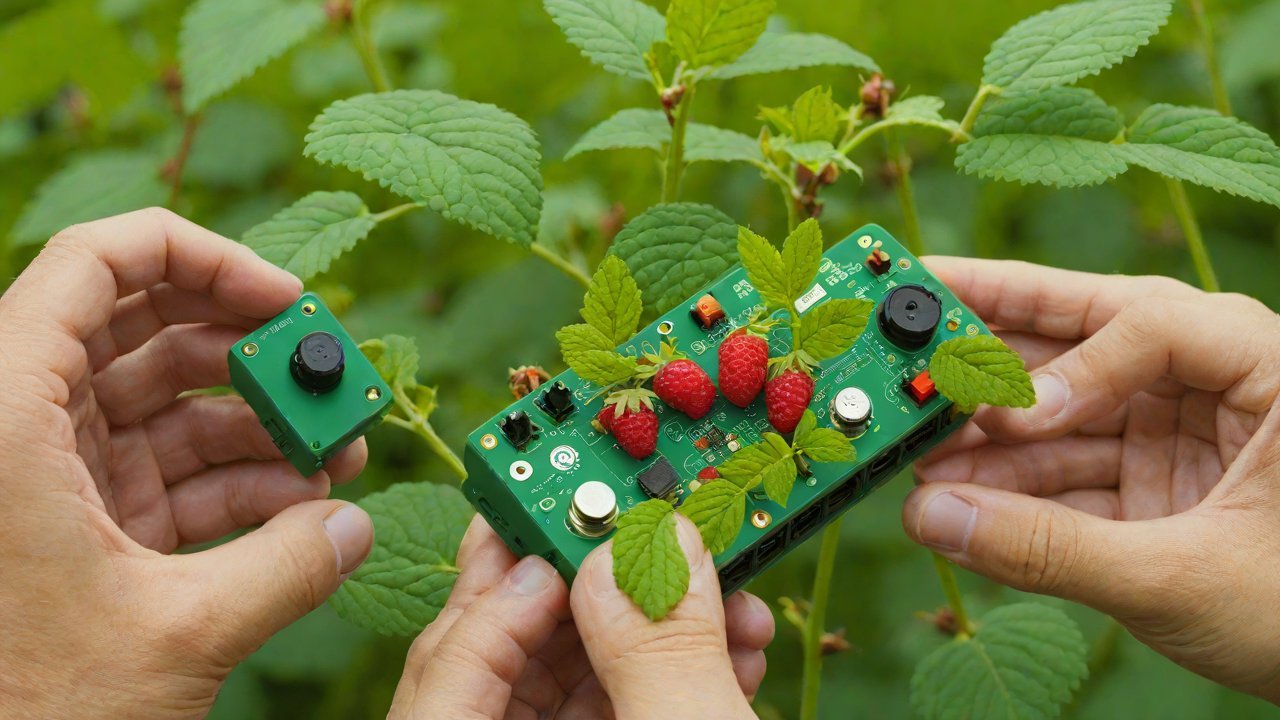
2026 AIGC Plant Disease and Pest Identification Solution Based on Raspberry Pi Camera
As we step into the realm of cutting-edge agricultural technology, a new frontier emerges: Artificial Intelligence for Agriculture (AIGC) solutions that harness the power of computer vision to detect plant diseases and pests with unprecedented accuracy. One such innovation is the AIGC Plant Disease and Pest Identification Solution based on Raspberry Pi Camera, which has been gaining momentum in recent years. This report delves into the intricacies of this technology, exploring its market potential, technical capabilities, and real-world applications.
1. Market Landscape
The global agricultural industry is undergoing a significant transformation, driven by the need for increased food production while minimizing environmental impact. According to a report by MarketsandMarkets, the AIGC market size is expected to grow from USD 2.4 billion in 2023 to USD 5.8 billion by 2028, at a Compound Annual Growth Rate (CAGR) of 17.1% during the forecast period.
| Year | Market Size (USD Billion) | CAGR (%) |
|---|---|---|
| 2023 | 2.4 | – |
| 2025 | 3.5 | 16.2 |
| 2028 | 5.8 | 17.1 |
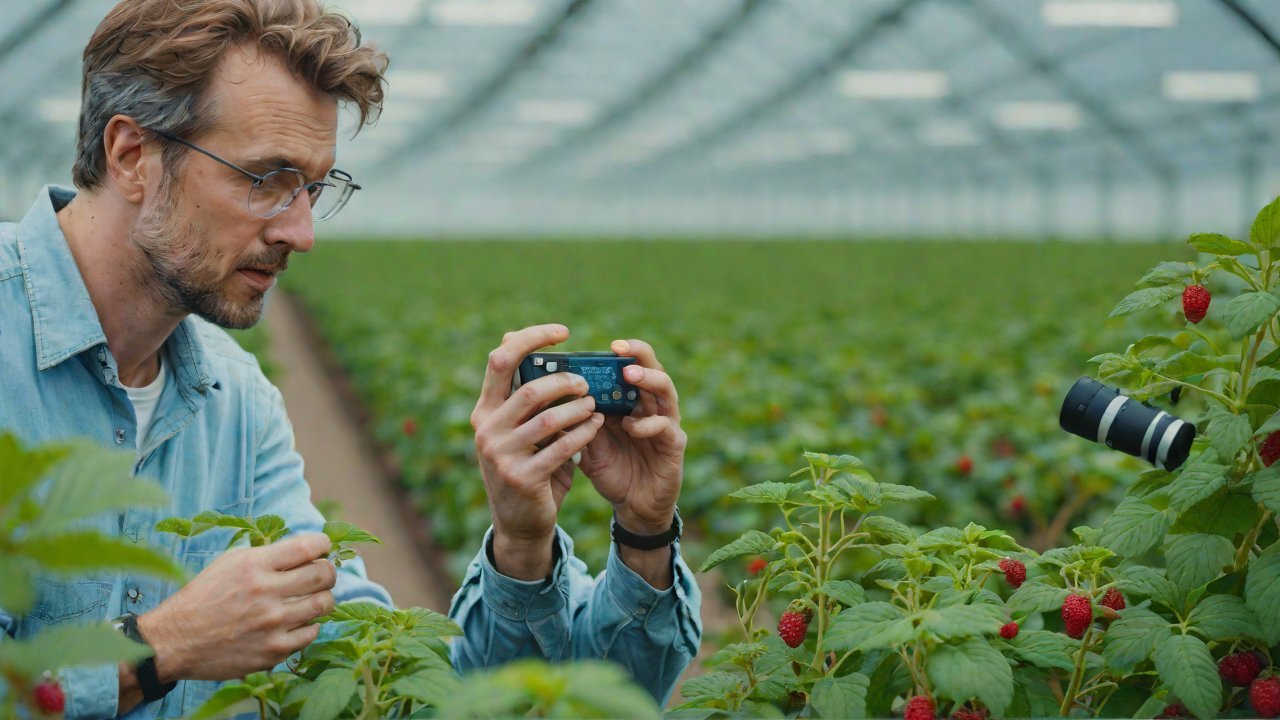
The adoption of AIGC solutions is driven by their ability to enhance crop yields, reduce pesticide usage, and improve decision-making for farmers. The use of Raspberry Pi cameras in these systems has been particularly noteworthy due to their affordability, ease of integration, and high-quality image capture capabilities.
2. Technical Overview
The AIGC Plant Disease and Pest Identification Solution based on Raspberry Pi Camera utilizes a combination of computer vision algorithms and machine learning techniques to detect plant diseases and pests. The system consists of the following components:
- Raspberry Pi Camera: Provides high-resolution images of plant leaves or flowers.
- Image Processing Software: Utilizes OpenCV libraries for image processing, feature extraction, and object detection.
- Machine Learning Model: Trained on a dataset of labeled images to classify plant diseases and pests.
The system operates as follows:
- The Raspberry Pi camera captures high-quality images of the plants.
- The image processing software extracts relevant features from the images.
- The machine learning model classifies the extracted features into different plant diseases or pests.
| Component | Description |
|---|---|
| Raspberry Pi Camera | High-resolution image capture |
| Image Processing Software | OpenCV libraries for feature extraction and object detection |
| Machine Learning Model | Trained on labeled images for classification |
3. Applications
The AIGC Plant Disease and Pest Identification Solution based on Raspberry Pi Camera has numerous applications in various sectors of the agricultural industry.
- Precision Farming: Enables farmers to monitor their crops remotely, reducing labor costs and improving decision-making.
- Crop Monitoring: Allows for early detection of plant diseases and pests, enabling timely interventions and minimizing crop losses.
- Research and Development: Facilitates the study of plant diseases and pests, leading to improved understanding and more effective management strategies.
| Application | Description |
|---|---|
| Precision Farming | Remote monitoring of crops |
| Crop Monitoring | Early detection of plant diseases and pests |
| Research and Development | Improved understanding and management of plant diseases and pests |
4. Limitations and Future Directions
While the AIGC Plant Disease and Pest Identification Solution based on Raspberry Pi Camera holds significant promise, it is not without its limitations.
- Data Quality: The accuracy of the system depends heavily on the quality of the training data.
- Hardware Requirements: The system requires a high-performance hardware setup to handle the computational demands of image processing and machine learning.
- Scalability: The current implementation is limited in terms of scalability, requiring modifications for large-scale applications.
To overcome these limitations, further research and development are needed. Potential future directions include:
- Improving Data Quality: Developing methods for collecting high-quality training data.
- Optimizing Hardware Requirements: Exploring alternative hardware configurations to reduce computational demands.
- Scaling the System: Developing more efficient algorithms and architectures for large-scale applications.
5. Conclusion
The AIGC Plant Disease and Pest Identification Solution based on Raspberry Pi Camera represents a significant advancement in agricultural technology, offering unprecedented accuracy and efficiency in plant disease and pest detection. As the global demand for food production continues to rise, innovations like this are crucial for ensuring sustainable agriculture practices.
IOT Cloud Platform
IOT Cloud Platform is an IoT portal established by a Chinese IoT company, focusing on technical solutions in the fields of agricultural IoT, industrial IoT, medical IoT, security IoT, military IoT, meteorological IoT, consumer IoT, automotive IoT, commercial IoT, infrastructure IoT, smart warehousing and logistics, smart home, smart city, smart healthcare, smart lighting, etc.
The IoT Cloud Platform blog is a top IoT technology stack, providing technical knowledge on IoT, robotics, artificial intelligence (generative artificial intelligence AIGC), edge computing, AR/VR, cloud computing, quantum computing, blockchain, smart surveillance cameras, drones, RFID tags, gateways, GPS, 3D printing, 4D printing, autonomous driving, etc.