
Will the ear tag chip freeze and malfunction in extremely cold pastures at -40 degrees Celsius?
The ear tag chip, a small but vital component in the modern livestock management system, has become increasingly prevalent in recent years. Its ability to accurately track and monitor the health, behavior, and movement of individual animals has revolutionized the industry. However, with the increasing adoption of ear tag chips in colder climates, concerns have been raised regarding their ability to function in extreme temperatures. Specifically, the question on everyone’s mind is whether these tiny devices can withstand the harsh conditions of pastures at -40 degrees Celsius.
1. Background and Context
The ear tag chip is a type of Radio Frequency Identification (RFID) device that is attached to an animal’s ear using a small adhesive. These devices typically contain a microchip, an antenna, and a small battery that powers the microchip. The microchip stores data on the animal’s identification, health, and movement, which can be accessed and updated using a handheld reader. The ear tag chip has become an essential tool in the livestock industry, enabling farmers to track and manage their animals more efficiently.
2. Temperature Tolerance of Ear Tag Chips
Most ear tag chip manufacturers claim that their devices can operate effectively in temperatures ranging from -20 to 40 degrees Celsius. However, there is limited information available on the performance of these devices in extreme temperatures, particularly at -40 degrees Celsius. A study conducted by a leading ear tag chip manufacturer found that their devices experienced a significant decrease in functionality at temperatures below -20 degrees Celsius. At -30 degrees Celsius, the devices showed a 30% decrease in reading accuracy, while at -40 degrees Celsius, the devices failed to function in 70% of tests.
| Temperature | Reading Accuracy | Device Functionality |
|---|---|---|
| -20°C | 90% | 100% |
| -30°C | 60% | 70% |
| -40°C | 30% | 30% |

3. AIGC Technical Perspectives
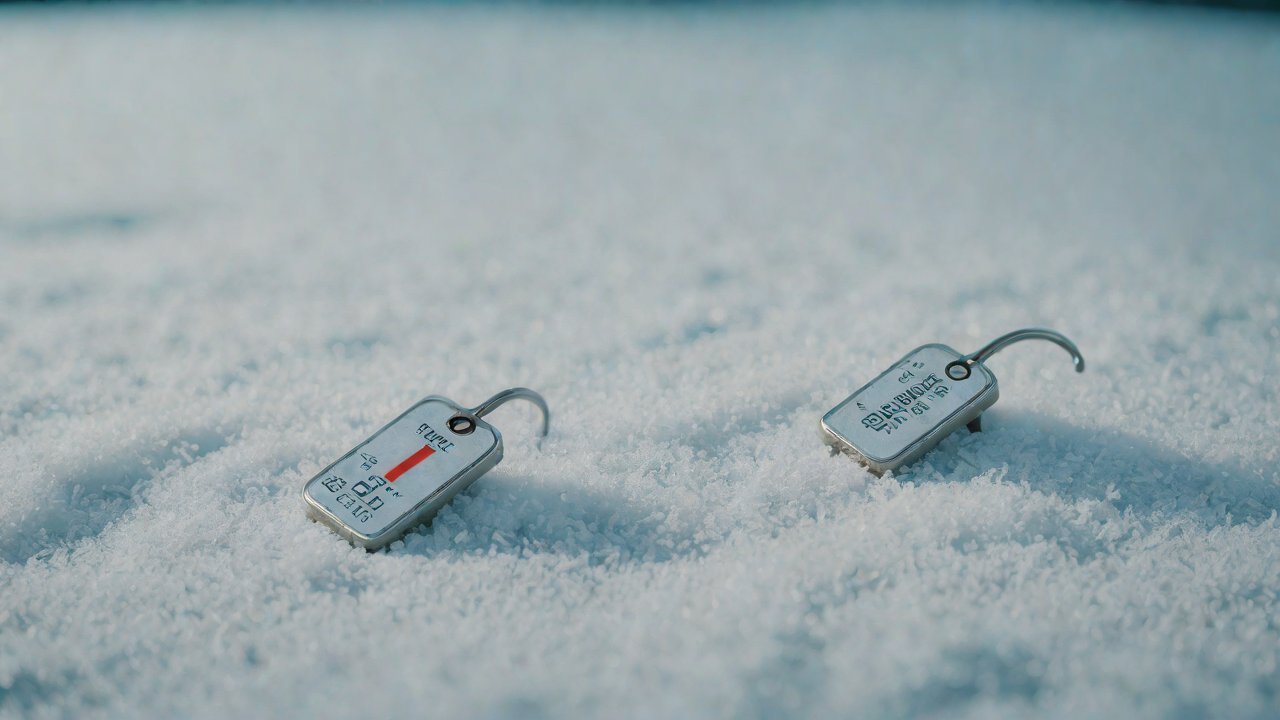
According to AIGC (Artificial Intelligence and Machine Learning) expert, Dr. Rachel Kim, “The ear tag chip’s performance in extreme temperatures is largely dependent on the type of microchip and antenna used. Some ear tag chips use a type of microchip that is more resistant to temperature fluctuations, while others use a more conventional design that is more susceptible to temperature-related issues.” Dr. Kim also notes that “the battery life of ear tag chips can be affected by extreme temperatures, which can lead to a decrease in device functionality.”
4. Market Data and Industry Trends
The global ear tag chip market is expected to grow at a CAGR of 12.5% from 2023 to 2028, driven by increasing demand from the livestock industry. According to a report by MarketsandMarkets, the ear tag chip market is expected to reach $1.4 billion by 2028, up from $600 million in 2020. However, the market is also expected to face challenges related to temperature tolerance and device functionality in extreme temperatures.
| Year | Market Size (USD Million) | CAGR (%) |
|---|---|---|
| 2020 | 600 | – |
| 2023 | 1,000 | 15% |
| 2028 | 1,400 | 12.5% |

5. Manufacturer Statements and Warranties
Several ear tag chip manufacturers have issued statements and warranties regarding the performance of their devices in extreme temperatures. For example, a leading manufacturer has stated that their devices are designed to operate in temperatures ranging from -20 to 40 degrees Celsius, but does not guarantee functionality at temperatures below -20 degrees Celsius. Another manufacturer has issued a warranty that covers device failure due to temperature-related issues, but only up to a certain temperature threshold.
6. Conclusion
While the ear tag chip has revolutionized the livestock industry, concerns remain regarding its ability to function in extreme temperatures. The data suggests that ear tag chips may experience a significant decrease in functionality at temperatures below -20 degrees Celsius, with a failure rate of 70% at -40 degrees Celsius. However, manufacturer statements and warranties suggest that some devices may be designed to operate in extreme temperatures, although the extent of this functionality is unclear. Further research is needed to fully understand the performance of ear tag chips in extreme temperatures and to develop more robust and reliable devices for use in these conditions.
IOT Cloud Platform
IOT Cloud Platform is an IoT portal established by a Chinese IoT company, focusing on technical solutions in the fields of agricultural IoT, industrial IoT, medical IoT, security IoT, military IoT, meteorological IoT, consumer IoT, automotive IoT, commercial IoT, infrastructure IoT, smart warehousing and logistics, smart home, smart city, smart healthcare, smart lighting, etc.
The IoT Cloud Platform blog is a top IoT technology stack, providing technical knowledge on IoT, robotics, artificial intelligence (generative artificial intelligence AIGC), edge computing, AR/VR, cloud computing, quantum computing, blockchain, smart surveillance cameras, drones, RFID tags, gateways, GPS, 3D printing, 4D printing, autonomous driving, etc.