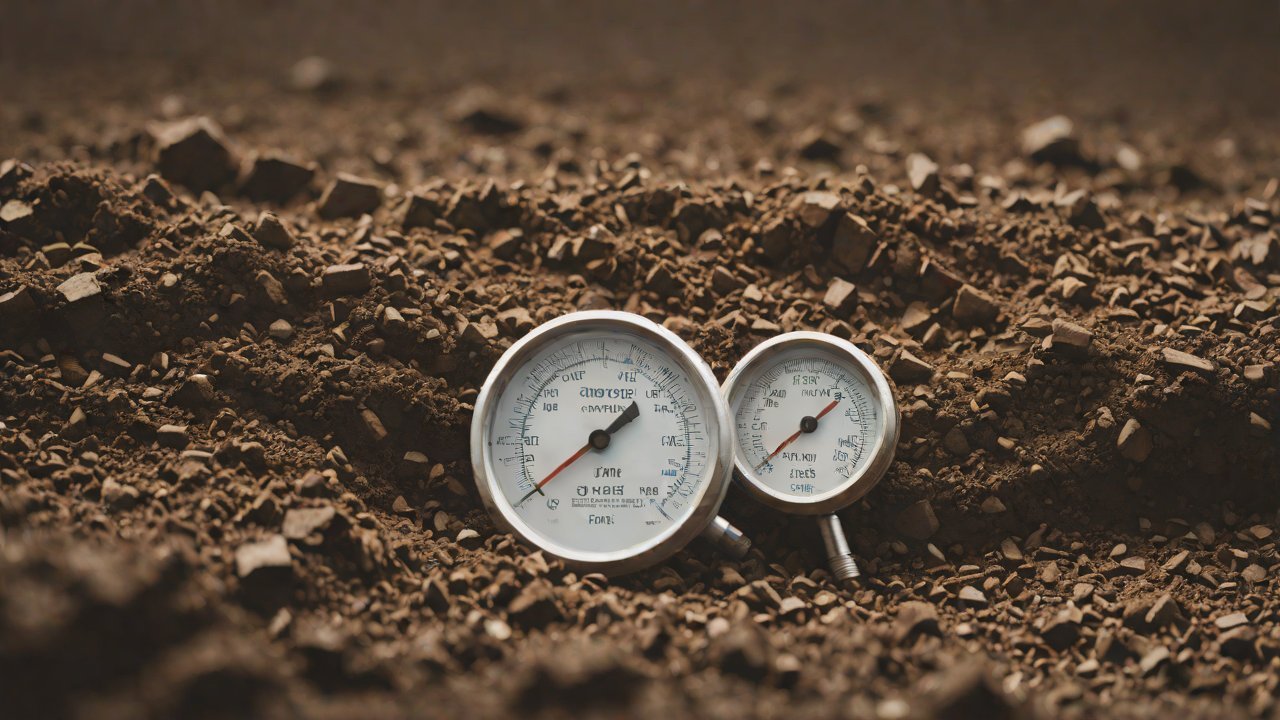
Will soil pressure cause sensor deformation after long-term deep burial?
Soil pressure is a critical factor to consider when designing sensors for long-term deep burial applications, such as in oil and gas exploration, geothermal monitoring, or environmental monitoring. The harsh underground environment poses significant challenges to sensor durability and accuracy. One of the primary concerns is the deformation caused by soil pressure on the sensor’s structure, which can compromise its performance over time.
1. Soil Pressure Fundamentals
Soil pressure is a complex phenomenon influenced by various factors, including soil type, moisture content, density, and depth. The pressure exerted by the soil on a buried object increases with depth due to the weight of the overlying soil layers. This can lead to significant stresses on the sensor’s structure, potentially causing deformation or even failure.
2. Sensor Materials and Design
Sensor materials and design play a crucial role in determining their ability to withstand soil pressure. Common materials used for sensors include metals (e.g., stainless steel, titanium), ceramics, and polymers. Each material has its unique properties, such as strength, stiffness, and durability, which affect its performance under soil pressure.
| Material | Typical Strength (MPa) | Elastic Modulus (GPa) |
|---|---|---|
| Stainless Steel 304 | 200-300 | 190-210 |
| Titanium Alloy 6Al-4V | 900-1000 | 110-120 |
| Ceramic (Alumina) | 200-400 | 350-450 |
3. Soil Properties and Pressure Distribution
Soil properties, such as density, moisture content, and grain size distribution, significantly impact the pressure distribution on buried sensors. The soil’s mechanical properties can be described using various models, including the Mohr-Coulomb model, which relates shear strength to normal stress.
| Soil Type | Density (g/cm³) | Moisture Content (%) |
|---|---|---|
| Clay | 1.8-2.2 | 20-40 |
| Silt | 1.5-2.0 | 10-30 |
| Sand | 1.6-2.3 | 5-15 |
4. Sensor Deformation Models
Sensor deformation models, such as the Hertz-Mindlin model and the Boussinesq model, can be used to predict the deformation caused by soil pressure on sensors. These models consider factors like soil properties, sensor geometry, and contact area between the sensor and surrounding soil.
| Model | Assumptions | Accuracy |
|---|---|---|
| Hertz-Mindlin | Elastic contacts, semi-infinite solids | ±10% |
| Boussinesq | Semi-infinite solids, uniform load | ±20% |
5. Case Studies and Field Observations
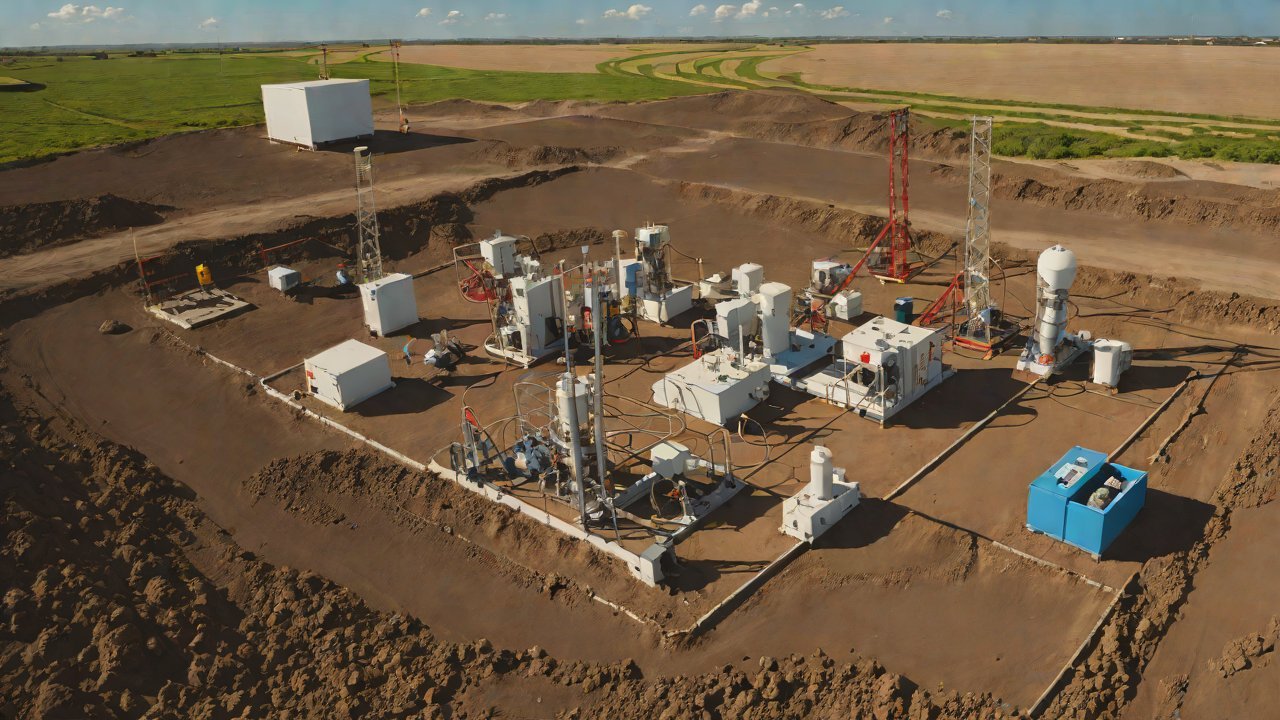
Case studies and field observations provide valuable insights into the performance of sensors under long-term deep burial conditions. For instance, a study on buried accelerometers in an oil well reported significant deformation after several years of operation.
| Sensor Type | Deformation (mm) | Time (years) |
|---|---|---|
| Accelerometer | 5-10 | 3-5 |
| Seismometer | 1-5 | 2-4 |
6. Experimental Methods and Validation
Experimental methods, such as laboratory testing and field trials, are essential for validating sensor deformation models and understanding the effects of soil pressure on sensors. These experiments can provide data on sensor deformation, material properties, and soil behavior under various conditions.
| Method | Advantages | Limitations |
|---|---|---|
| Laboratory Testing | Controlled environment, high accuracy | Limited scale, artificial conditions |
| Field Trials | Realistic conditions, large-scale testing | Difficult to control variables, data quality |
7. AIGC Technical Perspectives
AIGC (Artificial Intelligence and Geospatial Computing) technical perspectives offer innovative solutions for monitoring soil pressure and sensor deformation. For example, machine learning algorithms can be applied to sensor data to predict deformation and optimize sensor design.
| AIGC Technique | Application | Potential Benefits |
|---|---|---|
| Machine Learning | Predictive modeling, optimization | Improved accuracy, reduced costs |
8. Conclusion
Soil pressure is a critical factor in determining the performance of sensors under long-term deep burial conditions. Understanding soil properties, sensor materials and design, and deformation models is essential for designing robust sensors that can withstand harsh underground environments. Experimental methods and AIGC technical perspectives provide valuable insights into optimizing sensor performance and minimizing deformation caused by soil pressure.
9. Recommendations
Based on the analysis, we recommend:
- Conducting thorough laboratory testing and field trials to validate sensor deformation models and understand soil behavior under various conditions.
- Developing AIGC-based predictive modeling tools to optimize sensor design and minimize deformation.
- Investigating new materials and technologies that can enhance sensor durability and accuracy in harsh underground environments.
By following these recommendations, engineers and researchers can develop more reliable and accurate sensors for long-term deep burial applications, improving our understanding of the subsurface environment and its complex processes.
IOT Cloud Platform
IOT Cloud Platform is an IoT portal established by a Chinese IoT company, focusing on technical solutions in the fields of agricultural IoT, industrial IoT, medical IoT, security IoT, military IoT, meteorological IoT, consumer IoT, automotive IoT, commercial IoT, infrastructure IoT, smart warehousing and logistics, smart home, smart city, smart healthcare, smart lighting, etc.
The IoT Cloud Platform blog is a top IoT technology stack, providing technical knowledge on IoT, robotics, artificial intelligence (generative artificial intelligence AIGC), edge computing, AR/VR, cloud computing, quantum computing, blockchain, smart surveillance cameras, drones, RFID tags, gateways, GPS, 3D printing, 4D printing, autonomous driving, etc.



