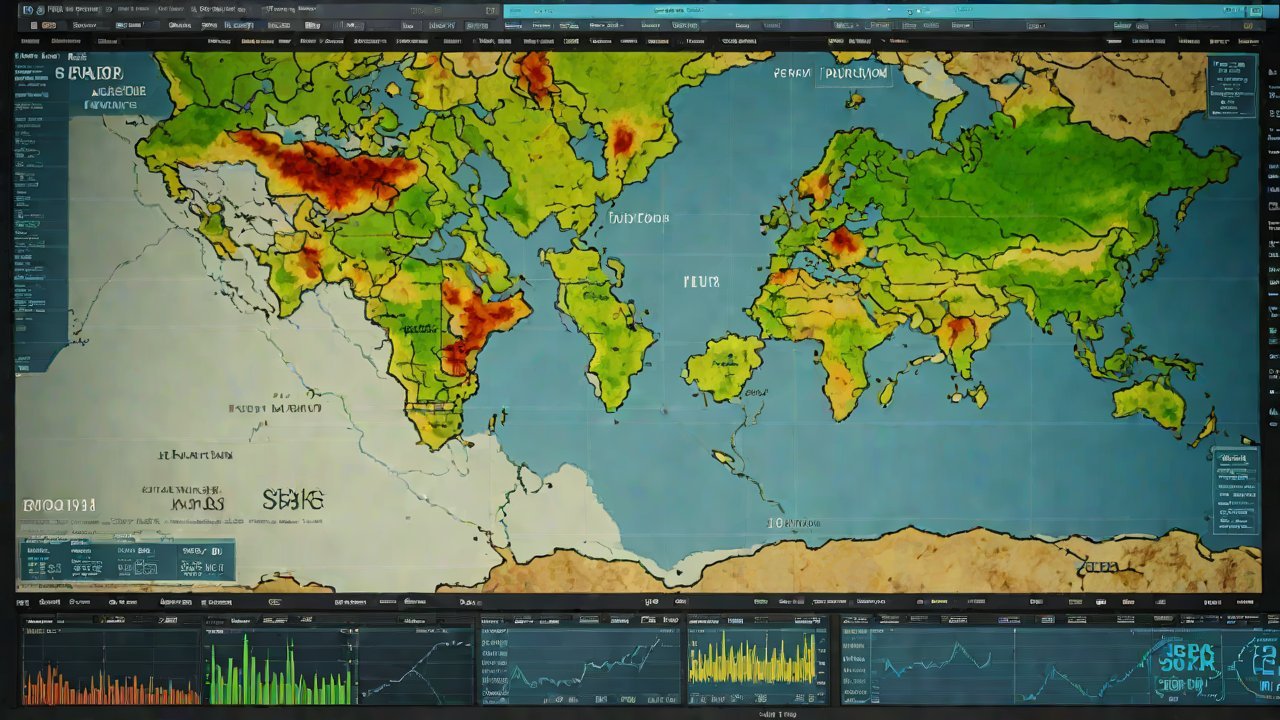
Will soil moisture forecasting models become trading chips in the agricultural futures market?
Soil moisture is a critical component of agricultural productivity, and its accurate prediction can have a significant impact on crop yields, water management, and ultimately, food security. The recent advancements in remote sensing technology, machine learning algorithms, and data analytics have enabled the development of sophisticated soil moisture forecasting models. These models can predict soil moisture levels with high accuracy, allowing farmers to make informed decisions about irrigation schedules, fertilizer application, and other critical agricultural practices.
The integration of these soil moisture forecasting models into the agricultural futures market is a concept that has garnered significant attention in recent years. The idea is that these models can provide valuable insights into crop yields, which can be used as inputs for derivatives trading in agricultural commodities. This could potentially create new revenue streams for farmers, traders, and other stakeholders involved in the agricultural supply chain.
1. Current State of Soil Moisture Forecasting Models
Soil moisture forecasting models typically rely on a combination of remote sensing data, such as satellite imagery and ground-based sensors, to predict soil moisture levels. These models can be divided into two main categories: empirical models and physically based models.
Empirical Models
| Model | Description |
|---|---|
| SMOS | Soil Moisture from Satellite (SMOS) uses microwave radiation to measure soil moisture |
| ASCAT | Advanced Scatterometer (ASCAT) uses radar signals to estimate soil moisture |
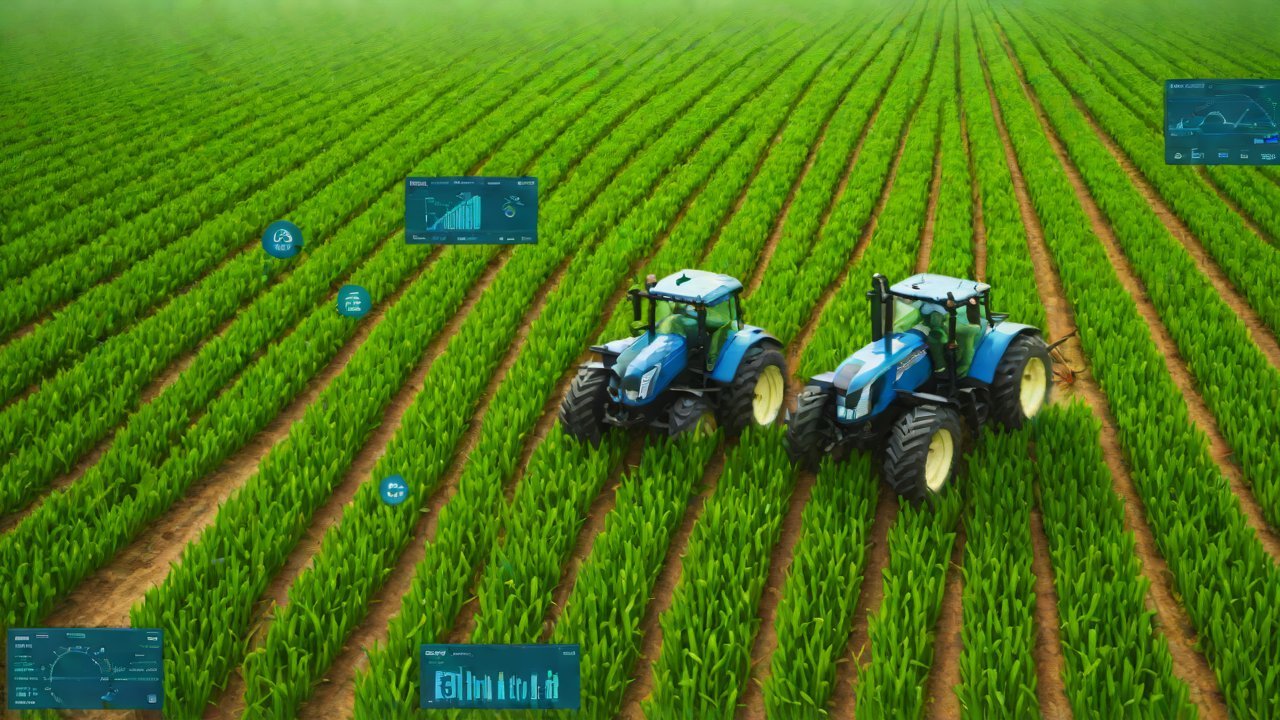
These models use statistical relationships between observed variables, such as temperature and precipitation, to predict soil moisture levels. While they are relatively simple to implement, they may not capture the underlying physical processes that govern soil moisture dynamics.
Physically Based Models
| Model | Description |
|---|---|
| SWAT | Soil and Water Assessment Tool (SWAT) simulates water balance and sediment yield in watersheds |
| WEPP | Water Erosion Prediction Project (WEPP) models soil erosion and runoff |
These models simulate the physical processes that govern soil moisture dynamics, such as infiltration, evaporation, and transpiration. While they are more complex to implement than empirical models, they can provide more accurate predictions of soil moisture levels.
2. Agricultural Futures Market Overview
The agricultural futures market is a subset of the broader commodity futures market, where traders buy and sell contracts based on the price of specific agricultural commodities, such as corn, soybeans, or wheat. The market operates through exchanges like the Chicago Mercantile Exchange (CME) and the Intercontinental Exchange (ICE), which provide a platform for trading derivatives contracts.
Key Players
| Company | Description |
|---|---|
| Cargill | One of the largest agricultural traders in the world, with operations in over 70 countries |
| Archer Daniels Midland (ADM) | A leading agricultural commodities trader and processor |
| Bunge Limited | A global agribusiness company that operates in the areas of oilseed processing, grain trade, and sugar production |

These companies, along with other market participants, engage in trading activities to manage risk, speculate on price movements, or take advantage of arbitrage opportunities.
3. Potential Applications of Soil Moisture Forecasting Models in the Agricultural Futures Market
The integration of soil moisture forecasting models into the agricultural futures market could have several potential applications:
- Risk Management: Farmers and traders can use these models to predict crop yields and adjust their production or trading strategies accordingly.
- Price Discovery: The models can provide valuable insights into supply and demand dynamics, which can be used to inform price-setting mechanisms in the futures market.
- Arbitrage Opportunities: Market participants can use the models to identify mispricings in the market and exploit them for profit.
4. Challenges and Limitations
While the integration of soil moisture forecasting models into the agricultural futures market is an exciting concept, several challenges and limitations need to be addressed:
- Data Quality and Availability: High-quality remote sensing data is required to train and validate these models, which can be expensive and difficult to obtain.
- Model Complexity and Interpretability: The models are often complex and difficult to interpret, making it challenging for market participants to understand their outputs.
- Regulatory Frameworks: Existing regulatory frameworks may not adequately address the use of soil moisture forecasting models in the futures market.
5. Future Directions
The integration of soil moisture forecasting models into the agricultural futures market is a rapidly evolving field, with several potential future directions:
- Advances in Remote Sensing Technology: Improved remote sensing technology can provide higher-resolution data and more accurate predictions of soil moisture levels.
- Development of More Sophisticated Models: Researchers are working on developing more sophisticated models that can capture the underlying physical processes governing soil moisture dynamics.
- Increased Adoption by Market Participants: As the benefits of these models become more apparent, market participants may increasingly adopt them as a tool for risk management and price discovery.
In conclusion, the integration of soil moisture forecasting models into the agricultural futures market has the potential to create new revenue streams for farmers, traders, and other stakeholders involved in the agricultural supply chain. However, several challenges and limitations need to be addressed before this concept can become a reality. As research and development continue to advance, we can expect to see more sophisticated models and increased adoption by market participants.
IOT Cloud Platform
IOT Cloud Platform is an IoT portal established by a Chinese IoT company, focusing on technical solutions in the fields of agricultural IoT, industrial IoT, medical IoT, security IoT, military IoT, meteorological IoT, consumer IoT, automotive IoT, commercial IoT, infrastructure IoT, smart warehousing and logistics, smart home, smart city, smart healthcare, smart lighting, etc.
The IoT Cloud Platform blog is a top IoT technology stack, providing technical knowledge on IoT, robotics, artificial intelligence (generative artificial intelligence AIGC), edge computing, AR/VR, cloud computing, quantum computing, blockchain, smart surveillance cameras, drones, RFID tags, gateways, GPS, 3D printing, 4D printing, autonomous driving, etc.



