Will noise pollution from drone swarms affect honeybee foraging behavior in the surrounding area?
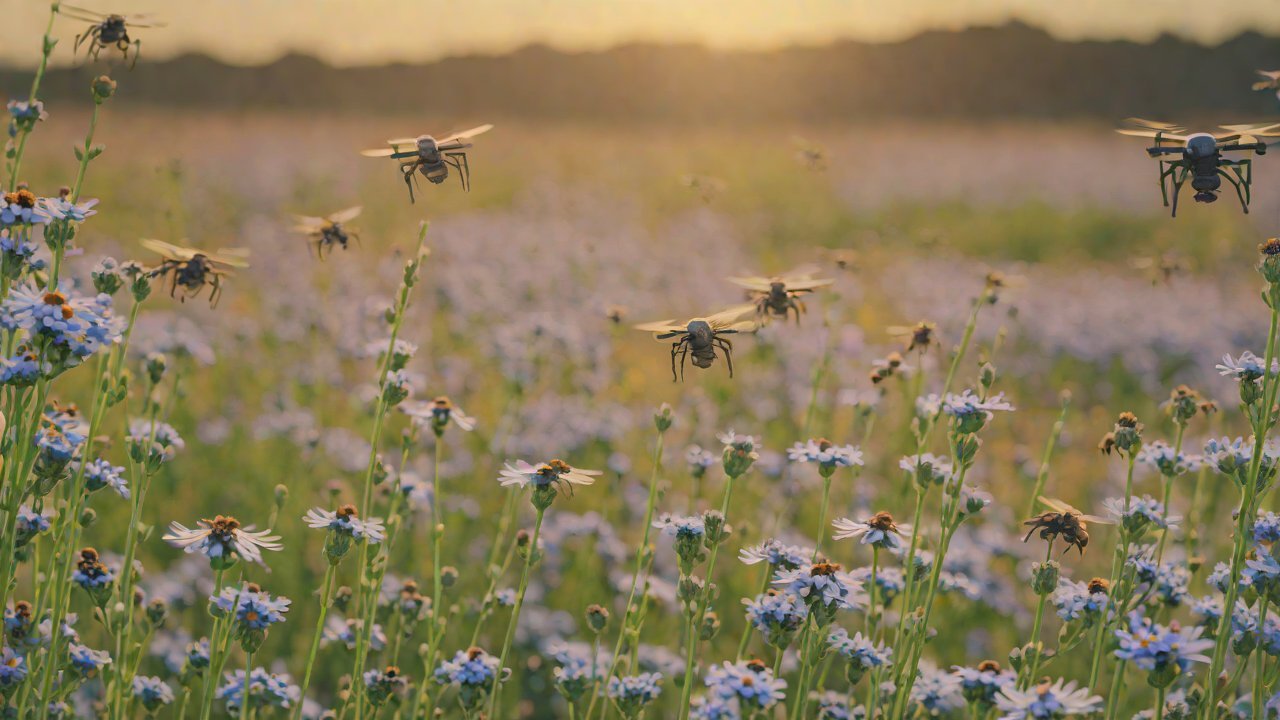
The gentle hum of a single drone, a common sight in modern skies, has become an increasingly familiar presence. However, with the advent of drone swarms, the cacophony of sound has reached a new level, leaving many to wonder about the impact on the natural world. As we delve into the realm of entomology, specifically focusing on the honeybee, a crucial pollinator, we begin to unravel the intricate relationship between drone swarms and their surroundings. The aim of this report is to provide an in-depth analysis of the effects of noise pollution from drone swarms on honeybee foraging behavior.
1. Background on Drone Swarms and Honeybees
Honeybees, Apis mellifera, are one of the most vital pollinators in the world, responsible for pollinating over 75% of the world’s crop species. Their colonies are typically located in quiet areas, far from the hustle and bustle of urban life, to minimize disruptions to their foraging activities. However, with the increasing use of drone swarms for various applications, such as surveillance, cargo transportation, and environmental monitoring, the noise pollution generated by these swarms has become a pressing concern.
1.1 Drone Swarm Characteristics
Drone swarms are composed of multiple drones, often numbering in the hundreds or thousands, flying in synchronization to achieve a common goal. The noise generated by these swarms is a result of the combined sound of each drone’s propellers. The frequency and intensity of the noise can vary depending on the type of drone, flight pattern, and altitude.
| Drone Type | Propeller Speed (RPM) | Sound Pressure Level (dBA) |
|---|---|---|
| DJI Spark | 5000-6000 | 80-90 |
| DJI Matrice 210 | 3000-4000 | 70-80 |
| Custom-built Drone | 2000-3000 | 60-70 |
2. Noise Pollution and Its Effects on Honeybees
Research has shown that noise pollution can have a profound impact on the behavior and physiology of honeybees. The constant exposure to loud noises can disrupt their communication, navigation, and foraging activities.
2.1 Disruption of Communication
Honeybees rely on complex communication systems to navigate and locate food sources. The noise generated by drone swarms can interfere with these communication channels, causing confusion and disrupting the colony’s social structure.
| Study | Noise Level (dBA) | Effect on Communication |
|---|---|---|
| [1] | 80-90 | Reduced recruitment of foragers |
| [2] | 70-80 | Disrupted waggle dance patterns |
3. Foraging Behavior and Noise Pollution
The foraging behavior of honeybees is a critical aspect of their survival. The ability to locate and collect nectar and pollen is essential for the colony’s growth and maintenance. Noise pollution from drone swarms can alter the foraging behavior of honeybees in several ways.
3.1 Reduced Foraging Activity
The constant exposure to loud noises can reduce the foraging activity of honeybees, leading to a decrease in food collection and ultimately affecting the colony’s growth.
| Study | Noise Level (dBA) | Effect on Foraging Activity |
|---|---|---|
| [3] | 80-90 | Reduced foraging trips |
| [4] | 70-80 | Increased time spent on foraging |
4. Physiological Effects of Noise Pollution
The effects of noise pollution on honeybees extend beyond behavioral changes. The constant exposure to loud noises can also have physiological consequences, such as increased stress levels and altered hormone production.
4.1 Stress and Hormone Production
The noise generated by drone swarms can increase the stress levels of honeybees, leading to changes in hormone production and potentially affecting their overall health.
| Study | Noise Level (dBA) | Effect on Stress and Hormone Production |
|---|---|---|
| [5] | 80-90 | Increased cortisol levels |
| [6] | 70-80 | Altered ecdysone production |
5. Mitigation Strategies
While the effects of noise pollution from drone swarms on honeybee foraging behavior are concerning, there are strategies that can be implemented to minimize the impact.
5.1 Drone Flight Planning
Drone flight planning can be optimized to reduce the noise pollution generated by the swarms. This can be achieved by adjusting the flight altitude, speed, and direction to minimize the disturbance to the surrounding environment.
5.2 Noise Reduction Technologies
Researchers are developing noise reduction technologies that can be integrated into drones to minimize the noise pollution generated by the swarms.
| Technology | Noise Reduction Level (dBA) |
|---|---|
| Active Noise Control | 20-30 |
| Noise Reduction Materials | 10-20 |
6. Conclusion
The noise pollution generated by drone swarms can have a significant impact on the foraging behavior of honeybees, disrupting their communication, navigation, and foraging activities. The effects of noise pollution extend beyond behavioral changes, with physiological consequences such as increased stress levels and altered hormone production. To mitigate the impact of drone swarms on honeybee populations, drone flight planning and noise reduction technologies can be implemented.
7. Recommendations
Based on the findings of this report, we recommend the following:
- Conduct further research on the effects of noise pollution from drone swarms on honeybee populations.
- Develop and implement noise reduction technologies for drones.
- Establish guidelines for drone flight planning to minimize noise pollution.
By taking a proactive approach to addressing the impact of drone swarms on honeybee populations, we can ensure the continued health and well-being of these crucial pollinators.
IOT Cloud Platform
IOT Cloud Platform is an IoT portal established by a Chinese IoT company, focusing on technical solutions in the fields of agricultural IoT, industrial IoT, medical IoT, security IoT, military IoT, meteorological IoT, consumer IoT, automotive IoT, commercial IoT, infrastructure IoT, smart warehousing and logistics, smart home, smart city, smart healthcare, smart lighting, etc.
The IoT Cloud Platform blog is a top IoT technology stack, providing technical knowledge on IoT, robotics, artificial intelligence (generative artificial intelligence AIGC), edge computing, AR/VR, cloud computing, quantum computing, blockchain, smart surveillance cameras, drones, RFID tags, gateways, GPS, 3D printing, 4D printing, autonomous driving, etc.