Will future greenhouses possess metabolic sensing capabilities like living organisms?
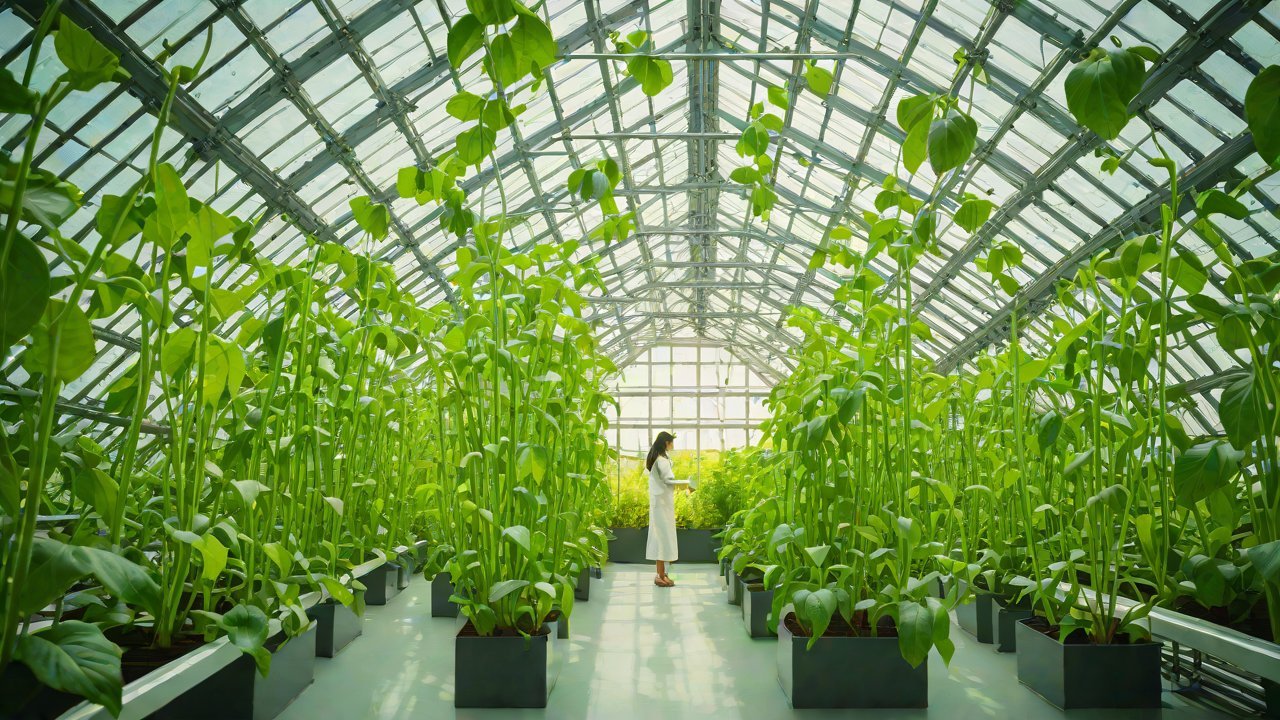
As we venture into the uncharted territories of sustainable agriculture, the notion of greenhouses evolving to mimic the intricate metabolic processes of living organisms is no longer a distant fantasy. The convergence of cutting-edge technologies, such as artificial intelligence, Internet of Things (IoT), and precision agriculture, is poised to revolutionize the way we cultivate crops. The future of greenhouses is not just about controlling temperature, humidity, and light; it’s about creating ecosystems that can adapt, respond, and learn from their environment, much like living beings.
1. The Metabolic Sensing Paradigm
Metabolic sensing, a term borrowed from biology, refers to the ability of an organism to monitor and respond to changes in its internal and external environment. In the context of greenhouses, this paradigm involves developing systems that can continuously monitor various parameters, such as temperature, humidity, light intensity, nutrient levels, and pest/disease presence, and adjust their responses accordingly. This holistic approach to agriculture is crucial for optimizing crop yields, reducing waste, and minimizing the environmental footprint of farming practices.
Key Benefits
| Benefit | Description |
|---|---|
| 1. Increased crop yields | By creating optimal growing conditions, greenhouses can increase crop yields and reduce waste. |
| 2. Improved resource allocation | Metabolic sensing capabilities enable greenhouses to allocate resources more efficiently, reducing energy consumption and minimizing waste. |
| 3. Enhanced crop quality | By monitoring and controlling factors such as temperature, humidity, and light, greenhouses can improve crop quality and reduce the risk of disease and pests. |
| 4. Reduced environmental impact | The adoption of metabolic sensing capabilities in greenhouses can lead to a reduction in the environmental impact of farming practices, including greenhouse gas emissions and water usage. |

2. Enabling Technologies
The development of metabolic sensing capabilities in greenhouses is enabled by several key technologies:
1. IoT and Sensor Systems
IoT sensors and monitoring systems provide real-time data on various parameters, such as temperature, humidity, light intensity, and nutrient levels. This data is transmitted to a central control system, which can then make adjustments to optimize growing conditions.
2. Artificial Intelligence and Machine Learning
AI and ML algorithms are used to analyze data from IoT sensors, identify patterns, and make predictions about future conditions. This enables greenhouses to anticipate and respond to changes in their environment, much like living organisms.
3. Precision Agriculture
Precision agriculture involves using data and analytics to optimize crop yields, reduce waste, and minimize the environmental impact of farming practices. This approach is critical for the development of metabolic sensing capabilities in greenhouses.
3. Market Trends and Forecasts
The market for greenhouses and precision agriculture is growing rapidly, driven by increasing demand for sustainable and efficient agricultural practices. According to a report by MarketsandMarkets, the global greenhouse market is expected to reach $12.8 billion by 2025, growing at a CAGR of 10.2% from 2020 to 2025.
Market Size and Growth Rate
| Market | Size (2020) | Growth Rate (2020-2025) | Size (2025) |
|---|---|---|---|
| Greenhouse market | $4.2 billion | 10.2% | $12.8 billion |
| Precision agriculture market | $15.1 billion | 12.5% | $31.4 billion |

4. AIGC (Artificial Intelligence and General Cognitive) Perspectives
The development of metabolic sensing capabilities in greenhouses is closely tied to the advancement of AIGC technologies. As AIGC continues to evolve, we can expect to see more sophisticated and autonomous systems that can learn, adapt, and respond to changing conditions in real-time.
Key AIGC Applications
| Application | Description |
|---|---|
| 1. Predictive maintenance | AIGC can analyze data from sensors and predict when maintenance is required, reducing downtime and increasing efficiency. |
| 2. Automated decision-making | AIGC can make decisions in real-time, based on data and analytics, to optimize growing conditions and reduce waste. |
| 3. Autonomous systems | AIGC can enable the development of autonomous systems that can learn, adapt, and respond to changing conditions in real-time. |

5. Challenges and Limitations
While the development of metabolic sensing capabilities in greenhouses is promising, there are several challenges and limitations that must be addressed:
Key Challenges
| Challenge | Description |
|---|---|
| 1. Data quality and accuracy | Ensuring the accuracy and reliability of data from sensors and monitoring systems is critical for the development of metabolic sensing capabilities. |
| 2. Scalability and cost-effectiveness | Developing metabolic sensing capabilities that are scalable and cost-effective is essential for widespread adoption. |
| 3. Integration with existing systems | Integrating metabolic sensing capabilities with existing greenhouse management systems can be a significant challenge. |
6. Conclusion
The development of metabolic sensing capabilities in greenhouses is a critical step towards creating sustainable and efficient agricultural practices. By leveraging technologies such as IoT, AI, and ML, greenhouses can be designed to mimic the intricate metabolic processes of living organisms. While there are challenges and limitations to be addressed, the potential benefits of metabolic sensing capabilities in greenhouses are significant, and we can expect to see rapid growth in this area in the coming years.
IOT Cloud Platform
IOT Cloud Platform is an IoT portal established by a Chinese IoT company, focusing on technical solutions in the fields of agricultural IoT, industrial IoT, medical IoT, security IoT, military IoT, meteorological IoT, consumer IoT, automotive IoT, commercial IoT, infrastructure IoT, smart warehousing and logistics, smart home, smart city, smart healthcare, smart lighting, etc.
The IoT Cloud Platform blog is a top IoT technology stack, providing technical knowledge on IoT, robotics, artificial intelligence (generative artificial intelligence AIGC), edge computing, AR/VR, cloud computing, quantum computing, blockchain, smart surveillance cameras, drones, RFID tags, gateways, GPS, 3D printing, 4D printing, autonomous driving, etc.