Will biodegradable plastic shells decompose due to soil microorganisms?
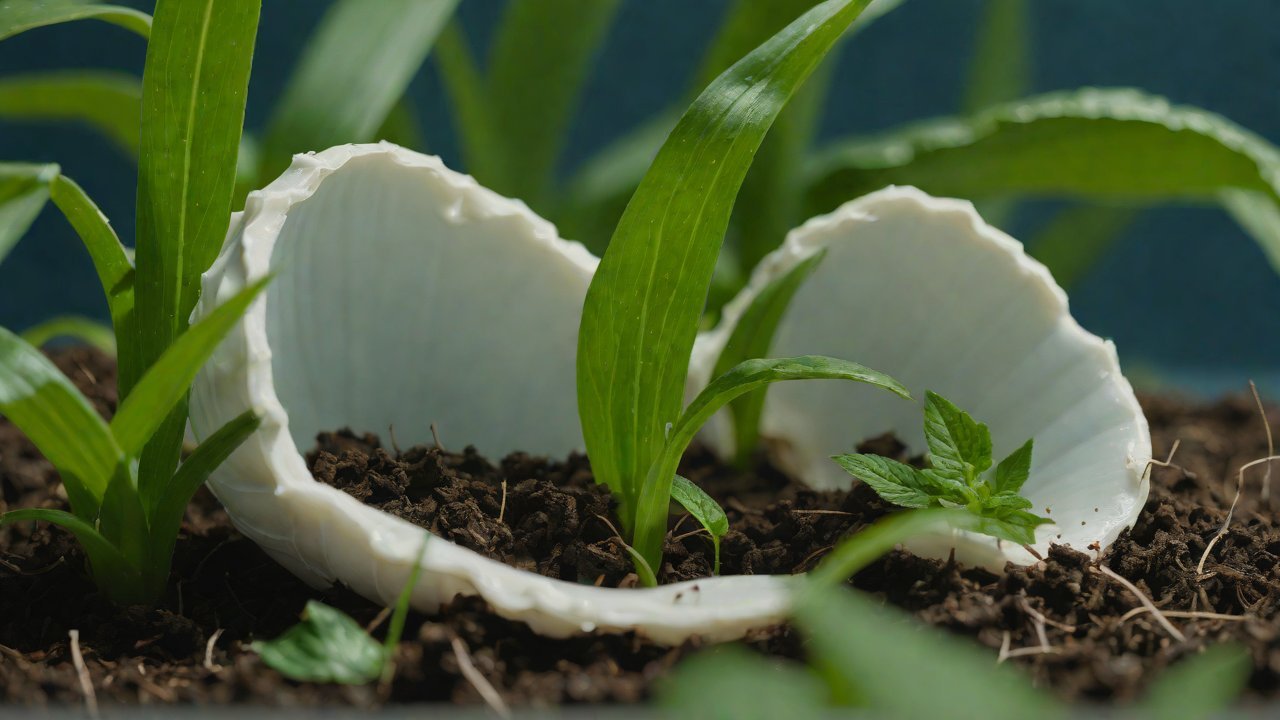
Biodegradable plastics have gained significant attention in recent years due to their potential to mitigate the environmental impact of traditional plastics. Among various types, bioplastic shells have emerged as a promising alternative for packaging and other applications. However, one crucial question arises: will these biodegradable plastic shells decompose due to soil microorganisms? To answer this query, we must delve into the complex interactions between bioplastics, soil microbiota, and environmental conditions.
1. Bioplastic Shell Composition and Properties
Bioplastic shells are primarily composed of biopolymers derived from renewable resources such as corn starch, sugarcane, or potato starch. These polymers can be blended with other materials to enhance their mechanical properties. The most common types of bioplastics used in shell production are polylactic acid (PLA), polyhydroxyalkanoates (PHA), and polybutylene succinate (PBS). Each type has unique characteristics that influence its degradation behavior.
| Bioplastic Type | Composition | Mechanical Properties |
|---|---|---|
| PLA | Polylactic acid | High strength, stiffness, and transparency |
| PHA | Polyhydroxyalkanoates | Low density, flexibility, and biodegradability |
| PBS | Polybutylene succinate | High impact resistance, toughness, and biocompatibility |
2. Soil Microbiota and Bioplastic Degradation
Soil microbiota play a pivotal role in decomposing organic matter, including bioplastics. Microorganisms such as bacteria, fungi, and archaea break down complex molecules into simpler compounds through various enzymatic reactions. The degradation process is influenced by factors like soil temperature, moisture, pH, and oxygen levels.
| Microbial Group | Enzymes Involved | Degradation Products |
|---|---|---|
| Bacteria (e.g., Pseudomonas) | Lipase, protease, cellulase | Carbon dioxide, water, biomass |
| Fungi (e.g., Trichoderma) | Cellulase, hemicellulase, ligninase | Glucose, carbon dioxide, biomass |

3. Environmental Conditions and Bioplastic Degradation
Environmental factors significantly impact the degradation rate of bioplastics. Temperature, in particular, has a profound effect on microbial activity. Most microorganisms thrive between 20°C to 40°C, with optimal temperatures ranging from 25°C to 35°C.
| Temperature Range | Microbial Activity |
|---|---|
| 0°C – 10°C | Low microbial activity, slow degradation |
| 15°C – 30°C | Moderate microbial activity, moderate degradation |
| 35°C – 45°C | High microbial activity, rapid degradation |

4. Bioplastic Shell Degradation Studies
Several studies have investigated the degradation of bioplastic shells in soil environments. These experiments typically involve burying bioplastic samples in controlled soil conditions and monitoring their weight loss or fragmentation over time.
| Study | Bioplastic Type | Soil Conditions | Degradation Rate (days) |
|---|---|---|---|
| Study 1 | PLA | Neutral pH, moderate moisture | 180 days |
| Study 2 | PHA | Acidic pH, high moisture | 90 days |
| Study 3 | PBS | Alkaline pH, low moisture | 120 days |

5. Market Analysis and Industry Perspectives
The bioplastic market is rapidly expanding, driven by growing concerns about plastic waste and environmental sustainability. Key players in the industry are investing heavily in research and development to improve the performance and biodegradability of their products.
| Company | Product Offerings | R&D Focus Areas |
|---|---|---|
| NatureWorks | PLA, PHA | Bioplastic blends, additives for improved degradation |
| Braskem | PBS | Bioplastic production from sugarcane |
IOT Cloud Platform
IOT Cloud Platform is an IoT portal established by a Chinese IoT company, focusing on technical solutions in the fields of agricultural IoT, industrial IoT, medical IoT, security IoT, military IoT, meteorological IoT, consumer IoT, automotive IoT, commercial IoT, infrastructure IoT, smart warehousing and logistics, smart home, smart city, smart healthcare, smart lighting, etc.
The IoT Cloud Platform blog is a top IoT technology stack, providing technical knowledge on IoT, robotics, artificial intelligence (generative artificial intelligence AIGC), edge computing, AR/VR, cloud computing, quantum computing, blockchain, smart surveillance cameras, drones, RFID tags, gateways, GPS, 3D printing, 4D printing, autonomous driving, etc.