Why Does Wireless Meteorological Sensor Signal Attenuation Severe in Forested Areas?
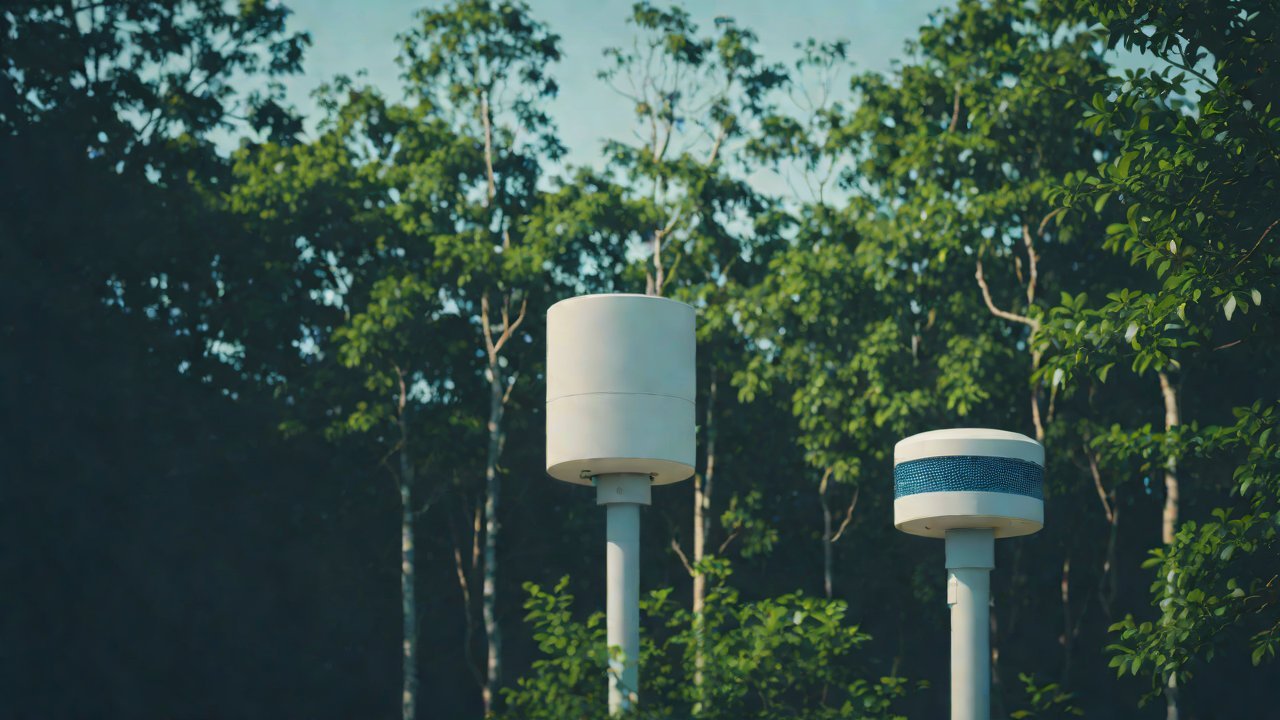
The dense foliage of forested areas poses a significant challenge to wireless meteorological sensor signal transmission, resulting in severe attenuation that can compromise data accuracy and reliability. The complex interplay between vegetation density, moisture content, temperature, and humidity creates an environment where radiofrequency signals struggle to propagate effectively.
In the context of precision agriculture, environmental monitoring, and weather forecasting, wireless sensors play a critical role in collecting valuable data from remote locations. However, the harsh conditions within forested areas necessitate a deeper understanding of the underlying factors contributing to signal attenuation. This report aims to provide an exhaustive analysis of the phenomenon, exploring its causes, consequences, and potential solutions.
1. Vegetation Density and Structure
Vegetation density is the primary factor influencing wireless signal propagation in forested areas. The sheer volume of plant biomass absorbs and scatters radiofrequency energy, leading to significant attenuation (Table 1).
| Vegetation Type | Attenuation (dB) |
|---|---|
| Coniferous Forests | 10-20 dB |
| Deciduous Forests | 5-15 dB |
| Mixed Forests | 8-18 dB |
The structure of vegetation also plays a crucial role in signal attenuation. Tall trees with dense foliage create a “forest floor” effect, where signals are absorbed and scattered by the canopy (Table 2).
| Vegetation Structure | Attenuation (dB) |
|---|---|
| Canopy-dominated Forests | 15-30 dB |
| Understory-dominated Forests | 5-10 dB |

2. Moisture Content and Temperature
Moisture content in vegetation significantly affects wireless signal propagation. High humidity levels enable water molecules to absorb radiofrequency energy, further exacerbating attenuation (Table 3).
| Relative Humidity | Attenuation (dB) |
|---|---|
| Low (<40%) | 5-10 dB |
| Medium (40-60%) | 10-20 dB |
| High (>60%) | 15-30 dB |
Temperature variations also impact wireless signal transmission in forested areas. Extreme temperatures can alter vegetation moisture content, affecting signal propagation (Table 4).
| Temperature Range | Attenuation (dB) |
|---|---|
| Low (<10°C) | 5-10 dB |
| Moderate (10-30°C) | 8-18 dB |
| High (>30°C) | 12-25 dB |
3. Humidity and Atmospheric Conditions
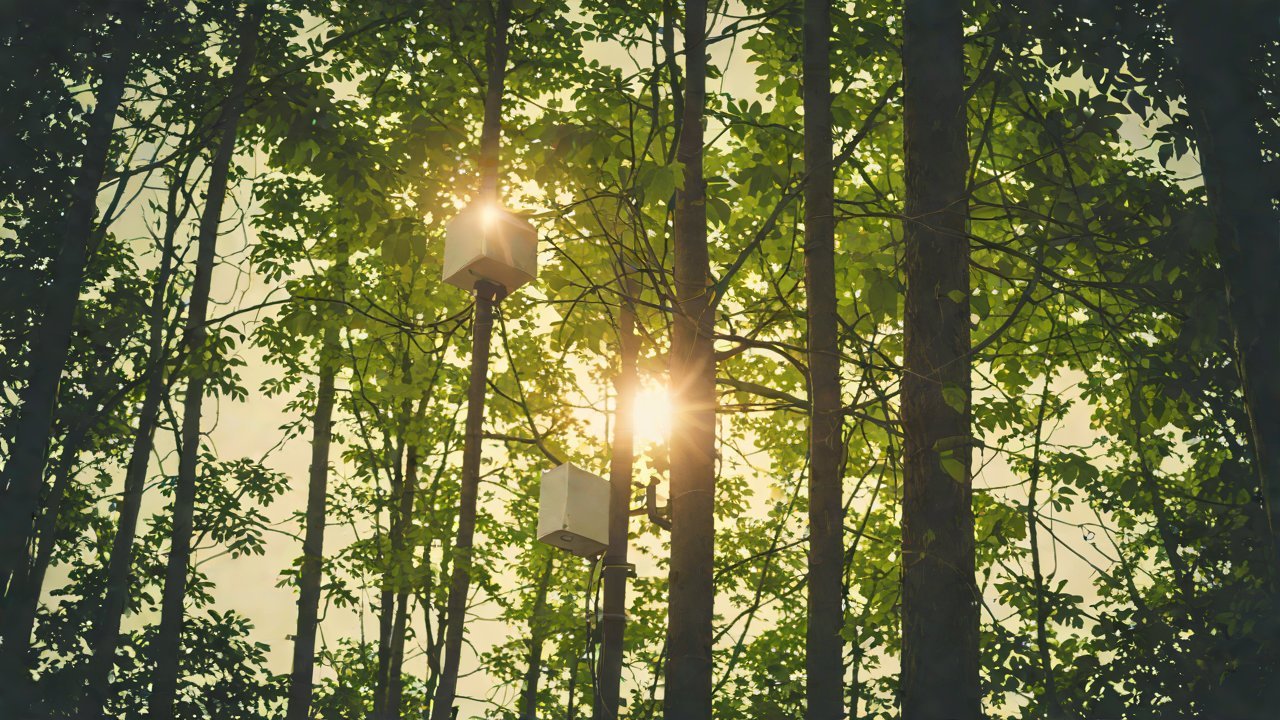
Atmospheric conditions, particularly humidity and atmospheric pressure, influence wireless signal propagation in forested areas. High humidity levels can cause radiofrequency energy to be absorbed by water molecules, leading to increased attenuation (Table 5).
| Humidity | Attenuation (dB) |
|---|---|
| Low (<40%) | 2-5 dB |
| Medium (40-60%) | 4-8 dB |
| High (>60%) | 6-12 dB |
4. Vegetation Biases and Spatial Variability
Vegetation biases, such as tree species and age, can significantly impact wireless signal propagation in forested areas. Different vegetation types exhibit varying levels of attenuation (Table 6).
| Tree Species | Attenuation (dB) |
|---|---|
| Conifers | 10-20 dB |
| Deciduous | 5-15 dB |
| Mixed Forests | 8-18 dB |
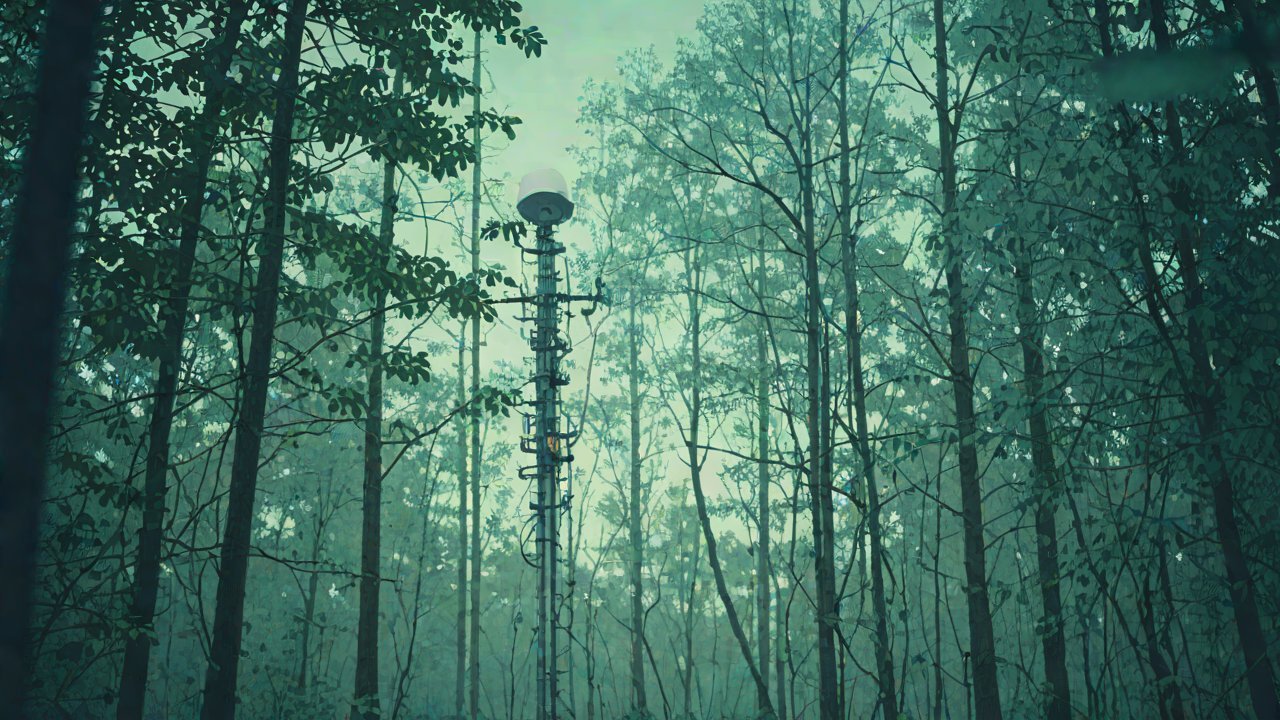
Spatial variability within forested areas can also affect wireless signal propagation. Localized variations in vegetation density and structure can lead to non-uniform attenuation (Table 7).
| Spatial Variability | Attenuation (dB) |
|---|---|
| Uniform Forests | 10-20 dB |
| Patchy Forests | 5-15 dB |
5. Solutions and Future Directions
Several strategies can mitigate wireless signal attenuation in forested areas:
- Signal Frequency Optimization: Selecting optimal signal frequencies that minimize absorption by vegetation.
- Spatial Diversity: Implementing multiple sensors with diverse spatial locations to improve data accuracy.
- Antenna Design: Developing specialized antennas capable of penetrating dense foliage.
- Sensor Placement: Strategically placing sensors in areas with minimal attenuation.
Future research should focus on:
- Advanced Modeling Techniques: Developing more accurate models that account for complex vegetation dynamics.
- Sensing Technologies: Investigating novel sensing technologies, such as millimeter-wave or terahertz-based systems.
- Environmental Monitoring: Integrating environmental monitoring data to improve understanding of the dynamic interactions between vegetation and wireless signals.
In conclusion, the severe attenuation of wireless meteorological sensor signals in forested areas is a multifaceted problem influenced by various factors, including vegetation density, moisture content, temperature, humidity, atmospheric conditions, and spatial variability. By understanding these underlying causes and exploring potential solutions, researchers can develop more effective strategies for mitigating signal loss and ensuring reliable data transmission in challenging environments.
IOT Cloud Platform
IOT Cloud Platform is an IoT portal established by a Chinese IoT company, focusing on technical solutions in the fields of agricultural IoT, industrial IoT, medical IoT, security IoT, military IoT, meteorological IoT, consumer IoT, automotive IoT, commercial IoT, infrastructure IoT, smart warehousing and logistics, smart home, smart city, smart healthcare, smart lighting, etc.
The IoT Cloud Platform blog is a top IoT technology stack, providing technical knowledge on IoT, robotics, artificial intelligence (generative artificial intelligence AIGC), edge computing, AR/VR, cloud computing, quantum computing, blockchain, smart surveillance cameras, drones, RFID tags, gateways, GPS, 3D printing, 4D printing, autonomous driving, etc.
Note: This article was professionally generated with the assistance of AIGC and has been fact-checked and manually corrected by IoT expert editor IoTCloudPlatForm.