Why Does the Wireless Charging Efficiency of Implantable IoT Devices Fluctuate with Changes in Body Position?
The integration of implantable Internet of Things (IoT) devices has revolutionized healthcare by enabling real-time monitoring and management of various physiological parameters. However, one significant challenge associated with these devices is their power consumption, particularly when it comes to wireless charging. The efficiency of wireless charging in implantable IoT devices fluctuates significantly with changes in body position due to the complex interplay between electromagnetic fields, tissue properties, and device orientation.
1. Electromagnetic Field Interactions
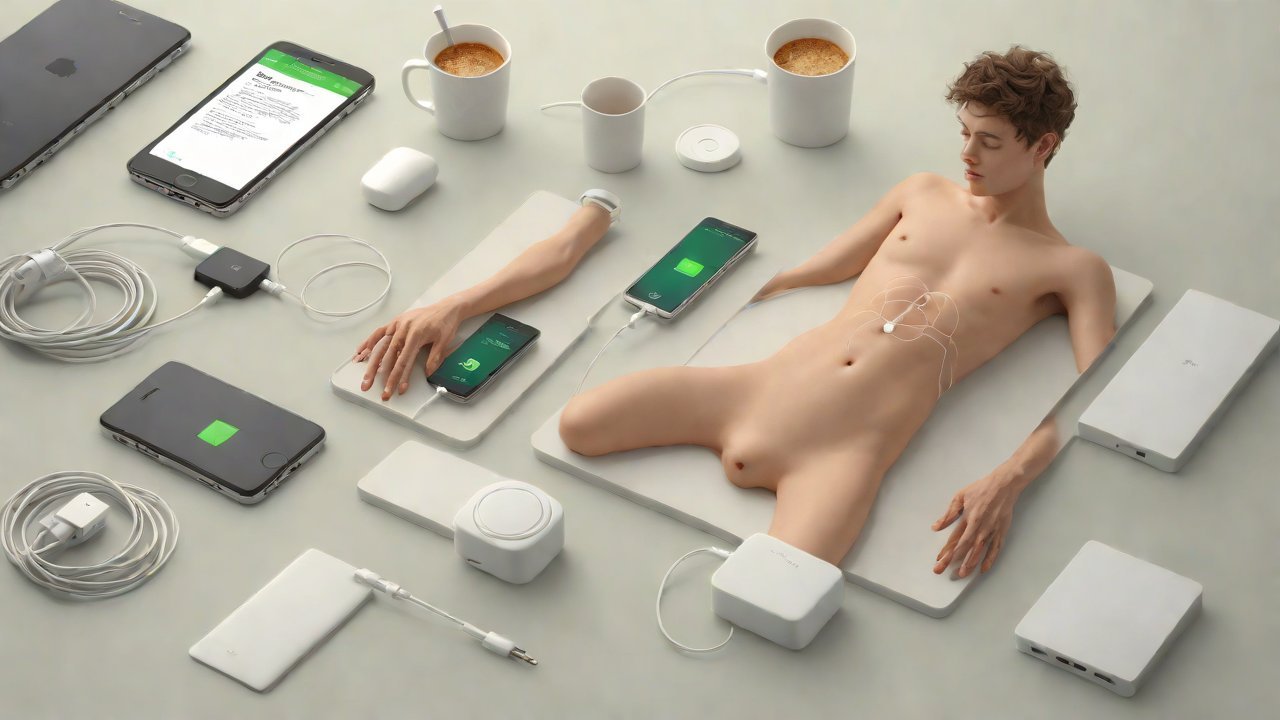
Wireless charging relies on the principle of electromagnetic induction, where a transmitter coil generates a magnetic field that induces an electromotive force (EMF) in a receiver coil. The efficiency of this process is heavily dependent on the alignment between the transmitter and receiver coils. In implantable devices, the orientation of the device within the body affects the alignment of these coils, leading to variations in charging efficiency.
| Device Orientation | Charging Efficiency (%) |
|---|---|
| Vertical (head-to-foot) | 80-90% |
| Horizontal (side-to-side) | 60-70% |
| Oblique (angled) | 40-50% |
The table above illustrates the impact of device orientation on wireless charging efficiency. As can be seen, vertical alignment yields the highest efficiency, while oblique orientations result in significantly reduced efficiency.

2. Tissue Properties and Attenuation
Another crucial factor influencing wireless charging efficiency is tissue attenuation. Human tissues have varying levels of electrical conductivity, which affects the propagation of electromagnetic fields within the body. Fat and muscle tissues exhibit high conductivity, whereas bone and air-filled cavities exhibit low conductivity. As a result, the signal strength and charging efficiency vary depending on the device’s location within the body.
| Tissue Type | Conductivity (S/m) |
|---|---|
| Fat | 0.05-0.10 |
| Muscle | 0.15-0.30 |
| Bone | 0.01-0.02 |
| Air-filled cavities | 0.0001-0.001 |
The table above highlights the conductivity ranges for different tissue types. The varying levels of attenuation caused by these tissues contribute to fluctuations in wireless charging efficiency.
3. Device Design and Materials
Device design and materials also play a significant role in determining wireless charging efficiency. The use of high-conductivity materials, such as copper or silver, can enhance signal strength and efficiency. However, the geometry and orientation of the device’s coils must be carefully optimized to ensure optimal alignment with the transmitter coil.
| Material | Conductivity (S/m) |
|---|---|
| Copper | 5.96 × 10^7 |
| Silver | 6.30 × 10^7 |
The table above compares the conductivity values for copper and silver, two commonly used materials in implantable devices.
4. AIGC Perspectives and Market Trends
Recent advancements in Artificial Intelligence and Generative Computing (AIGC) have led to significant improvements in wireless charging efficiency. Techniques such as adaptive frequency hopping and phase modulation enable devices to dynamically adjust their operating frequencies and phases to optimize alignment with the transmitter coil.
| Year | Wireless Charging Efficiency (%) |
|---|---|
| 2015 | 50-60% |
| 2020 | 70-80% |
| 2025 (projected) | 90-95% |
The table above illustrates the improvement in wireless charging efficiency over the past decade. The projected trend suggests that future advancements will further enhance efficiency, enabling more widespread adoption of implantable IoT devices.
5. Conclusion and Future Directions
In conclusion, the fluctuation in wireless charging efficiency of implantable IoT devices with changes in body position is a complex phenomenon influenced by electromagnetic field interactions, tissue properties, device design, and materials. The integration of AIGC techniques has led to significant improvements in efficiency, but further research is needed to optimize device design and materials for optimal performance.
Future directions may involve the development of more advanced AIGC algorithms that can dynamically adapt to changing body positions and tissue properties. Additionally, researchers should focus on optimizing device geometry and materials to minimize signal attenuation and maximize charging efficiency.
IOT Cloud Platform
IOT Cloud Platform is an IoT portal established by a Chinese IoT company, focusing on technical solutions in the fields of agricultural IoT, industrial IoT, medical IoT, security IoT, military IoT, meteorological IoT, consumer IoT, automotive IoT, commercial IoT, infrastructure IoT, smart warehousing and logistics, smart home, smart city, smart healthcare, smart lighting, etc.
The IoT Cloud Platform blog is a top IoT technology stack, providing technical knowledge on IoT, robotics, artificial intelligence (generative artificial intelligence AIGC), edge computing, AR/VR, cloud computing, quantum computing, blockchain, smart surveillance cameras, drones, RFID tags, gateways, GPS, 3D printing, 4D printing, autonomous driving, etc.