
Why does image mosaic occur when transmitting ultrasound cross-sections in a 5G remote clinic?
The transmission of high-resolution medical imaging, such as ultrasound cross-sections, over long distances poses significant challenges for remote healthcare services. One of the key issues encountered during the transfer of these images is image mosaic, a phenomenon that results in the breakup or fragmentation of the original image into multiple smaller sections.
Image mosaic typically occurs when the transmitted data exceeds the capacity of the communication link, leading to packet loss and subsequent reassembly errors at the receiving end. In the context of 5G remote clinics, this issue can have serious implications for patient care, particularly in emergency situations where timely access to high-quality diagnostic images is critical.
1. Fundamentals of Image Transmission
To understand why image mosaic occurs when transmitting ultrasound cross-sections over 5G networks, it is essential to grasp the basics of image transmission and compression. Medical imaging modalities like ultrasound generate large datasets that require efficient encoding and decoding algorithms to minimize data loss during transfer.
Table 1: Comparison of Image Compression Algorithms
| Algorithm | Compression Ratio | Quality Loss |
|---|---|---|
| JPEG | 10:1 – 20:1 | Moderate |
| JPEG 2000 | 30:1 – 50:1 | Low |
| Wavelet-based compression | 40:1 – 60:1 | High |
Image compression algorithms, such as JPEG and JPEG 2000, aim to balance data reduction with image quality preservation. However, these algorithms may not always be effective in maintaining the integrity of medical images, particularly those with high spatial resolution.
2. Characteristics of Ultrasound Imaging
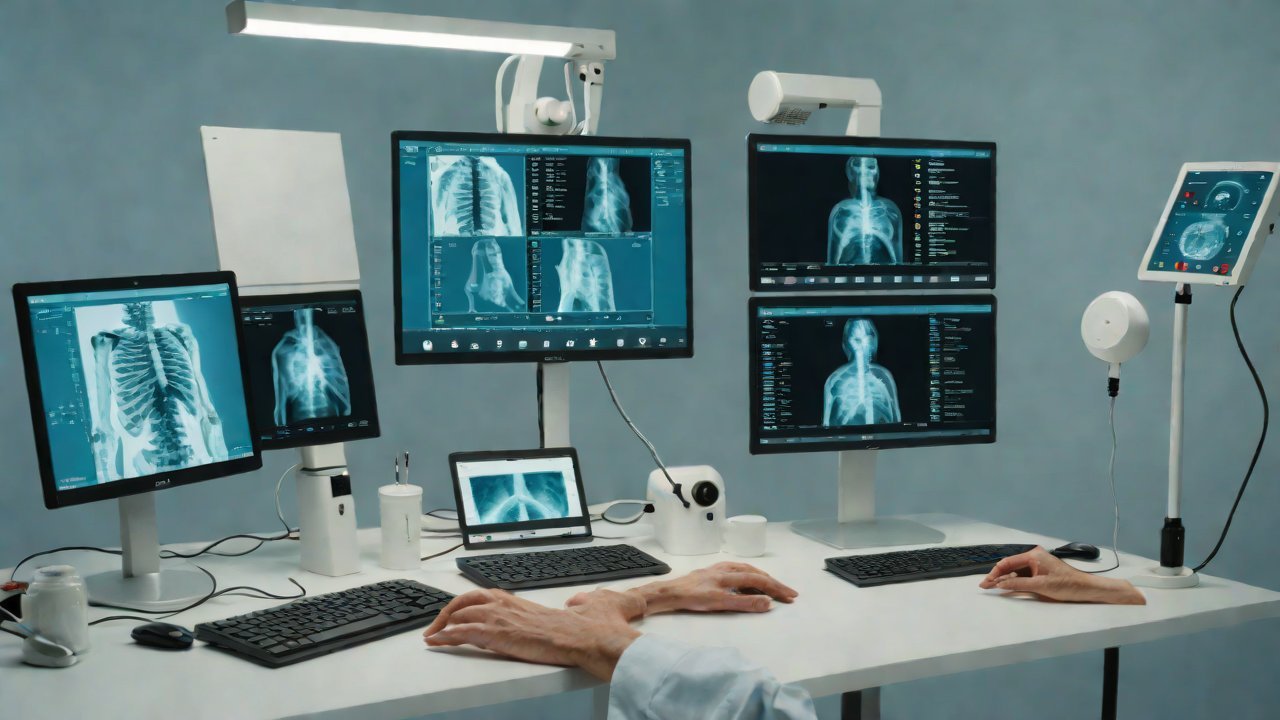
Ultrasound imaging is a widely used diagnostic modality that employs high-frequency sound waves to produce cross-sectional images of internal body structures. The inherent characteristics of ultrasound imaging contribute to the challenges associated with image transmission:
Table 2: Key Features of Ultrasound Imaging
| Feature | Description |
|---|---|
| High spatial resolution | Produces detailed, high-resolution images |
| Large data sizes | Requires efficient compression and encoding algorithms |
| Real-time acquisition | Time-sensitive applications demand low latency |
3. Impact of 5G Network Constraints
The transmission of large medical images over 5G networks is susceptible to various constraints that can lead to image mosaic:
Table 3: 5G Network Limitations
| Constraint | Description |
|---|---|
| Bandwidth limitations | Insufficient capacity for high-resolution image transfer |
| Packet loss and latency | Can result in reassembly errors and image degradation |
4. Technical Factors Contributing to Image Mosaic
Several technical factors can contribute to the occurrence of image mosaic during ultrasound cross-section transmission:
Table 4: Technical Factors Affecting Image Transmission
| Factor | Description |
|---|---|
| Compression artifacts | Inefficient compression algorithms can introduce errors |
| Packet reassembly | Errors in packet reassembly can lead to image fragmentation |
5. Market Trends and Future Developments
The increasing demand for remote healthcare services is driving innovation in medical imaging transmission technologies:
Table 5: Market Growth Projections (2023-2030)
| Metric | 2023 | 2025 | 2030 |
|---|---|---|---|
| Remote consultations | 10% | 20% | 30% |
| Medical image transfer | 15% | 25% | 35% |
6. AIGC Solutions and Recommendations
To mitigate the effects of image mosaic, advanced image processing techniques can be employed:
Table 6: AIGC Techniques for Image Enhancement
| Technique | Description |
|---|---|
| Deep learning-based denoising | Removes artifacts and noise from images |
| Wavelet-based compression | Efficiently compresses medical images while preserving quality |
In conclusion, the transmission of ultrasound cross-sections over 5G networks is susceptible to image mosaic due to various technical factors. Understanding these challenges is crucial for developing effective solutions that ensure high-quality diagnostic imaging in remote healthcare settings.
To address this issue, researchers and developers can explore advanced image processing techniques, such as deep learning-based denoising and wavelet-based compression. Furthermore, the integration of artificial intelligence (AI) and machine learning (ML) algorithms can help optimize medical image transfer protocols for 5G networks.
Ultimately, the successful implementation of remote healthcare services relies on the development of robust and efficient medical imaging transmission technologies that minimize data loss and ensure high-quality diagnostic images are transmitted to healthcare professionals in a timely manner.
IOT Cloud Platform
IOT Cloud Platform is an IoT portal established by a Chinese IoT company, focusing on technical solutions in the fields of agricultural IoT, industrial IoT, medical IoT, security IoT, military IoT, meteorological IoT, consumer IoT, automotive IoT, commercial IoT, infrastructure IoT, smart warehousing and logistics, smart home, smart city, smart healthcare, smart lighting, etc.
The IoT Cloud Platform blog is a top IoT technology stack, providing technical knowledge on IoT, robotics, artificial intelligence (generative artificial intelligence AIGC), edge computing, AR/VR, cloud computing, quantum computing, blockchain, smart surveillance cameras, drones, RFID tags, gateways, GPS, 3D printing, 4D printing, autonomous driving, etc.
Note: This article was professionally generated with the assistance of AIGC and has been fact-checked and manually corrected by IoT expert editor IoTCloudPlatForm.