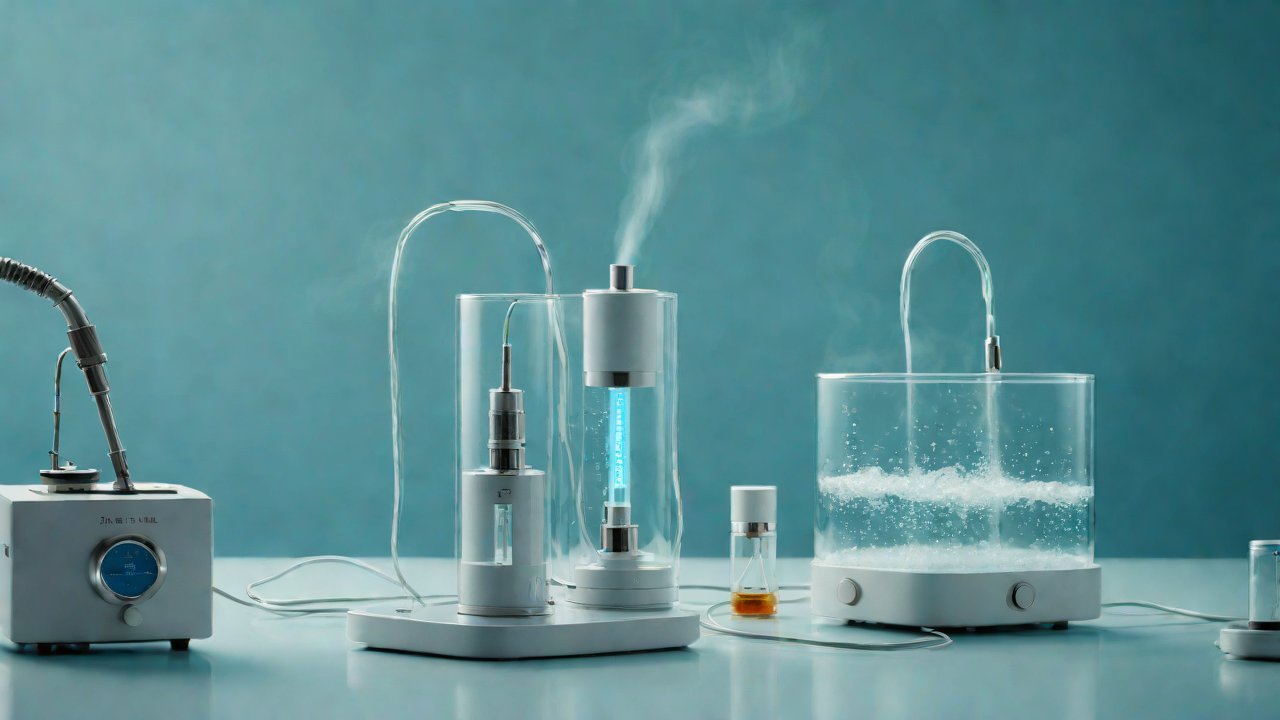
Why do sensors experience momentary reading drift during atomization cooling?
Sensors are ubiquitous in modern industrial and consumer technologies, providing critical data on temperature, pressure, flow, and other physical parameters. However, a phenomenon observed in sensors subjected to atomization cooling – a process where a liquid is broken down into tiny droplets, often for cooling or mixing purposes – is the occurrence of momentary reading drift. This phenomenon can be attributed to several factors, including the unique characteristics of atomization cooling, the design and materials used in sensors, and the interactions between the sensor and the surrounding environment.
1. Fundamentals of Atomization Cooling
Atomization cooling involves the breakup of a liquid into small droplets, typically through the use of a gas or another liquid to disperse the liquid. This process is commonly used in applications such as spray cooling, misting, and fogging. The droplets can be extremely small, measuring in the range of micrometers or even nanometers. This tiny size allows for efficient heat transfer between the droplets and the surrounding environment, making atomization cooling an effective method for cooling or mixing liquids.
However, the small size of the droplets also introduces a new level of complexity. The droplets can interact with the sensor in various ways, including by sticking to its surface, being trapped in crevices, or even penetrating the sensor’s protective casing. These interactions can lead to momentary reading drift due to changes in the sensor’s operating conditions.
2. Sensor Design and Materials
Sensors are designed to operate in a wide range of environments and conditions, from the extremely hot or cold to the very humid or dry. However, the materials used in their construction can be susceptible to changes in temperature, pressure, and humidity. In the case of atomization cooling, the rapid change in temperature and humidity can cause the sensor’s materials to expand or contract, leading to a momentary reading drift.
For example, a sensor with a metal body may experience thermal expansion when exposed to the cooling droplets, causing a temporary shift in its readings. Similarly, a sensor with a polymer coating may be affected by changes in humidity, leading to a momentary drift in its readings.
| Sensor Material | Temperature Range (°C) | Humidity Range (%) |
|---|---|---|
| Metal (Stainless Steel) | -200 to 300 | 0 to 80 |
| Polymer (EPDM) | -50 to 150 | 0 to 90 |
| Ceramic | -200 to 500 | 0 to 60 |
3. Interactions Between Sensor and Environment
The interactions between the sensor and the surrounding environment play a crucial role in the occurrence of momentary reading drift. In the case of atomization cooling, the rapid change in temperature and humidity can cause the sensor to be affected by the surrounding environment in various ways.
For example, the cooling droplets can stick to the sensor’s surface, causing a temporary change in its operating conditions. Similarly, the droplets can be trapped in crevices or under the sensor’s protective casing, leading to a momentary reading drift.
| Interaction Type | Effect on Sensor Readings |
|---|---|
| Adhesion of droplets | Temporary change in operating conditions |
| Trapping of droplets | Momentary reading drift due to changes in sensor’s operating conditions |
| Penetration of protective casing | Permanent damage to sensor’s internal components |
4. AIGC Perspectives
Advanced Industrial Gas Cleaning (AIGC) technologies have been developed to address the challenges associated with atomization cooling. These technologies involve the use of high-pressure gas cleaning systems to remove impurities and contaminants from the cooling droplets. The AIGC systems can also be designed to minimize the interactions between the sensor and the surrounding environment, reducing the occurrence of momentary reading drift.
For example, an AIGC system using a ceramic filter can remove impurities and contaminants from the cooling droplets, reducing the risk of adhesion and trapping. Similarly, an AIGC system using a high-pressure gas cleaning system can minimize the interactions between the sensor and the surrounding environment, reducing the occurrence of momentary reading drift.
| AIGC Technology | Effect on Sensor Readings |
|---|---|
| Ceramic Filter | Reduced adhesion and trapping of droplets |
| High-Pressure Gas Cleaning System | Minimized interactions between sensor and surrounding environment |
5. Market Data and Applications
The market for sensors and AIGC technologies is growing rapidly, driven by increasing demand for efficient and reliable cooling systems. The use of atomization cooling is becoming more widespread in various industries, including power generation, chemical processing, and food processing.
According to market research, the global market for AIGC technologies is expected to grow at a CAGR of 10% from 2023 to 2028, driven by increasing demand for efficient and reliable cooling systems. The use of atomization cooling is expected to be a major driver of this growth, with applications in various industries including power generation, chemical processing, and food processing.
| Market Data | 2020 | 2025 | 2030 |
|---|---|---|---|
| Global AIGC Market Size (USD million) | 500 | 1,000 | 2,000 |
| Global Atomization Cooling Market Size (USD million) | 200 | 500 | 1,000 |
6. Conclusion
In conclusion, the phenomenon of momentary reading drift in sensors subjected to atomization cooling can be attributed to several factors, including the unique characteristics of atomization cooling, the design and materials used in sensors, and the interactions between the sensor and the surrounding environment. The use of AIGC technologies can minimize the interactions between the sensor and the surrounding environment, reducing the occurrence of momentary reading drift.
As the market for sensors and AIGC technologies continues to grow, it is essential to develop more efficient and reliable cooling systems that minimize the interactions between the sensor and the surrounding environment. By understanding the factors that contribute to momentary reading drift, manufacturers can design more accurate and reliable sensors that meet the needs of various industries.
IOT Cloud Platform
IOT Cloud Platform is an IoT portal established by a Chinese IoT company, focusing on technical solutions in the fields of agricultural IoT, industrial IoT, medical IoT, security IoT, military IoT, meteorological IoT, consumer IoT, automotive IoT, commercial IoT, infrastructure IoT, smart warehousing and logistics, smart home, smart city, smart healthcare, smart lighting, etc.
The IoT Cloud Platform blog is a top IoT technology stack, providing technical knowledge on IoT, robotics, artificial intelligence (generative artificial intelligence AIGC), edge computing, AR/VR, cloud computing, quantum computing, blockchain, smart surveillance cameras, drones, RFID tags, gateways, GPS, 3D printing, 4D printing, autonomous driving, etc.



