Why Do PM2.5 Sensors from Different Brands Show Inconsistent Readings in the Same Environment?
The air quality monitoring market has witnessed a significant surge in recent years, driven by growing concerns about air pollution and its impact on human health. As a result, various brands have introduced PM2.5 sensors to measure particulate matter with diameters of 2.5 micrometers or smaller. These sensors are widely used for indoor and outdoor air quality monitoring, as well as in industrial settings. However, one common issue that has been observed is the inconsistent readings provided by different brands’ PM2.5 sensors in the same environment.
This discrepancy can be attributed to several factors, including differences in sensor technology, calibration, and data processing algorithms. Moreover, the lack of standardization in sensor specifications and testing protocols has further exacerbated this issue. As a result, users often find it challenging to compare readings from different sensors or even from the same sensor over time.
To address this problem, we need to delve into the technical aspects of PM2.5 sensing technology and explore the various factors that contribute to inconsistent readings.
1. Sensor Technology
PM2.5 sensors use a variety of technologies to measure particulate matter in the air. The most common types of sensors used for this purpose are:
| Sensor Type | Description |
|---|---|
| Optical Sensors | These sensors use light scattering or absorption principles to measure PM2.5 concentrations. They are commonly used in low-cost, portable devices. |
| Beta Attenuation Monitors (BAMs) | BAMs use a filter paper to collect PM2.5 particles, which then block the flow of air through the monitor, causing a pressure drop that is proportional to the particle concentration. |
| Diffusion Charging Sensors | These sensors use an electric field to charge and count PM2.5 particles as they pass through the sensor chamber. |
Each of these technologies has its own strengths and weaknesses, and their performance can be affected by various environmental factors such as humidity, temperature, and air flow.
2. Calibration and Data Processing
Sensor calibration is a critical step in ensuring accurate readings from PM2.5 sensors. However, different brands may use varying calibration procedures or employ different algorithms to process the sensor data. This can lead to inconsistent results when comparing readings from different sensors.

| Calibration Method | Description |
|---|---|
| Factory Calibration | Many manufacturers calibrate their sensors at the factory using a reference instrument or a certified laboratory. |
| Field Calibration | Some sensors are calibrated in the field using a range of known concentrations or a calibration gas mixture. |
Data processing algorithms also play a crucial role in determining the accuracy and consistency of PM2.5 readings. Different brands may use proprietary algorithms that can affect the sensor’s performance and response to changing environmental conditions.
3. Sensor Specifications
The lack of standardization in sensor specifications has contributed significantly to the inconsistent readings observed across different brands. Key parameters such as sensor sensitivity, resolution, and range can vary widely between manufacturers.
| Sensor Specification | Description |
|---|---|
| Sensitivity (μg/m³) | The minimum detectable concentration of PM2.5 particles. |
| Resolution (μg/m³) | The smallest change in concentration that the sensor can detect. |
| Range (μg/m³) | The maximum concentration of PM2.5 particles that the sensor can measure. |
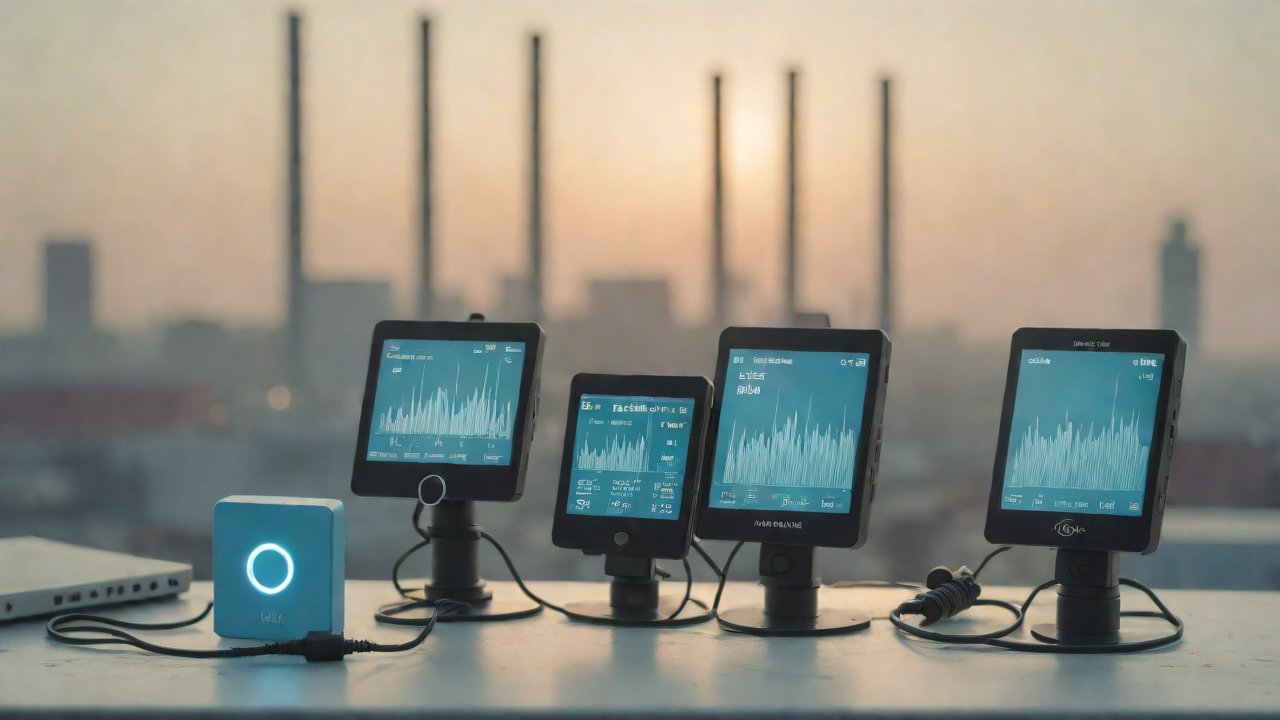
Users often find it challenging to compare readings from different sensors or even from the same sensor over time due to these variations in specifications.
4. Environmental Factors
Environmental factors such as humidity, temperature, and air flow can significantly impact the performance of PM2.5 sensors. Different brands may employ various techniques to mitigate the effects of these factors on their sensors.
| Environmental Factor | Description |
|---|---|
| Humidity (RH) | High or low humidity levels can affect sensor accuracy and response time. |
| Temperature (°C) | Temperature fluctuations can impact sensor performance, especially for optical sensors. |
| Air Flow (m³/h) | Changes in air flow rates can influence sensor accuracy and response time. |

Understanding the effects of these environmental factors is essential to selecting the right PM2.5 sensor for a particular application.
5. Industry Standards
The lack of industry standards for PM2.5 sensors has contributed to the inconsistent readings observed across different brands. Various organizations such as the International Organization for Standardization (ISO) and the American Society for Testing and Materials (ASTM) have developed guidelines for air quality monitoring, but these are not universally adopted.
| Standard | Description |
|---|---|
| ISO 16814 | Provides guidance on the measurement of particulate matter in ambient air. |
| ASTM D6216 | Specifies a method for measuring PM2.5 concentrations using optical sensors. |
Establishing clear industry standards and guidelines can help ensure consistency across different brands and applications.
6. Conclusion
The inconsistent readings observed from PM2.5 sensors from different brands are primarily due to differences in sensor technology, calibration, and data processing algorithms. The lack of standardization in sensor specifications and testing protocols has further exacerbated this issue. To address this problem, it is essential to understand the technical aspects of PM2.5 sensing technology and select the right sensor for a particular application based on its specifications and performance under various environmental conditions.
In conclusion, the development of standardized industry guidelines and regulations can help ensure consistency across different brands and applications. This will enable users to make informed decisions when selecting PM2.5 sensors and improve the overall accuracy and reliability of air quality monitoring systems.
IOT Cloud Platform
IOT Cloud Platform is an IoT portal established by a Chinese IoT company, focusing on technical solutions in the fields of agricultural IoT, industrial IoT, medical IoT, security IoT, military IoT, meteorological IoT, consumer IoT, automotive IoT, commercial IoT, infrastructure IoT, smart warehousing and logistics, smart home, smart city, smart healthcare, smart lighting, etc.
The IoT Cloud Platform blog is a top IoT technology stack, providing technical knowledge on IoT, robotics, artificial intelligence (generative artificial intelligence AIGC), edge computing, AR/VR, cloud computing, quantum computing, blockchain, smart surveillance cameras, drones, RFID tags, gateways, GPS, 3D printing, 4D printing, autonomous driving, etc.
Note: This article was professionally generated with the assistance of AIGC and has been fact-checked and manually corrected by IoT expert editor IoTCloudPlatForm.