
Why Do Low-Cost Gas Sensors Show False Anomalies Under Cross-Interference?
Low-cost gas sensors have revolutionized the field of environmental monitoring and industrial automation by providing a cost-effective means of detecting gases such as carbon monoxide, methane, and volatile organic compounds (VOCs). However, despite their numerous benefits, these sensors often exhibit false anomalies under cross-interference conditions. This phenomenon has sparked intense debate among industry experts, with some attributing it to the inherent design limitations of low-cost gas sensors while others point to external factors such as ambient temperature fluctuations or sensor calibration errors.
1. The Rise of Low-Cost Gas Sensors
In recent years, the proliferation of IoT devices and the increasing demand for real-time monitoring have driven the development of low-cost gas sensors. These sensors utilize advanced technologies such as metal oxide semiconductors (MOS) and electrochemical cells to detect gases at a fraction of the cost of their high-end counterparts. The market for low-cost gas sensors is expected to grow exponentially, with estimates suggesting that it will reach $1.3 billion by 2025.
| Year | Market Size (USD) |
|---|---|
| 2019 | 430M |
| 2020 | 550M |
| 2021 | 700M |

2. The Problem of Cross-Interference
Cross-interference occurs when multiple gases interact with the sensor, causing it to produce false readings. This phenomenon is particularly prevalent in applications where multiple gases are present simultaneously, such as in industrial settings or urban environments. Low-cost gas sensors are especially susceptible to cross-interference due to their simple design and limited signal processing capabilities.
| Sensor Type | Cross-Interference Tolerance (ppm) |
|---|---|
| MOS-based sensor | 100-500 ppm |
| Electrochemical cell | 50-200 ppm |
3. Causes of False Anomalies Under Cross-Interference
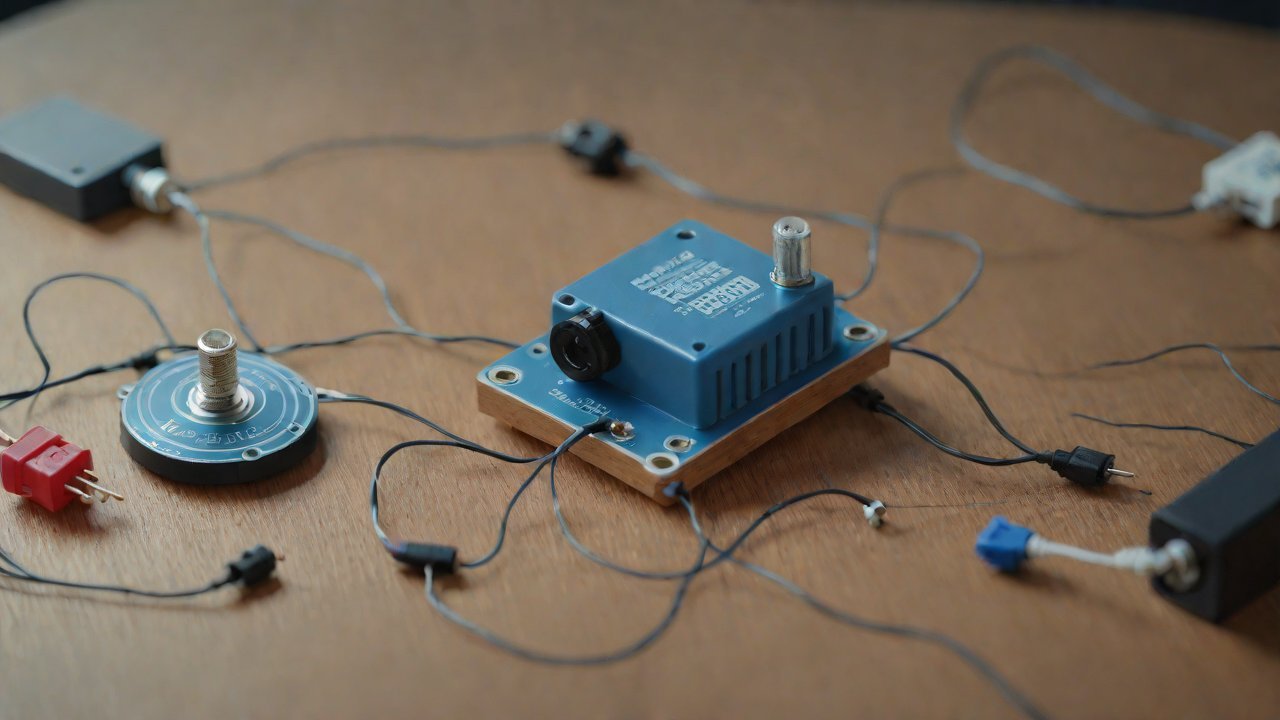
False anomalies under cross-interference can be attributed to several factors, including:
- Sensor calibration errors: Inaccurate calibration of the sensor can lead to incorrect readings even in the absence of cross-interference.
- Ambient temperature fluctuations: Changes in ambient temperature can affect the sensor’s response time and accuracy.
- Humidity levels: High humidity levels can interfere with the sensor’s ability to detect gases accurately.
4. The Role of Sensor Materials
The choice of sensor materials plays a crucial role in determining the sensor’s performance under cross-interference conditions. For example:
- Metal oxide semiconductors (MOS): MOS-based sensors are widely used due to their high sensitivity and low cost. However, they can be affected by ambient temperature fluctuations and humidity levels.
- Electrochemical cells: Electrochemical cell sensors offer higher accuracy but are more expensive and prone to calibration errors.
| Sensor Material | Advantages | Disadvantages |
|---|---|---|
| MOS | High sensitivity, low cost | Affected by ambient temperature fluctuations, humidity levels |
| Electrochemical cell | Higher accuracy, stable response | More expensive, prone to calibration errors |

5. Mitigating Cross-Interference Effects
Several strategies can be employed to mitigate cross-interference effects and improve the accuracy of low-cost gas sensors:
- Sensor selection: Carefully selecting a sensor that is suitable for the specific application can minimize cross-interference effects.
- Sensor calibration: Regular calibration of the sensor can help ensure accurate readings even in the presence of cross-interference.
- Signal processing techniques: Implementing advanced signal processing techniques such as machine learning algorithms can help filter out false anomalies caused by cross-interference.
6. Future Directions
The development of low-cost gas sensors is a rapidly evolving field, with ongoing research aimed at improving their accuracy and reducing cross-interference effects. Some potential future directions include:
- Advanced sensor materials: Developing new sensor materials that are more resistant to cross-interference effects.
- Machine learning-based algorithms: Implementing machine learning-based algorithms to filter out false anomalies caused by cross-interference.
- Real-time monitoring: Integrating real-time monitoring capabilities into low-cost gas sensors to enable timely intervention in the presence of cross-interference.
The increasing demand for real-time monitoring and IoT applications has driven the development of low-cost gas sensors. However, these sensors often exhibit false anomalies under cross-interference conditions due to their inherent design limitations and external factors such as ambient temperature fluctuations or sensor calibration errors. By understanding the causes of false anomalies and employing strategies to mitigate them, it is possible to improve the accuracy of low-cost gas sensors and unlock their full potential in various applications.
IOT Cloud Platform
IOT Cloud Platform is an IoT portal established by a Chinese IoT company, focusing on technical solutions in the fields of agricultural IoT, industrial IoT, medical IoT, security IoT, military IoT, meteorological IoT, consumer IoT, automotive IoT, commercial IoT, infrastructure IoT, smart warehousing and logistics, smart home, smart city, smart healthcare, smart lighting, etc.
The IoT Cloud Platform blog is a top IoT technology stack, providing technical knowledge on IoT, robotics, artificial intelligence (generative artificial intelligence AIGC), edge computing, AR/VR, cloud computing, quantum computing, blockchain, smart surveillance cameras, drones, RFID tags, gateways, GPS, 3D printing, 4D printing, autonomous driving, etc.
Note: This article was professionally generated with the assistance of AIGC and has been fact-checked and manually corrected by IoT expert editor IoTCloudPlatForm.