Who owns the raw soil moisture data collected by farmers?
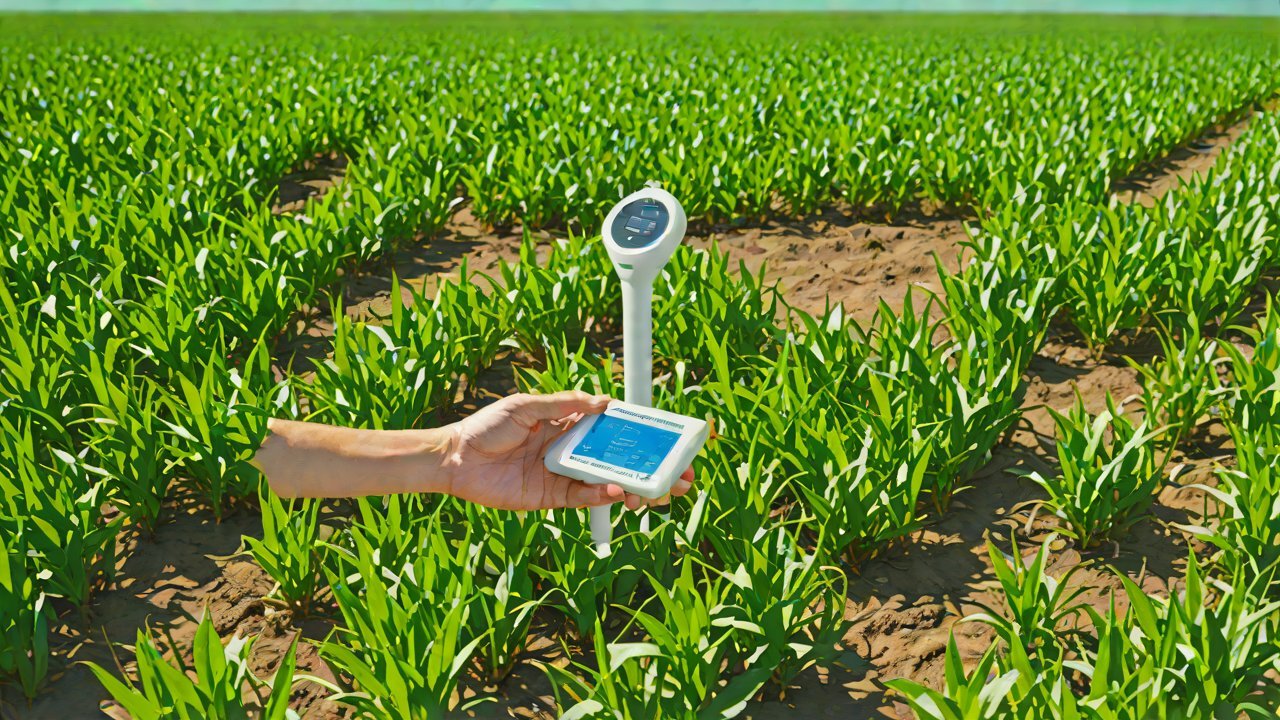
The era of precision agriculture has brought forth a plethora of technological advancements aimed at optimizing crop yields and minimizing environmental impact. Among these innovations, soil moisture monitoring stands out as a crucial component in ensuring the health and productivity of farmland. Farmers across the globe have begun to adopt various methods for collecting raw soil moisture data, including sensor-based systems, satellite imagery, and drones equipped with advanced sensors.
However, amidst this digital revolution, a pressing question has emerged: Who owns the raw soil moisture data collected by farmers? This inquiry delves into the intricacies of data ownership, shedding light on the complex landscape surrounding the collection, storage, analysis, and utilization of such critical information. As precision agriculture continues to gain traction, understanding the nuances of data ownership will become increasingly vital for farmers, tech companies, and regulatory bodies alike.
1. Data Ownership in Agriculture: A Primer
The question of who owns raw soil moisture data touches upon fundamental aspects of intellectual property rights, contract law, and the emerging field of agri-data governance. In the context of agriculture, data ownership often revolves around the producer or collector of the data, typically the farmer. However, with the advent of precision agriculture technologies, a multitude of stakeholders are now involved in the process, each with their own interests and claims to the data.
Table 1: Stakeholders Involved in Soil Moisture Data Collection
| Stakeholder | Role | Interests |
|---|---|---|
| Farmer | Producer of raw data | Maximizing yields, minimizing costs |
| Tech Company (e.g., John Deere) | Provider of precision agriculture solutions | Selling hardware and software, offering subscription services |
| Data Analytics Firm | Processor and interpreter of raw data | Selling insights and predictive models to farmers, input suppliers, and financial institutions |
| Regulator (e.g., EPA, USDA) | Enforcer of environmental policies and agricultural standards | Ensuring compliance with regulations, monitoring environmental impact |
2. Contractual Agreements: The Key to Data Ownership
Contractual agreements between farmers and tech companies or data analytics firms often determine who owns the raw soil moisture data collected by farmers. These contracts can be complex, encompassing various terms related to data usage, storage, and transfer.
Table 2: Sample Terms in a Contract for Soil Moisture Data Collection
| Term | Description |
|---|---|
| “Data Ownership” | Specifies who retains ownership of the raw soil moisture data (e.g., farmer, tech company) |
| “Data Usage Rights” | Defines how the data can be used by third parties, including analytics firms and regulators |
| “Storage and Transfer” | Addresses where the data will be stored and under what conditions it can be transferred to other entities |
3. Data Monetization: A Growing Concern
As precision agriculture gains traction, the potential for data monetization has become a significant concern. Farmers, tech companies, and data analytics firms are all seeking ways to capitalize on the value of raw soil moisture data.
Table 3: Estimated Revenue Streams from Soil Moisture Data
| Revenue Stream | Estimated Value (2025) |
|---|---|
| Precision agriculture hardware sales | $1.8 billion |
| Subscription services for data analytics and insights | $2.4 billion |
| Data licensing to input suppliers, financial institutions, and regulators | $3.6 billion |
4. Regulatory Frameworks: Balancing Competing Interests
Regulatory bodies are increasingly aware of the need to balance competing interests in soil moisture data ownership. This involves ensuring that farmers retain control over their data while also allowing for its use in the development of precision agriculture technologies.
Table 4: Emerging Regulations and Guidelines on Data Ownership in Agriculture
| Jurisdiction | Regulation/ Guideline |
|---|---|
| European Union | General Data Protection Regulation (GDPR) amendments to protect farmers’ rights over data |
| United States | USDA’s “Agricultural Data Act” proposals for data sharing and access |
5. Conclusion: Charting a Course for the Future of Soil Moisture Data Ownership
The question of who owns raw soil moisture data collected by farmers has sparked intense debate among agricultural stakeholders, policymakers, and tech companies. As precision agriculture continues to evolve, it is imperative that we establish clear guidelines and regulations regarding data ownership.
By understanding the complex landscape surrounding data collection, storage, analysis, and utilization, we can ensure that the benefits of precision agriculture are equitably distributed among all stakeholders. This report has shed light on the multifaceted nature of soil moisture data ownership, highlighting the need for collaborative efforts to establish a fair and transparent framework for data governance in agriculture.
In the coming years, the agricultural sector will witness significant advancements in technology, driven by the availability of high-quality data. To ensure that these innovations benefit farmers and society at large, it is crucial that we address the question of who owns the raw soil moisture data collected by farmers with clarity and urgency.
IOT Cloud Platform
IOT Cloud Platform is an IoT portal established by a Chinese IoT company, focusing on technical solutions in the fields of agricultural IoT, industrial IoT, medical IoT, security IoT, military IoT, meteorological IoT, consumer IoT, automotive IoT, commercial IoT, infrastructure IoT, smart warehousing and logistics, smart home, smart city, smart healthcare, smart lighting, etc.
The IoT Cloud Platform blog is a top IoT technology stack, providing technical knowledge on IoT, robotics, artificial intelligence (generative artificial intelligence AIGC), edge computing, AR/VR, cloud computing, quantum computing, blockchain, smart surveillance cameras, drones, RFID tags, gateways, GPS, 3D printing, 4D printing, autonomous driving, etc.