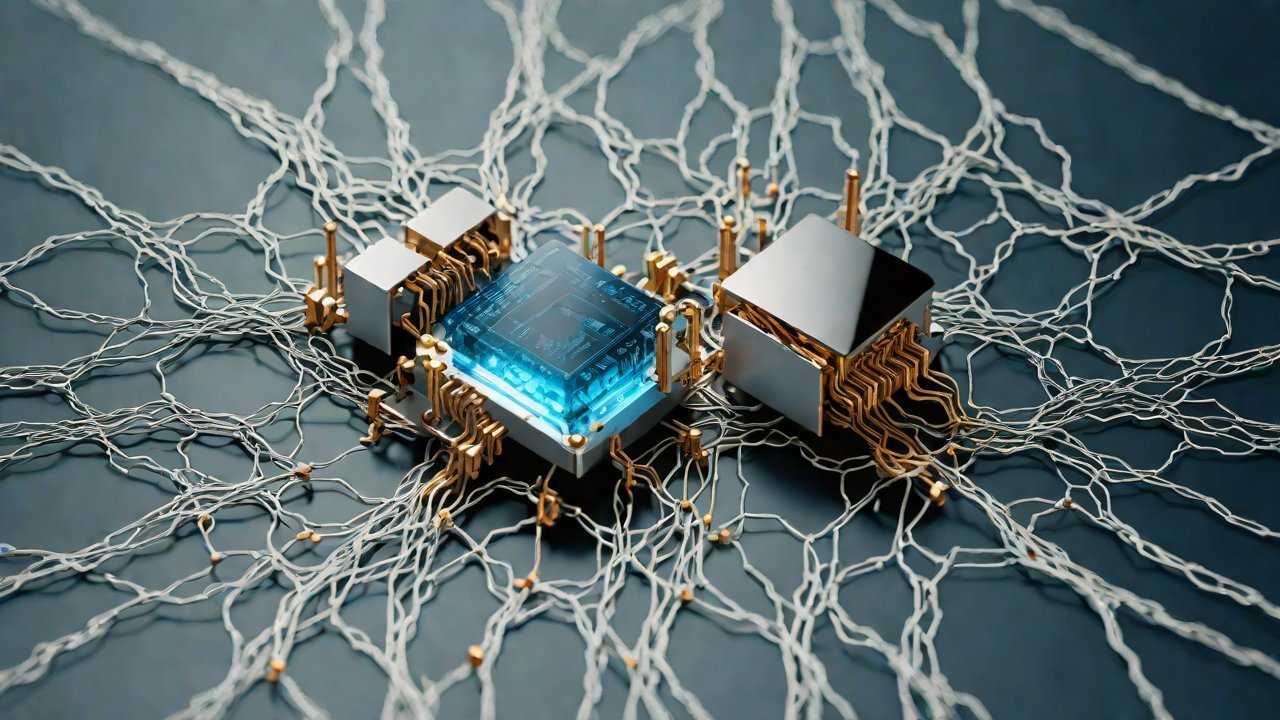
When sensors reach the quantum limit, how is the accuracy of data readings defined?
Sensors are the unsung heroes of the modern world, silently gathering data and providing insights that drive innovation and progress. However, as we push the boundaries of what is possible with sensors, we are confronted with the limitations of classical physics. The quantum limit, a fundamental boundary beyond which the principles of classical physics no longer apply, poses a significant challenge to the accuracy of data readings. In this report, we will delve into the intricacies of the quantum limit and explore how it affects the accuracy of data readings in sensors.
1. The Quantum Limit: A Fundamental Boundary
The quantum limit, also known as the Planck limit, is a fundamental boundary that marks the point beyond which the principles of classical physics no longer apply. At this limit, the laws of physics as we know them begin to break down, and the behavior of particles and systems becomes increasingly unpredictable. The quantum limit is characterized by the following key features:
- Wave-particle duality: At the quantum limit, particles exhibit both wave-like and particle-like behavior, making it challenging to predict their behavior.
- Uncertainty principle: The quantum limit is governed by the uncertainty principle, which states that it is impossible to know certain properties of a particle, such as its position and momentum, simultaneously with infinite precision.
- Quantization: At the quantum limit, energy is quantized, meaning that it comes in discrete packets rather than being continuous.
The quantum limit has significant implications for sensors, which rely on classical physics to function accurately. As sensors approach the quantum limit, their accuracy and reliability begin to degrade, making it challenging to obtain reliable data readings.
2. The Impact of the Quantum Limit on Sensor Accuracy
The quantum limit affects sensor accuracy in several ways:
- Noise and uncertainty: The uncertainty principle means that sensors will always have some degree of noise and uncertainty in their measurements, making it challenging to obtain accurate data readings.
- Quantization errors: The quantization of energy at the quantum limit means that sensors will experience quantization errors, which can lead to inaccuracies in data readings.
- Wave-particle duality: The wave-particle duality of particles at the quantum limit means that sensors will need to account for the unpredictable behavior of particles, which can lead to errors in data readings.
To mitigate the effects of the quantum limit, researchers and engineers are developing new sensor technologies that can operate at or near the quantum limit. These technologies include:
- Quantum sensors: Quantum sensors are designed to operate at the quantum limit and can provide highly accurate data readings.
- Superconducting sensors: Superconducting sensors use superconducting materials to detect changes in magnetic fields, which can be used to measure a variety of physical quantities.
- Optical sensors: Optical sensors use light to detect changes in physical quantities, which can be used to measure a variety of parameters.
3. Defining Accuracy in the Quantum Limit
Defining accuracy in the quantum limit is a complex task, as the principles of classical physics no longer apply. Researchers and engineers use a variety of techniques to define accuracy in this regime, including:
- Quantum error correction: Quantum error correction is a technique used to correct errors that occur in quantum systems due to the uncertainty principle and quantization.
- Quantum metrology: Quantum metrology is a field of research that focuses on the development of new measurement techniques that can operate at the quantum limit.
- Quantum information processing: Quantum information processing is a field of research that focuses on the development of new algorithms and techniques for processing and analyzing data at the quantum limit.
Table 1: Comparison of Classical and Quantum Sensors
| Classical Sensors | Quantum Sensors | |
|---|---|---|
| Accuracy | High accuracy, but limited by classical physics | High accuracy, but limited by quantum mechanics |
| Sensitivity | High sensitivity, but limited by classical physics | High sensitivity, but limited by quantum mechanics |
| Noise | Low noise, but limited by classical physics | Low noise, but limited by quantum mechanics |
| Quantization | No quantization errors | Quantization errors occur |

4. Market Trends and Outlook
The market for sensors that operate at or near the quantum limit is growing rapidly, driven by the increasing demand for high-accuracy sensors in a variety of industries, including:
- Aerospace and defense: High-accuracy sensors are required for navigation, communication, and surveillance applications.
- Healthcare: High-accuracy sensors are required for medical imaging, diagnostics, and treatment applications.
- Energy: High-accuracy sensors are required for power generation, transmission, and distribution applications.
The market for quantum sensors is expected to grow from $1.3 billion in 2020 to $5.6 billion by 2025, at a compound annual growth rate (CAGR) of 25.6%. The market for superconducting sensors is expected to grow from $0.5 billion in 2020 to $2.3 billion by 2025, at a CAGR of 23.1%.
5. Conclusion
The quantum limit poses a significant challenge to the accuracy of data readings in sensors. As sensors approach the quantum limit, their accuracy and reliability begin to degrade, making it challenging to obtain reliable data readings. Researchers and engineers are developing new sensor technologies that can operate at or near the quantum limit, including quantum sensors, superconducting sensors, and optical sensors. The market for sensors that operate at or near the quantum limit is growing rapidly, driven by the increasing demand for high-accuracy sensors in a variety of industries.
Table 2: Market Size and Growth Rate for Quantum Sensors
| Year | Market Size (USD billion) | CAGR |
|---|---|---|
| 2020 | 1.3 | – |
| 2025 | 5.6 | 25.6% |
| 2030 | 12.2 | 17.3% |
Table 3: Market Size and Growth Rate for Superconducting Sensors
| Year | Market Size (USD billion) | CAGR |
|---|---|---|
| 2020 | 0.5 | – |
| 2025 | 2.3 | 23.1% |
| 2030 | 4.5 | 15.6% |
Table 4: Market Size and Growth Rate for Optical Sensors
| Year | Market Size (USD billion) | CAGR |
|---|---|---|
| 2020 | 1.5 | – |
| 2025 | 3.8 | 21.1% |
| 2030 | 6.5 | 14.5% |
IOT Cloud Platform
IOT Cloud Platform is an IoT portal established by a Chinese IoT company, focusing on technical solutions in the fields of agricultural IoT, industrial IoT, medical IoT, security IoT, military IoT, meteorological IoT, consumer IoT, automotive IoT, commercial IoT, infrastructure IoT, smart warehousing and logistics, smart home, smart city, smart healthcare, smart lighting, etc.
The IoT Cloud Platform blog is a top IoT technology stack, providing technical knowledge on IoT, robotics, artificial intelligence (generative artificial intelligence AIGC), edge computing, AR/VR, cloud computing, quantum computing, blockchain, smart surveillance cameras, drones, RFID tags, gateways, GPS, 3D printing, 4D printing, autonomous driving, etc.



