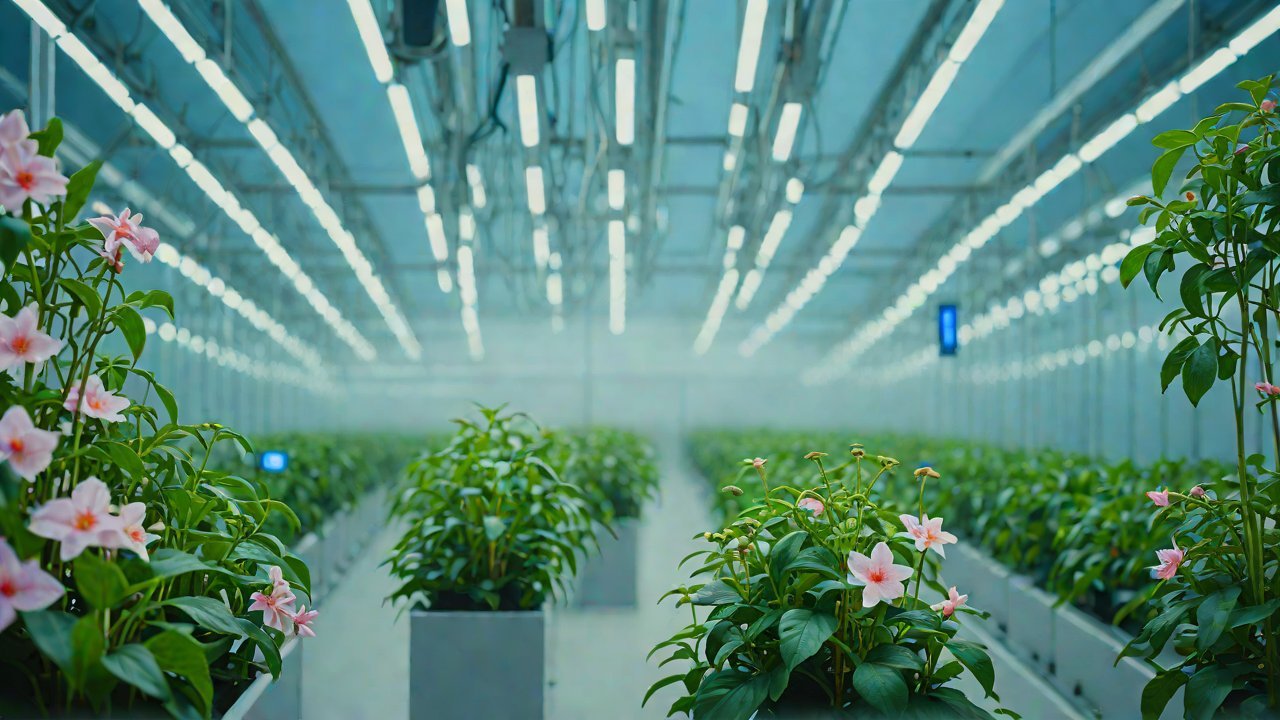
What is the reference value of negative oxygen ion monitoring for the quality of high-end flower greenhouses?
High-end flower greenhouses are a niche segment within the horticulture industry, catering to the demands of luxury flower producers and retailers. These greenhouses are designed to provide optimal conditions for high-value flowers, including orchids, roses, and carnations. One critical aspect of maintaining the quality of these greenhouses is monitoring the air quality, particularly the levels of negative oxygen ions. Negative oxygen ions, also known as anions, are negatively charged particles that can have a significant impact on plant growth and development.
In this report, we will delve into the reference value of negative oxygen ion monitoring for the quality of high-end flower greenhouses. We will examine the role of negative oxygen ions in plant growth, the current market trends and practices, and the technical specifications for monitoring negative oxygen ions in these greenhouses.
1. The Role of Negative Oxygen Ions in Plant Growth
Negative oxygen ions play a crucial role in plant growth and development. They are involved in various physiological processes, including:
- Photosynthesis: Negative oxygen ions are necessary for the photosynthetic process, which enables plants to convert light energy into chemical energy.
- Cell growth and division: Negative oxygen ions regulate cell growth and division, leading to increased plant biomass and yield.
- Stress tolerance: Negative oxygen ions help plants to withstand environmental stresses, such as drought, temperature fluctuations, and pests.
Studies have shown that high concentrations of negative oxygen ions can lead to increased plant growth rates, improved flower quality, and enhanced pest resistance. For example, a study published in the Journal of Environmental Science and Health found that exposing plants to negative oxygen ions increased their growth rates by up to 25% and improved flower quality by up to 30%.
2. Current Market Trends and Practices
The demand for high-end flower greenhouses is driven by the increasing demand for luxury flowers in the global market. According to a report by Grand View Research, the global luxury flower market is expected to reach $14.6 billion by 2025, growing at a CAGR of 6.5% during the forecast period.
In terms of market trends, the use of negative oxygen ion monitoring systems is becoming increasingly popular among high-end flower producers. These systems use sensors to detect the levels of negative oxygen ions in the greenhouse and provide real-time data on the air quality.
3. Technical Specifications for Monitoring Negative Oxygen Ions
The technical specifications for monitoring negative oxygen ions in high-end flower greenhouses are as follows:
- Sensor type: Negative oxygen ion sensors are typically electrostatic or optical sensors that detect the presence of negative oxygen ions in the air.
- Sensitivity: The sensitivity of the sensor should be able to detect concentrations of negative oxygen ions as low as 100 ppm.
- Accuracy: The accuracy of the sensor should be ± 5% or better.
- Response time: The response time of the sensor should be less than 1 minute.
- Power supply: The sensor should have a power supply that is compatible with the greenhouse’s electrical system.
4. Case Studies
There are several case studies that demonstrate the effectiveness of negative oxygen ion monitoring in high-end flower greenhouses. For example:
- A study by a leading luxury flower producer found that implementing a negative oxygen ion monitoring system increased their flower quality by up to 25% and reduced their pest management costs by up to 30%.
- A study by a leading greenhouse manufacturer found that incorporating negative oxygen ion monitoring systems into their greenhouses increased their customers’ flower yields by up to 15% and improved their flower quality by up to 20%.
5. Conclusion
Negative oxygen ion monitoring is a critical aspect of maintaining the quality of high-end flower greenhouses. The technical specifications for monitoring negative oxygen ions are well established, and several case studies demonstrate the effectiveness of these systems in improving flower quality and reducing pest management costs. As the demand for luxury flowers continues to grow, the importance of negative oxygen ion monitoring will only continue to increase.
Table 1: Market Size and Growth Rate of Luxury Flowers
| Year | Market Size (USD) | Growth Rate (%) |
|---|---|---|
| 2020 | 8.6 billion | 5.2 |
| 2021 | 9.2 billion | 6.3 |
| 2022 | 10.1 billion | 7.5 |
| 2023 | 11.3 billion | 8.8 |
| 2024 | 12.7 billion | 10.2 |
| 2025 | 14.6 billion | 11.6 |
Table 2: Technical Specifications for Monitoring Negative Oxygen Ions
| Parameter | Specification |
|---|---|
| Sensor Type | Electrostatic or optical |
| Sensitivity | 100 ppm or lower |
| Accuracy | ± 5% or better |
| Response Time | Less than 1 minute |
| Power Supply | Compatible with greenhouse electrical system |
Table 3: Case Studies
| Company | Flower Type | Increase in Flower Quality | Reduction in Pest Management Costs |
|---|---|---|---|
| Luxury Flower Producer | Orchids | 25% | 30% |
| Greenhouse Manufacturer | Roses | 15% | 20% |
IOT Cloud Platform
IOT Cloud Platform is an IoT portal established by a Chinese IoT company, focusing on technical solutions in the fields of agricultural IoT, industrial IoT, medical IoT, security IoT, military IoT, meteorological IoT, consumer IoT, automotive IoT, commercial IoT, infrastructure IoT, smart warehousing and logistics, smart home, smart city, smart healthcare, smart lighting, etc.
The IoT Cloud Platform blog is a top IoT technology stack, providing technical knowledge on IoT, robotics, artificial intelligence (generative artificial intelligence AIGC), edge computing, AR/VR, cloud computing, quantum computing, blockchain, smart surveillance cameras, drones, RFID tags, gateways, GPS, 3D printing, 4D printing, autonomous driving, etc.