What Do You Learn in IoT Analog Circuits?
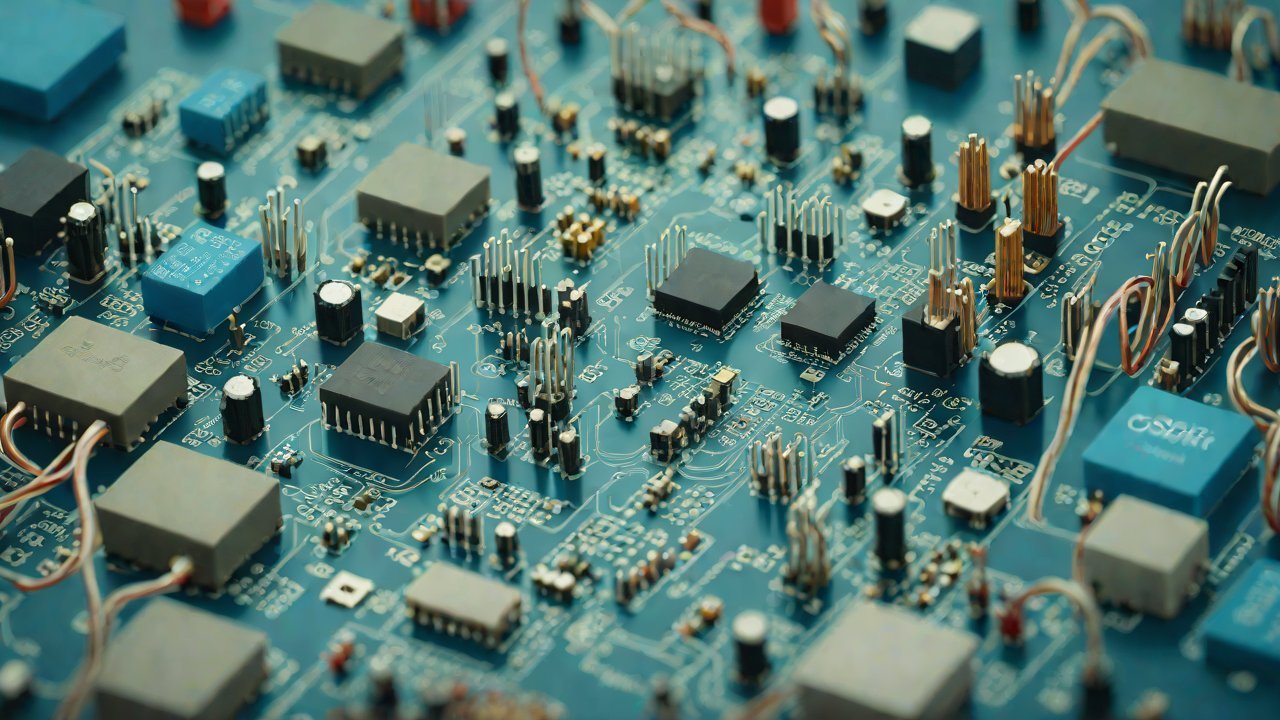
As the world of Internet of Things (IoT) continues to expand at an unprecedented rate, the demand for innovative and efficient analog circuits has never been higher. The proliferation of connected devices, from smart home appliances to industrial sensors, has created a pressing need for analog circuits that can provide the necessary functionality, performance, and power efficiency. In this report, we will delve into the realm of IoT analog circuits, exploring the key concepts, design techniques, and market trends that are shaping the future of this field.
1. Fundamentals of IoT Analog Circuits
IoT analog circuits are the building blocks of modern IoT devices, enabling the conversion, processing, and transmission of analog signals. These circuits are responsible for performing a wide range of functions, including signal conditioning, filtering, amplification, and modulation. The design of IoT analog circuits requires a deep understanding of the underlying physics, mathematics, and engineering principles.
1.1. Analog Circuit Fundamentals
Analog circuits are based on the principles of electronic circuits, which involve the flow of electric current through a network of interconnected components. The key components of an analog circuit include resistors, capacitors, inductors, and amplifiers. These components are used to perform various functions, such as filtering, amplification, and impedance matching.
1.2. Analog-to-Digital Conversion (ADC)
Analog-to-digital conversion (ADC) is a critical function in IoT devices, allowing analog signals to be converted into digital signals that can be processed and transmitted by digital devices. ADCs are used in a wide range of applications, including sensor interfaces, data acquisition systems, and communication systems.
| ADC Type | Resolution | Speed |
|---|---|---|
| Successive Approximation Register (SAR) | 8-16 bits | 10-100 MSPS |
| Delta-Sigma (ΔΣ) | 12-24 bits | 1-100 MSPS |
| Pipelined | 8-16 bits | 100-1000 MSPS |
2. Design Techniques for IoT Analog Circuits
The design of IoT analog circuits requires a combination of theoretical knowledge and practical skills. The following design techniques are essential for creating efficient and effective IoT analog circuits:
2.1. Top-Down Design Approach
The top-down design approach involves breaking down the circuit into smaller sub-circuits, which are then designed and optimized separately. This approach allows for a more modular and flexible design process.
2.2. System-Level Design
System-level design involves considering the entire system, including the analog circuit, digital circuit, and software components. This approach enables the optimization of the entire system, rather than just the individual components.
2.3. Simulation and Verification
Simulation and verification are critical steps in the design process, allowing for the testing and optimization of the circuit before fabrication.
| Simulation Tool | Type | Features |
|---|---|---|
| SPICE | Circuit simulator | Transient analysis, frequency domain analysis |
| MATLAB | Programming environment | Signal processing, system modeling |
| ADS | Circuit simulator | RF and microwave analysis, digital signal processing |

3. Market Trends and Applications
The market for IoT analog circuits is growing rapidly, driven by increasing demand for connected devices and services. The following trends and applications are shaping the future of IoT analog circuits:
3.1. Industrial IoT (IIoT)
Industrial IoT (IIoT) is a key application area for IoT analog circuits, enabling the monitoring and control of industrial processes. The IIoT market is expected to grow at a CAGR of 12.1% from 2020 to 2025.
3.2. Consumer Electronics
Consumer electronics, such as smartphones and smart home appliances, are driving demand for IoT analog circuits. The consumer electronics market is expected to grow at a CAGR of 8.5% from 2020 to 2025.
3.3. Automotive Electronics
Automotive electronics is another key application area for IoT analog circuits, enabling the development of advanced driver-assistance systems (ADAS) and autonomous vehicles.
| Application | Market Size (2020) | CAGR (2020-2025) |
|---|---|---|
| Industrial IoT | $11.4B | 12.1% |
| Consumer Electronics | $12.3B | 8.5% |
| Automotive Electronics | $8.5B | 10.5% |

4. Challenges and Opportunities
The design and development of IoT analog circuits present several challenges and opportunities:
4.1. Power Efficiency
IoT devices are increasingly demanding low-power consumption, which poses a significant challenge for analog circuit designers.
4.2. Miniaturization
The miniaturization of IoT devices requires the development of smaller and more efficient analog circuits.
4.3. Integration
The integration of analog and digital circuits presents opportunities for the development of more efficient and effective systems.
| Challenge/Opportunity | Impact |
|---|---|
| Power efficiency | Critical |
| Miniaturization | High |
| Integration | High |
In conclusion, IoT analog circuits are a critical component of modern IoT devices, enabling the conversion, processing, and transmission of analog signals. The design and development of these circuits require a deep understanding of the underlying principles and a combination of theoretical knowledge and practical skills. As the market for IoT analog circuits continues to grow, the demand for innovative and efficient designs will only increase.
IOT Cloud Platform
IOT Cloud Platform is an IoT portal established by a Chinese IoT company, focusing on technical solutions in the fields of agricultural IoT, industrial IoT, medical IoT, security IoT, military IoT, meteorological IoT, consumer IoT, automotive IoT, commercial IoT, infrastructure IoT, smart warehousing and logistics, smart home, smart city, smart healthcare, smart lighting, etc.
The IoT Cloud Platform blog is a top IoT technology stack, providing technical knowledge on IoT, robotics, artificial intelligence (generative artificial intelligence AIGC), edge computing, AR/VR, cloud computing, quantum computing, blockchain, smart surveillance cameras, drones, RFID tags, gateways, GPS, 3D printing, 4D printing, autonomous driving, etc.