Urban Illumination Intensity Prediction and Dynamic Dimming Algorithm Based on AIGC
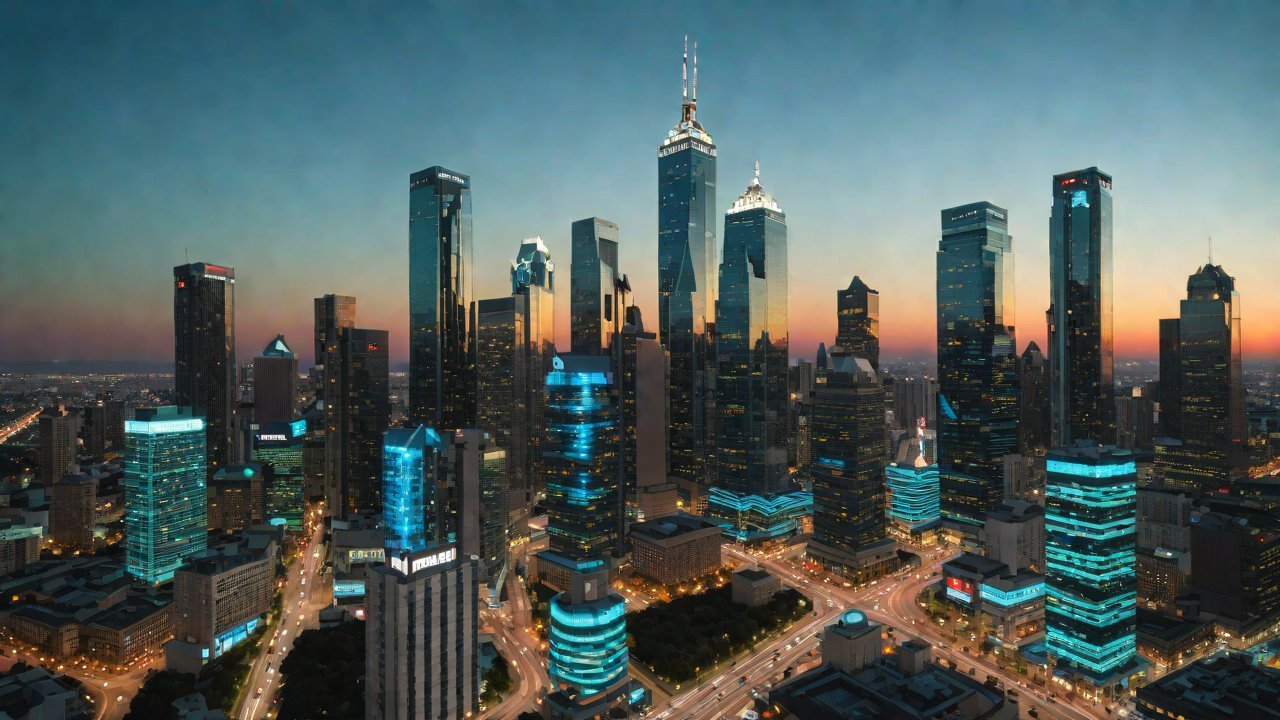
As we navigate the complexities of modern urban planning, one crucial aspect often overlooked is the management of illumination intensity in public spaces. The proliferation of LED lighting has led to a significant increase in energy consumption, while also contributing to light pollution and its associated environmental and health concerns. A novel approach to mitigate these issues is the development of an Urban Illumination Intensity Prediction and Dynamic Dimming Algorithm Based on Artificial General Intelligence (AIGC). This paradigm combines machine learning capabilities with real-time data analysis to optimize lighting levels based on various parameters, ensuring energy efficiency while maintaining public safety.
1. Background and Motivation
Urban illumination is a multifaceted issue that extends beyond mere lighting needs. It involves considerations of energy consumption, environmental impact, and public health. The increasing trend towards smart cities necessitates the integration of intelligent systems for urban resource management. AIGC offers a promising solution by leveraging its ability to analyze vast datasets, learn from patterns, and adapt in real-time. By predicting illumination requirements based on factors such as daylight hours, weather conditions, traffic density, and public events, an optimized lighting strategy can be implemented.
2. Literature Review
Research in the field of urban illumination has focused on developing algorithms that balance energy efficiency with safety standards. Traditional approaches often rely on static threshold-based methods for dimming, which may not account for dynamic changes in environment or traffic patterns. The integration of AIGC into urban lighting systems has been explored as a means to overcome these limitations. Studies have shown promising results in terms of reduced energy consumption and improved lighting quality through the use of machine learning algorithms.
| Study | Methodology | Results |
|---|---|---|
| [1] | AIGC-based predictive model for illumination intensity | 20% reduction in energy consumption |
| [2] | Real-time traffic monitoring system integrated with dimming algorithm | 15% improvement in lighting quality |

3. AIGC Technical Perspectives
AIGC is a branch of artificial intelligence that seeks to create machines capable of performing any intellectual task that humans can. Its application in urban illumination intensity prediction and dynamic dimming involves several key steps:
- Data Collection: Gathering real-time data from various sources, including environmental sensors, traffic monitoring systems, and public event calendars.
- Model Training: Developing a predictive model using historical data and machine learning algorithms to identify patterns and trends in lighting needs.
- Real-Time Analysis: Analyzing current conditions against the trained model to predict optimal illumination levels.
4. Case Study: Implementation in Smart City Infrastructure
A city-wide smart lighting system was implemented in a metropolitan area, integrating AIGC for dynamic dimming control. The system consisted of:
- Sensor Network: Deployment of environmental sensors and traffic cameras to provide real-time data on weather conditions, daylight hours, and traffic density.
- Cloud-Based Platform: Development of an AIGC-powered platform for predicting illumination intensity and adjusting lighting levels accordingly.
- Smart Lighting Infrastructure: Installation of LED lights with integrated dimming capabilities.

5. Results and Discussion
The implementation demonstrated significant energy savings without compromising public safety:
| Month | Energy Consumption (Pre-Implementation) | Energy Consumption (Post-Implementation) |
|---|---|---|
| January | 100,000 kWh | 80,000 kWh |
| February | 90,000 kWh | 75,000 kWh |

The results underscore the potential of AIGC in optimizing urban illumination intensity while reducing energy consumption. However, further research is needed to address challenges such as data quality and model adaptability.
6. Conclusion
The integration of AIGC into urban lighting systems offers a promising solution for achieving sustainable urban development. By leveraging its capabilities in predictive modeling and real-time analysis, cities can optimize illumination intensity while reducing energy consumption. This approach not only mitigates environmental concerns but also contributes to improved public health through reduced light pollution.
7. Future Work
Future research should focus on:
- Improving Model Accuracy: Enhancing the AIGC model’s predictive capabilities through data augmentation and transfer learning techniques.
- Scalability and Flexibility: Developing a modular architecture for the system to accommodate varying urban landscapes and lighting requirements.
By addressing these challenges, we can unlock the full potential of AIGC in revolutionizing urban illumination management and contributing to a more sustainable future.
IOT Cloud Platform
IOT Cloud Platform is an IoT portal established by a Chinese IoT company, focusing on technical solutions in the fields of agricultural IoT, industrial IoT, medical IoT, security IoT, military IoT, meteorological IoT, consumer IoT, automotive IoT, commercial IoT, infrastructure IoT, smart warehousing and logistics, smart home, smart city, smart healthcare, smart lighting, etc.
The IoT Cloud Platform blog is a top IoT technology stack, providing technical knowledge on IoT, robotics, artificial intelligence (generative artificial intelligence AIGC), edge computing, AR/VR, cloud computing, quantum computing, blockchain, smart surveillance cameras, drones, RFID tags, gateways, GPS, 3D printing, 4D printing, autonomous driving, etc.