UART Interface for IoT Projects
The Universal Asynchronous Receiver-Transmitter (UART) interface is a fundamental component in the realm of IoT (Internet of Things) projects. As the primary means of communication between microcontrollers and external devices, UARTs have been a cornerstone of embedded systems for decades. The increasing demand for IoT devices has led to a surge in the adoption of UART interfaces, making it essential for developers to understand the intricacies of this technology.
In this report, we will delve into the world of UART interfaces, exploring their functionality, advantages, and applications in IoT projects. We will also examine the technical aspects of UARTs, including their pinout, timing, and protocol stacks. Furthermore, we will discuss the challenges associated with UARTs and how to overcome them.
1. UART Fundamentals
A UART is a digital circuit that enables communication between a microcontroller and external devices, such as sensors, actuators, and other peripherals. The primary function of a UART is to transmit and receive data serially, converting parallel data from the microcontroller into a serial format for transmission over a single wire.
The UART interface consists of three main components:
- Transmitter (TX): responsible for converting parallel data from the microcontroller into a serial format for transmission.
- Receiver (RX): responsible for receiving serial data and converting it back into parallel format for the microcontroller.
- Clock (CLK): responsible for generating a clock signal to synchronize the transmission and reception of data.
UARTs operate at a specific baud rate, which is the number of bits transmitted per second. The baud rate is typically measured in bits per second (bps) or symbols per second (sps).
2. UART Applications in IoT Projects
UARTs are ubiquitous in IoT projects, serving as a primary means of communication between microcontrollers and external devices. Some common applications of UARTs in IoT projects include:
| Device | UART Baud Rate | Data Transfer Rate |
|---|---|---|
| GPS Module | 9600 bps | 9600 bps |
| Bluetooth Module | 115200 bps | 115200 bps |
| Wi-Fi Module | 9600 bps | 9600 bps |
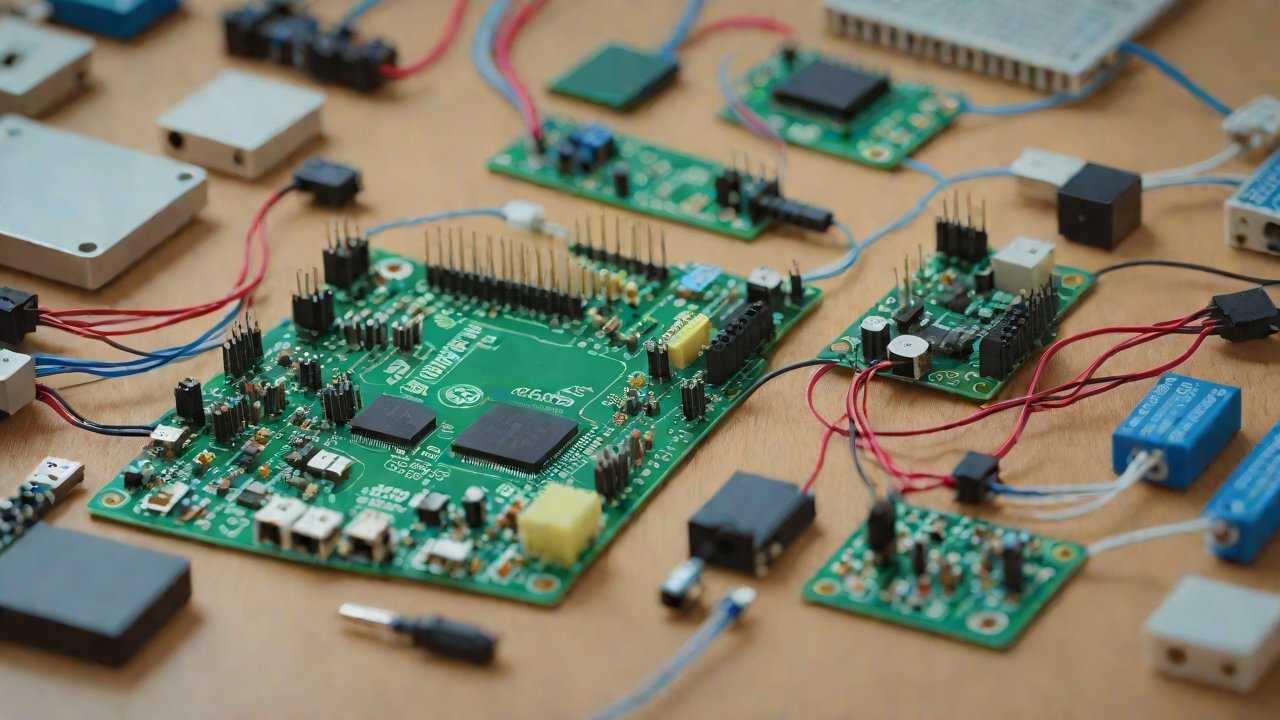
The UART interface is often used in IoT projects for its simplicity, flexibility, and low power consumption. It is widely used in applications such as:
- Sensor integration: UARTs enable the integration of sensors, such as temperature, humidity, and pressure sensors, with microcontrollers.
- Actuator control: UARTs allow for the control of actuators, such as motors and LEDs, from microcontrollers.
- Communication protocols: UARTs are used to implement communication protocols, such as UART-based serial communication, SPI, and I2C.
3. UART Pinout and Timing
The UART interface has a specific pinout, which includes:
- TXD (Transmit Data): the output pin for serial data transmission.
- RXD (Receive Data): the input pin for serial data reception.
- CTS (Clear to Send): the output pin for indicating that the receiver is ready to receive data.
- RTS (Request to Send): the output pin for requesting the transmitter to send data.
The UART timing is critical, as it determines the accuracy and reliability of data transmission. The timing parameters include:
- Baud Rate: the number of bits transmitted per second.
- Data Bit Length: the length of each data bit in bits.
- Stop Bit Length: the length of each stop bit in bits.
4. UART Protocol Stacks
UART protocol stacks are used to implement communication protocols on top of the UART interface. Some common UART protocol stacks include:
| Protocol | Description |
|---|---|
| UART-based serial communication | a basic protocol for transmitting serial data between devices. |
| SPI (Serial Peripheral Interface) | a protocol for transmitting serial data between devices with multiple data lines. |
| I2C (Inter-Integrated Circuit) | a protocol for transmitting serial data between devices with a single data line and multiple control lines. |
5. Challenges and Solutions
While UARTs are widely used in IoT projects, they also present several challenges, including:
- Noise and interference: UART signals are susceptible to noise and interference, which can cause errors in data transmission.
- Baud rate limitations: UARTs are limited by their baud rate, which can be a bottleneck in high-speed applications.
- Protocol complexity: UART protocol stacks can be complex, making them difficult to implement and debug.
To overcome these challenges, developers can use various techniques, including:
- Error correction codes: adding error correction codes to detect and correct errors in data transmission.
- Baud rate optimization: optimizing the baud rate for specific applications to minimize data transfer time.
- Protocol simplification: simplifying UART protocol stacks to reduce complexity and improve reliability.
6. Conclusion
In conclusion, UART interfaces are a fundamental component in IoT projects, providing a means of communication between microcontrollers and external devices. Understanding the fundamentals of UARTs, including their functionality, advantages, and applications, is essential for developers working on IoT projects. By examining the technical aspects of UARTs, including their pinout, timing, and protocol stacks, developers can optimize their use of UARTs and overcome common challenges.
IOT Cloud Platform
IOT Cloud Platform is an IoT portal established by a Chinese IoT company, focusing on technical solutions in the fields of agricultural IoT, industrial IoT, medical IoT, security IoT, military IoT, meteorological IoT, consumer IoT, automotive IoT, commercial IoT, infrastructure IoT, smart warehousing and logistics, smart home, smart city, smart healthcare, smart lighting, etc.
The IoT Cloud Platform blog is a top IoT technology stack, providing technical knowledge on IoT, robotics, artificial intelligence (generative artificial intelligence AIGC), edge computing, AR/VR, cloud computing, quantum computing, blockchain, smart surveillance cameras, drones, RFID tags, gateways, GPS, 3D printing, 4D printing, autonomous driving, etc.



