Top IoT Technology Companies of 2026: The Driving Force Behind Unmanned Factories
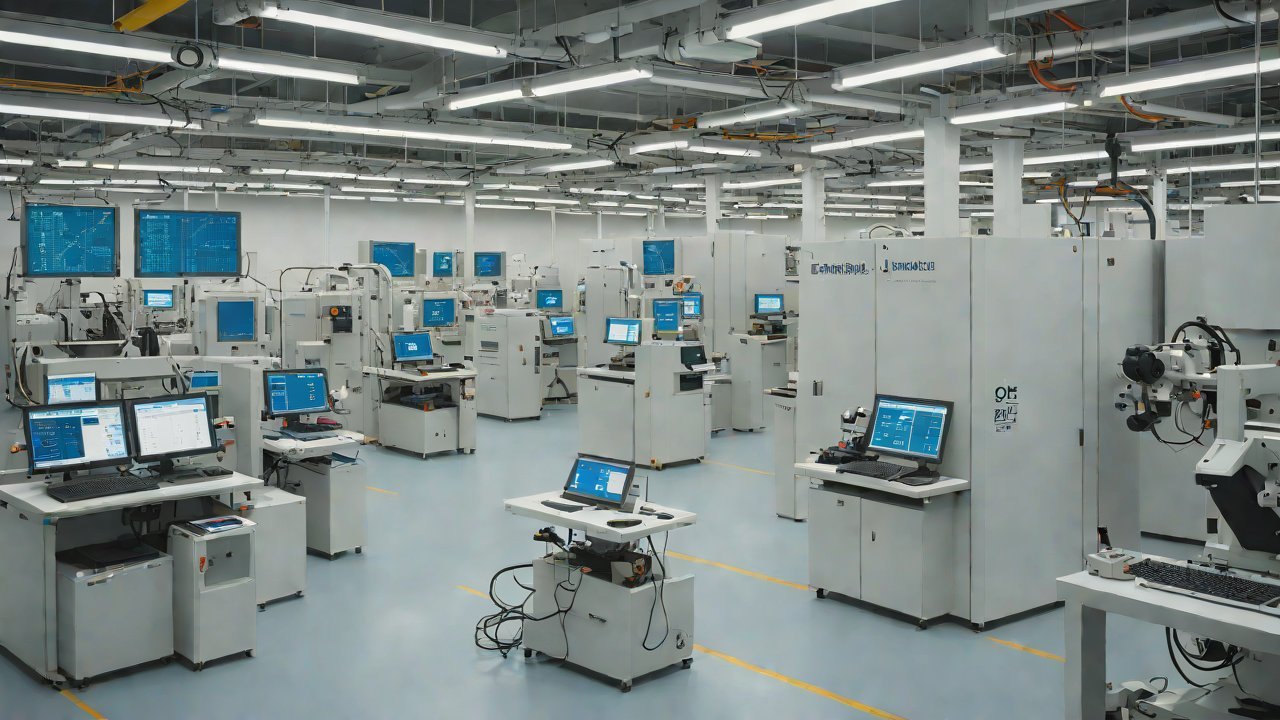
The industrial landscape is undergoing a transformative shift, driven by the convergence of artificial intelligence (AI), robotics, and the Internet of Things (IoT). Unmanned factories, once considered a futuristic concept, are now becoming a reality. These cutting-edge facilities leverage IoT technology to optimize production processes, reduce labor costs, and increase efficiency. The top IoT technology companies of 2026 are at the forefront of this revolution, pioneering innovations that will shape the future of manufacturing.
1. Leaders in Industrial Automation
As the industry transitions towards unmanned factories, several companies have emerged as leaders in industrial automation. These innovators are developing cutting-edge solutions that integrate AI, robotics, and IoT to optimize production processes.
| Company | Headquarters | Revenue (2025) | Key Products/Services |
|---|---|---|---|
| ABB | Switzerland | $25.4B | Robotics, Industrial Automation, Power Grids |
| Siemens | Germany | $72.3B | Industrial Automation, Energy Management, Medical Technology |
| Rockwell Automation | USA | $6.2B | Industrial Automation, Control Systems, IoT Solutions |
ABB’s Ability Platform is a prime example of their commitment to industrial automation. This comprehensive suite of solutions integrates AI, robotics, and IoT to optimize production processes across various industries. The platform enables real-time monitoring, predictive maintenance, and smart manufacturing, making it an essential tool for unmanned factories.
2. IoT Solutions Providers
The rise of unmanned factories has created a high demand for IoT solutions providers. These companies are developing innovative technologies that enable seamless communication between machines, humans, and the physical environment.
| Company | Headquarters | Revenue (2025) | Key Products/Services |
|---|---|---|---|
| Cisco Systems | USA | $53.7B | Networking Solutions, IoT Platforms, Cybersecurity |
| GE Digital | USA | $1.3B | Industrial Internet of Things (IIoT), Predix Platform, Analytics |
| Bosch.IO | Germany | $100M | IoT Platforms, Data Analytics, Industry 4.0 Solutions |

Cisco’s Industrial Ethernet 4000 series is a notable example of their commitment to IoT solutions. This robust networking solution enables secure and reliable communication between machines, making it an ideal choice for unmanned factories.
3. Artificial Intelligence (AI) and Machine Learning (ML) Providers
The integration of AI and ML in unmanned factories has revolutionized production processes. These technologies enable predictive maintenance, quality control, and optimized resource allocation.
| Company | Headquarters | Revenue (2025) | Key Products/Services |
|---|---|---|---|
| NVIDIA | USA | $15.6B | GPU-accelerated Computing, AI & ML Solutions, Autonomous Systems |
| Microsoft Azure | USA | $42.1B | Cloud Computing, AI & ML Services, IoT Solutions |
| Google Cloud AI Platform | USA | $18.9B | AI & ML Services, Cloud-Based Solutions, Data Analytics |
NVIDIA’s Deep Learning platform is a prime example of their commitment to AI and ML. This comprehensive suite of solutions enables developers to build, train, and deploy AI models that can be integrated into various applications, including unmanned factories.

4. Robotics and Machine Vision Providers
The integration of robotics and machine vision in unmanned factories has enabled precise and efficient production processes. These technologies enable real-time monitoring, quality control, and optimized resource allocation.
| Company | Headquarters | Revenue (2025) | Key Products/Services |
|---|---|---|---|
| KUKA | Germany | $1.4B | Industrial Robots, Robotics Solutions, Machine Vision Systems |
| Cognex | USA | $430M | Machine Vision Systems, Barcode Scanning, Quality Control Solutions |
| Fanuc | Japan | $2.3B | Industrial Robots, CNC Machines, Robotics Solutions |
KUKA’s LBR iiwa robot is a notable example of their commitment to robotics and machine vision. This lightweight robot enables precise and efficient production processes, making it an ideal choice for unmanned factories.
5. Cybersecurity Providers
The increasing adoption of IoT technology in unmanned factories has created new cybersecurity challenges. These companies are developing innovative solutions that protect against cyber threats and ensure the integrity of production data.
| Company | Headquarters | Revenue (2025) | Key Products/Services |
|---|---|---|---|
| Palo Alto Networks | USA | $3.2B | Next-Generation Firewalls, Cybersecurity Solutions, IoT Security |
| Check Point | Israel | $1.4B | Cybersecurity Solutions, Threat Prevention, Cloud Security |
| IBM Security | USA | $20.6B | Cybersecurity Solutions, AI-Powered Threat Detection, Cloud Security |

Palo Alto Networks’ IoT security solutions are a prime example of their commitment to cybersecurity. Their platforms enable real-time monitoring and threat detection, ensuring the integrity of production data in unmanned factories.
6. Industry 4.0 Enablers
The convergence of AI, robotics, and IoT has enabled the development of Industry 4.0 enablers. These companies are developing innovative solutions that integrate various technologies to optimize production processes and improve efficiency.
| Company | Headquarters | Revenue (2025) | Key Products/Services |
|---|---|---|---|
| SAP | Germany | $27.6B | Enterprise Resource Planning, Industry 4.0 Solutions, IoT Platforms |
| Siemens MindSphere | Germany | $1.2B | Industrial Automation, Energy Management, Industry 4.0 Solutions |
| Dassault Systèmes | France | $3.7B | 3D Design, Simulation, and Engineering Software, Industry 4.0 Solutions |
SAP’s SAP IoT platform is a notable example of their commitment to Industry 4.0 enablers. This comprehensive suite of solutions integrates AI, robotics, and IoT to optimize production processes across various industries.
The top IoT technology companies of 2026 are at the forefront of the unmanned factory revolution. These innovators are developing cutting-edge solutions that integrate AI, robotics, and IoT to optimize production processes, reduce labor costs, and increase efficiency. As the industry continues to evolve, it is essential for manufacturers to adopt these technologies to remain competitive in the market.
As we move forward into this new era of industrial automation, it will be exciting to see how these companies continue to innovate and push the boundaries of what is possible with IoT technology.
IOT Cloud Platform
IOT Cloud Platform is an IoT portal established by a Chinese IoT company, focusing on technical solutions in the fields of agricultural IoT, industrial IoT, medical IoT, security IoT, military IoT, meteorological IoT, consumer IoT, automotive IoT, commercial IoT, infrastructure IoT, smart warehousing and logistics, smart home, smart city, smart healthcare, smart lighting, etc.
The IoT Cloud Platform blog is a top IoT technology stack, providing technical knowledge on IoT, robotics, artificial intelligence (generative artificial intelligence AIGC), edge computing, AR/VR, cloud computing, quantum computing, blockchain, smart surveillance cameras, drones, RFID tags, gateways, GPS, 3D printing, 4D printing, autonomous driving, etc.