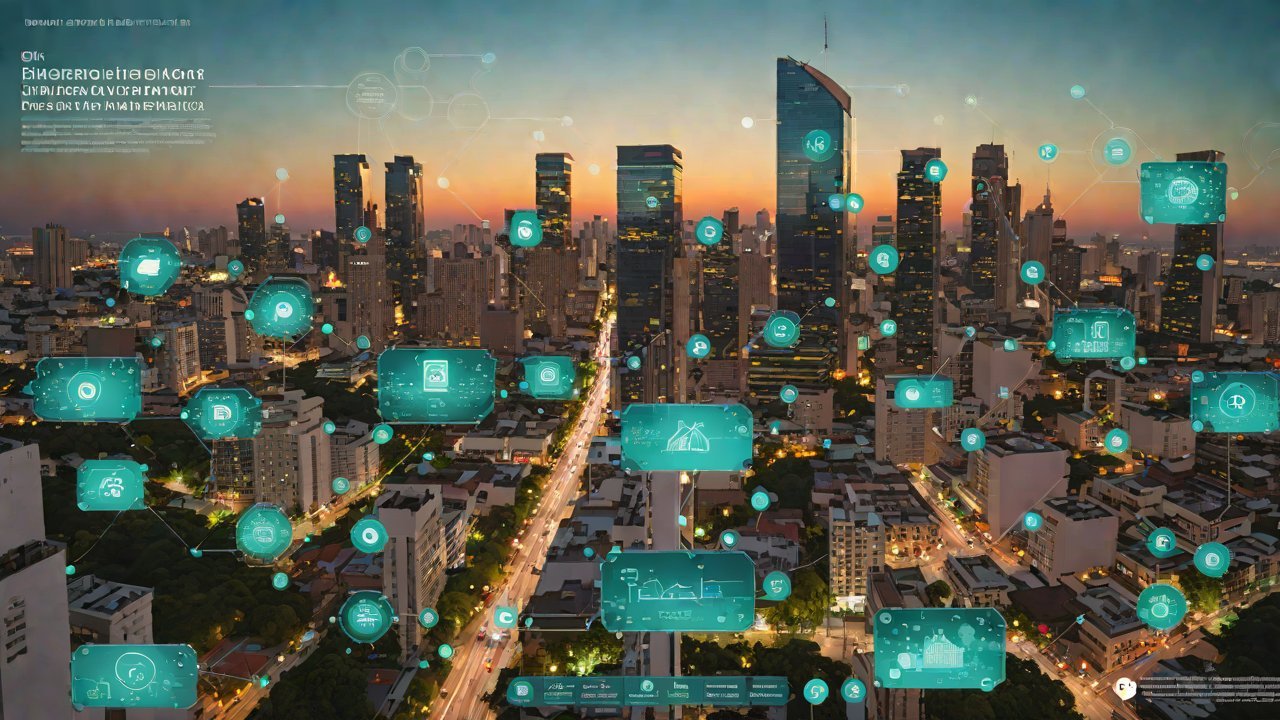
The Integration of Multimodal Large Models with IoT
As we stand at the threshold of a new era in artificial intelligence (AI), the integration of multimodal large models with Internet of Things (IoT) is poised to revolutionize the way businesses and individuals interact with their surroundings. The convergence of these two technologies has the potential to unlock unprecedented levels of efficiency, productivity, and innovation.
The proliferation of IoT devices has created a vast network of interconnected sensors and actuators that can collect and transmit vast amounts of data from various sources. However, this data is often siloed and fragmented, making it difficult to extract meaningful insights and take informed decisions. Multimodal large models, on the other hand, have made tremendous strides in recent years, enabling machines to understand, reason, and generate human-like responses across multiple modalities such as text, image, audio, and video.
The integration of these two technologies has the potential to unlock new possibilities for predictive maintenance, anomaly detection, and decision-making. By leveraging multimodal large models, IoT devices can analyze data from various sources, identify patterns, and make predictions about future events. This can enable businesses to proactively address issues before they become major problems, reducing downtime and increasing overall efficiency.
1. The State of Multimodal Large Models
Multimodal large models have made tremendous strides in recent years, enabling machines to understand, reason, and generate human-like responses across multiple modalities. These models are typically trained on massive datasets that contain a wide range of inputs and outputs, allowing them to learn complex patterns and relationships between different types of data.
Some of the key features of multimodal large models include:
| Model Type | Description |
|---|---|
| Multimodal Transformers | Models that can process multiple modalities simultaneously, such as text-image or audio-video. |
| Vision-Language Models | Models that can understand and generate text based on images or videos. |
| Speech-to-Text Models | Models that can convert spoken language into written text. |
2. The State of IoT
IoT devices have become ubiquitous in recent years, with billions of connected devices transmitting data to the cloud and back. However, this data is often siloed and fragmented, making it difficult to extract meaningful insights and take informed decisions.
Some of the key features of IoT include:
| Device Type | Description |
|---|---|
| Smart Sensors | Devices that can collect and transmit data from various sources such as temperature, humidity, and pressure. |
| Actuators | Devices that can receive commands and perform actions in real-time, such as opening or closing valves. |
| Gateways | Devices that can connect multiple IoT devices to the cloud, enabling seamless communication and data exchange. |

3. Integration of Multimodal Large Models with IoT
The integration of multimodal large models with IoT has the potential to unlock new possibilities for predictive maintenance, anomaly detection, and decision-making.
Some of the key benefits of this integration include:
| Benefit | Description |
|---|---|
| Predictive Maintenance | The ability to predict when equipment will fail or require maintenance, reducing downtime and increasing overall efficiency. |
| Anomaly Detection | The ability to identify unusual patterns in data that may indicate potential issues or threats. |
| Decision-Making | The ability to analyze data from various sources and make informed decisions based on insights and predictions. |

4. Market Analysis
The market for multimodal large models and IoT is rapidly growing, with estimates suggesting that the global IoT market will reach $1.6 trillion by 2025, while the market for AI-powered IoT devices will reach $13.3 billion by 2027.
Some of the key players in this space include:
| Company | Description |
|---|---|
| Google Cloud | Offers a range of cloud-based services that enable businesses to build and deploy multimodal large models on top of IoT data. |
| Amazon Web Services (AWS) | Offers a range of cloud-based services that enable businesses to build and deploy multimodal large models on top of IoT data. |
| Microsoft Azure | Offers a range of cloud-based services that enable businesses to build and deploy multimodal large models on top of IoT data. |

5. Technical Perspective
The integration of multimodal large models with IoT requires significant technical expertise, including knowledge of machine learning algorithms, neural networks, and programming languages such as Python and Java.
Some of the key technical challenges include:
| Challenge | Description |
|---|---|
| Data Integration | Integrating data from various sources, including sensors, actuators, and gateways. |
| Model Training | Training multimodal large models on massive datasets that contain a wide range of inputs and outputs. |
| Deployment | Deploying trained models in real-world settings, including IoT devices and cloud-based services. |
6. Conclusion
The integration of multimodal large models with IoT has the potential to unlock unprecedented levels of efficiency, productivity, and innovation. By leveraging these technologies, businesses can analyze data from various sources, identify patterns, and make predictions about future events. This can enable proactive decision-making, reducing downtime and increasing overall efficiency.
However, this requires significant technical expertise, including knowledge of machine learning algorithms, neural networks, and programming languages such as Python and Java. Additionally, the market for multimodal large models and IoT is rapidly growing, with estimates suggesting that the global IoT market will reach $1.6 trillion by 2025, while the market for AI-powered IoT devices will reach $13.3 billion by 2027.
As we stand at the threshold of a new era in artificial intelligence, it is clear that the integration of multimodal large models with IoT is poised to revolutionize the way businesses and individuals interact with their surroundings.
IOT Cloud Platform
IOT Cloud Platform is an IoT portal established by a Chinese IoT company, focusing on technical solutions in the fields of agricultural IoT, industrial IoT, medical IoT, security IoT, military IoT, meteorological IoT, consumer IoT, automotive IoT, commercial IoT, infrastructure IoT, smart warehousing and logistics, smart home, smart city, smart healthcare, smart lighting, etc.
The IoT Cloud Platform blog is a top IoT technology stack, providing technical knowledge on IoT, robotics, artificial intelligence (generative artificial intelligence AIGC), edge computing, AR/VR, cloud computing, quantum computing, blockchain, smart surveillance cameras, drones, RFID tags, gateways, GPS, 3D printing, 4D printing, autonomous driving, etc.