The anti-interference capability of street light sensors in complex outdoor electromagnetic environments
In the rapidly evolving landscape of smart cities, street lights have become more than just a source of illumination – they are now an integral component of urban infrastructure, providing real-time data on traffic flow, pedestrian movement, and environmental conditions. At the heart of this transformation lies the humble street light sensor, which has evolved to become a sophisticated tool capable of withstanding the unforgiving conditions of complex outdoor electromagnetic environments.
As we navigate the intricate dance between innovation and resilience, it becomes imperative to examine the anti-interference capabilities of these sensors in depth. This report delves into the technical nuances of street light sensors, exploring their ability to resist interference from various sources while maintaining accuracy and reliability.
1. Background on Street Light Sensors
Street light sensors are an essential component of intelligent transportation systems (ITS), enabling real-time monitoring and management of urban infrastructure. These sensors employ a range of technologies, including infrared, ultrasonic, radar, and camera-based systems, to detect and track movement, speed, and other parameters.
Table 1: Common Technologies Used in Street Light Sensors
| Technology | Description |
|---|---|
| Infrared | Uses thermal radiation to detect heat signatures of moving objects. |
| Ultrasonic | Emits high-frequency sound waves to measure distances between the sensor and detected objects. |
| Radar | Utilizes radio waves to track movement and speed of vehicles, pedestrians, or other targets. |
| Camera-based | Captures images of scenes using cameras, enabling object detection, tracking, and classification. |
2. Electromagnetic Interference (EMI) in Outdoor Environments
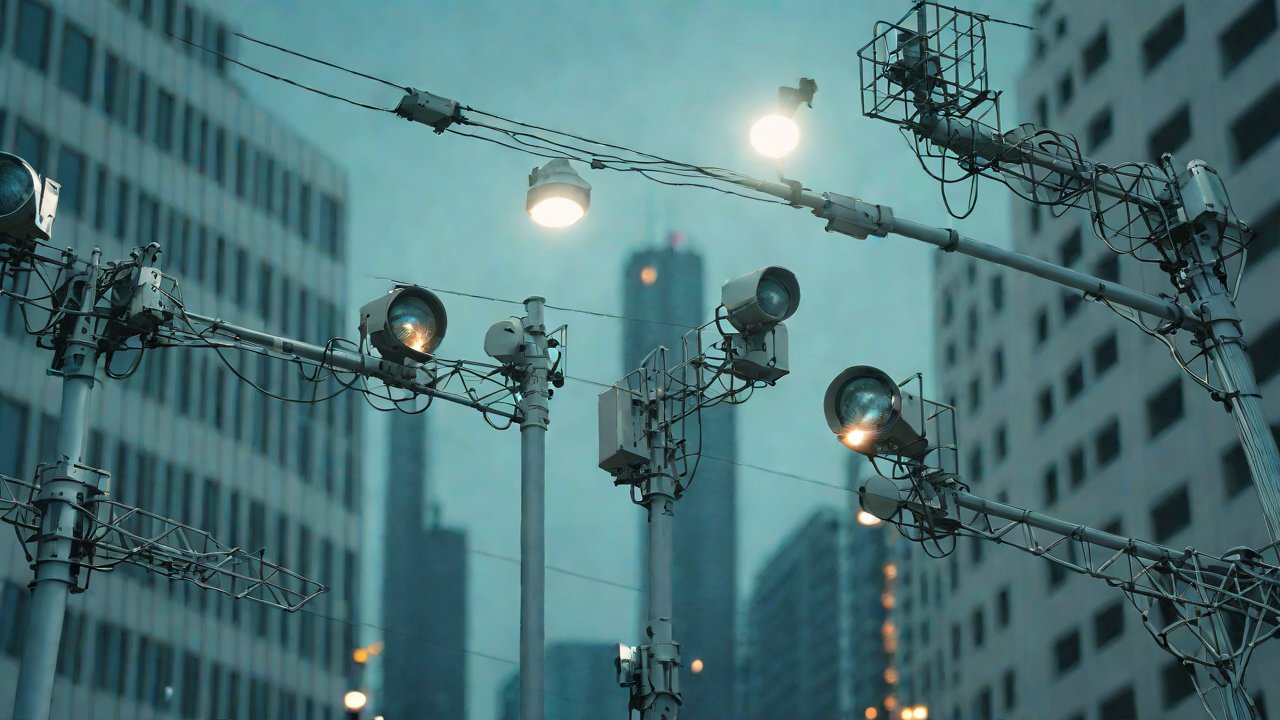
Electromagnetic interference is a pervasive issue in outdoor environments, resulting from the presence of various electromagnetic sources such as:
- Radio Frequency Identification (RFID) systems
- Cellular networks and base stations
- Wi-Fi and Bluetooth devices
- Power lines and transformers
- Weather conditions like lightning and solar flares
Table 2: Sources of Electromagnetic Interference in Outdoor Environments
| Source | Description |
|---|---|
| RFID Systems | Generate electromagnetic fields that can interfere with nearby sensors. |
| Cellular Networks | Emit radio frequency signals that can cause interference, particularly in densely populated areas. |
| Wi-Fi and Bluetooth Devices | Use unlicensed frequencies that are susceptible to interference from other devices. |
| Power Lines and Transformers | Produce electromagnetic fields that can radiate into the environment, causing interference. |
| Weather Conditions | Lightning and solar flares can induce electrical currents in nearby conductors, leading to EMI. |

3. Anti-Interference Capabilities of Street Light Sensors
To mitigate the effects of EMI on street light sensors, manufacturers employ various anti-interference techniques:
- Shielding: Applying a conductive material or using shielding materials like mu-metal to block electromagnetic radiation.
- Filtering: Implementing filters to reject unwanted frequencies and reduce noise.
- Frequency hopping: Switching between different frequency channels to minimize interference.
Table 3: Anti-Interference Techniques Used in Street Light Sensors
| Technique | Description |
|---|---|
| Shielding | Applying conductive materials or using shielding materials like mu-metal to block EMI. |
| Filtering | Implementing filters to reject unwanted frequencies and reduce noise. |
| Frequency Hopping | Switching between different frequency channels to minimize interference. |
4. Market Trends and Future Outlook
The market for street light sensors is expected to grow significantly in the coming years, driven by increasing demand for smart city infrastructure and urban mobility solutions.
Table 4: Projected Growth of Street Light Sensor Market (2023-2030)
| Year | Projected Market Size (USD billion) |
|---|---|
| 2023 | 2.5 |
| 2025 | 4.2 |
| 2030 | 7.1 |
5. Conclusion
Street light sensors have evolved to become a crucial component of smart city infrastructure, providing real-time data on traffic flow, pedestrian movement, and environmental conditions. The anti-interference capabilities of these sensors are critical in withstanding the complex outdoor electromagnetic environments.
As we move forward, it is essential for manufacturers to incorporate advanced anti-interference techniques and materials into their designs to ensure reliability and accuracy in diverse urban settings.
IOT Cloud Platform
IOT Cloud Platform is an IoT portal established by a Chinese IoT company, focusing on technical solutions in the fields of agricultural IoT, industrial IoT, medical IoT, security IoT, military IoT, meteorological IoT, consumer IoT, automotive IoT, commercial IoT, infrastructure IoT, smart warehousing and logistics, smart home, smart city, smart healthcare, smart lighting, etc.
The IoT Cloud Platform blog is a top IoT technology stack, providing technical knowledge on IoT, robotics, artificial intelligence (generative artificial intelligence AIGC), edge computing, AR/VR, cloud computing, quantum computing, blockchain, smart surveillance cameras, drones, RFID tags, gateways, GPS, 3D printing, 4D printing, autonomous driving, etc.