SPI Interface Analysis and Application Examples in Low-Power IoT
The proliferation of low-power Internet of Things (IoT) devices has created a pressing need for efficient and reliable communication interfaces. Among various interface options, Serial Peripheral Interface (SPI) has emerged as a popular choice due to its simplicity, flexibility, and low power consumption. This report delves into the analysis of the SPI interface and its application examples in low-power IoT, providing an in-depth understanding of its capabilities, limitations, and potential use cases.
1. SPI Interface Overview
The SPI interface is a synchronous serial communication protocol that enables data transfer between devices. It is widely used in various applications, including microcontrollers, sensors, and actuators. The SPI interface consists of four main components:
- Master: The device that initiates the data transfer.
- Slave: The device that responds to the master’s requests.
- SCLK: The clock signal that synchronizes the data transfer.
- MOSI: The master output slave input signal that carries the data from the master to the slave.
- MISO: The master input slave output signal that carries the data from the slave to the master.
The SPI interface operates at a clock frequency of up to 100 MHz, making it suitable for high-speed data transfer applications. However, its power consumption is relatively low, making it an attractive choice for low-power IoT devices.
2. SPI Interface Characteristics
The SPI interface has several characteristics that make it suitable for low-power IoT applications:
- Low power consumption: The SPI interface consumes minimal power, making it ideal for battery-powered devices.
- High data transfer rate: The SPI interface can transfer data at high speeds, making it suitable for applications that require fast data transfer.
- Simple and flexible: The SPI interface is easy to implement and can be used with various devices, making it a versatile communication protocol.
However, the SPI interface also has some limitations:
- Half-duplex: The SPI interface is a half-duplex protocol, meaning that data can only be transferred in one direction at a time.
- Limited bandwidth: The SPI interface has a limited bandwidth, which can be a constraint in high-bandwidth applications.
3. SPI Interface Applications
The SPI interface is widely used in various applications, including:
- Microcontrollers: The SPI interface is often used to connect microcontrollers to peripherals, such as sensors and actuators.
- Sensors: The SPI interface is used to connect sensors to microcontrollers, allowing for data transfer and control.
- Actuators: The SPI interface is used to connect actuators to microcontrollers, enabling control and monitoring.
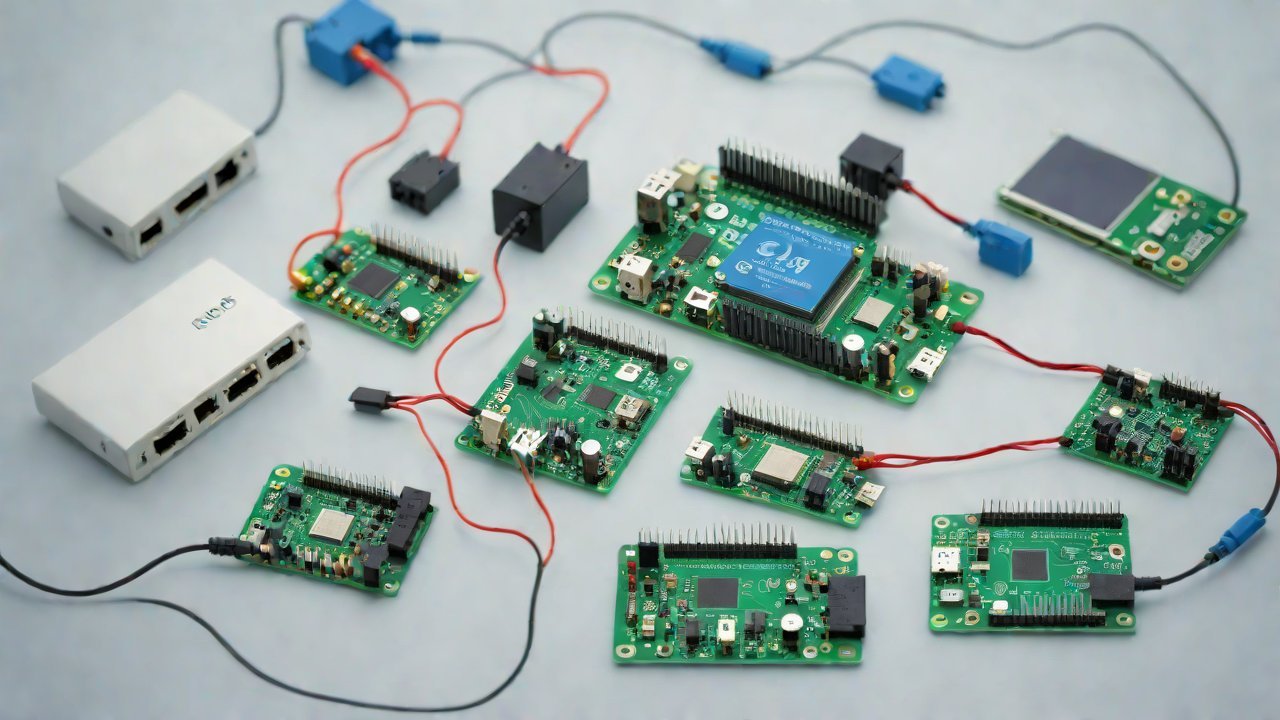
Some specific examples of SPI interface applications include:
| Application | Description |
|---|---|
| Microcontroller-Sensor Interface | The SPI interface is used to connect a microcontroller to a sensor, allowing for data transfer and control. |
| Microcontroller-Actuator Interface | The SPI interface is used to connect a microcontroller to an actuator, enabling control and monitoring. |
| Sensor-Sensor Interface | The SPI interface is used to connect two sensors, allowing for data transfer and control. |

4. SPI Interface in Low-Power IoT
The SPI interface is an attractive choice for low-power IoT applications due to its low power consumption and high data transfer rate. However, its limitations, such as half-duplex operation and limited bandwidth, must be considered when designing low-power IoT systems.
To overcome these limitations, various techniques can be employed, including:
- SPI multiplexing: Multiple SPI interfaces can be multiplexed to increase the bandwidth.
- SPI arbitration: Arbitration protocols can be used to manage access to the SPI interface and prevent collisions.
- SPI buffering: Buffers can be used to store data and reduce the impact of half-duplex operation.
5. SPI Interface Comparison with Other Interfaces
The SPI interface is compared with other interfaces, including:
| Interface | Description |
|---|---|
| I2C | The I2C interface is a synchronous serial communication protocol that is widely used in low-power IoT applications. |
| UART | The UART interface is a serial communication protocol that is widely used in low-power IoT applications. |
| SPI | The SPI interface is a synchronous serial communication protocol that is widely used in low-power IoT applications. |
The SPI interface has several advantages over other interfaces, including:
- Lower power consumption: The SPI interface consumes less power than other interfaces, making it suitable for battery-powered devices.
- Higher data transfer rate: The SPI interface can transfer data at higher speeds than other interfaces, making it suitable for applications that require fast data transfer.
However, the SPI interface also has some disadvantages compared to other interfaces, including:
- More complex implementation: The SPI interface is more complex to implement than other interfaces, making it less suitable for low-complexity applications.
- Limited bandwidth: The SPI interface has a limited bandwidth, which can be a constraint in high-bandwidth applications.
6. Conclusion
The SPI interface is a popular choice for low-power IoT applications due to its low power consumption, high data transfer rate, and simple implementation. However, its limitations, such as half-duplex operation and limited bandwidth, must be considered when designing low-power IoT systems. By understanding the characteristics, applications, and limitations of the SPI interface, developers can make informed decisions when selecting a communication interface for their low-power IoT applications.
7. Recommendations
Based on the analysis of the SPI interface, the following recommendations are made:
- Use the SPI interface for low-power IoT applications: The SPI interface is a suitable choice for low-power IoT applications due to its low power consumption and high data transfer rate.
- Consider SPI multiplexing, arbitration, and buffering: Techniques such as SPI multiplexing, arbitration, and buffering can be used to overcome the limitations of the SPI interface.
- Evaluate the SPI interface against other interfaces: The SPI interface should be evaluated against other interfaces, such as I2C and UART, to determine the most suitable choice for the application.
By following these recommendations, developers can design low-power IoT systems that meet the requirements of their applications while minimizing power consumption and maximizing data transfer rates.
IOT Cloud Platform
IOT Cloud Platform is an IoT portal established by a Chinese IoT company, focusing on technical solutions in the fields of agricultural IoT, industrial IoT, medical IoT, security IoT, military IoT, meteorological IoT, consumer IoT, automotive IoT, commercial IoT, infrastructure IoT, smart warehousing and logistics, smart home, smart city, smart healthcare, smart lighting, etc.
The IoT Cloud Platform blog is a top IoT technology stack, providing technical knowledge on IoT, robotics, artificial intelligence (generative artificial intelligence AIGC), edge computing, AR/VR, cloud computing, quantum computing, blockchain, smart surveillance cameras, drones, RFID tags, gateways, GPS, 3D printing, 4D printing, autonomous driving, etc.