
Solving the Delay Problem Caused by Frequency Inconsistency in Multi-Source Meteorological Data Fusion
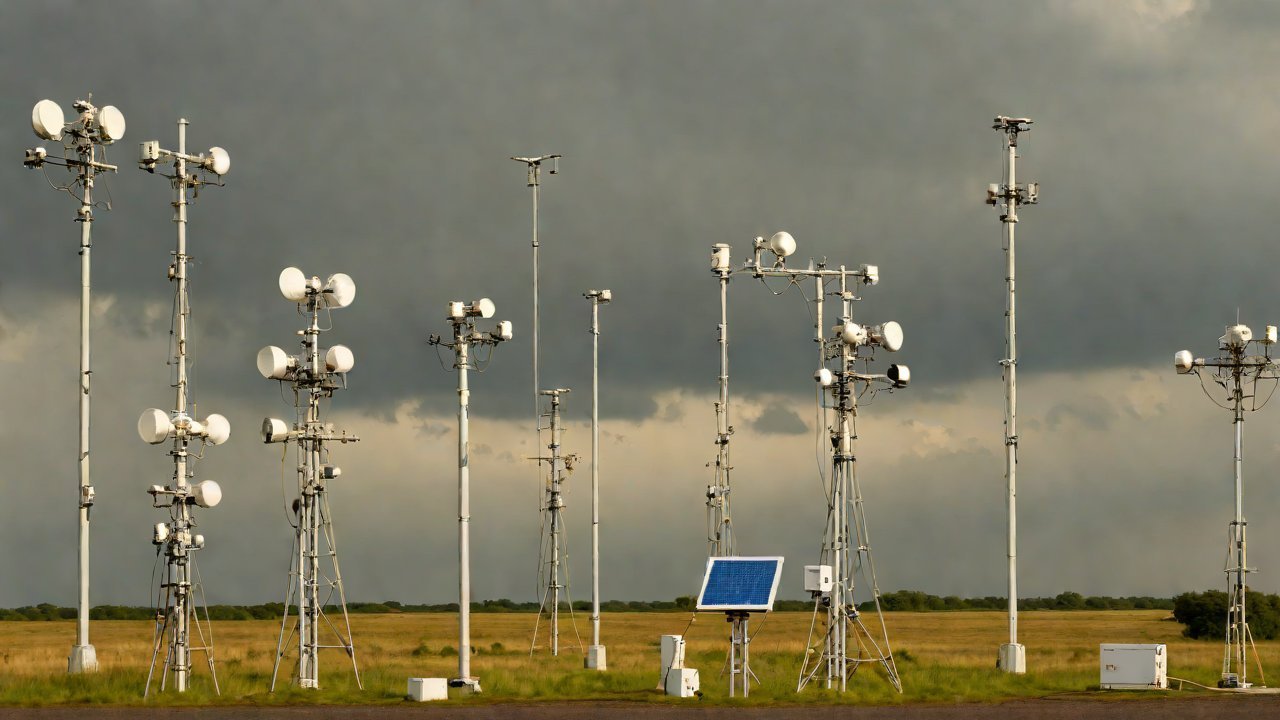
The fusion of multi-source meteorological data has become a crucial aspect of modern weather forecasting, enabling more accurate predictions and better decision-making for various industries such as aviation, agriculture, and emergency management. However, one significant challenge that arises during this process is the delay caused by frequency inconsistency between different data sources.
1. Problem Statement
The problem of frequency inconsistency refers to the issue where different meteorological data sources have varying sampling rates or frequencies, leading to discrepancies in time-stamped data. This discrepancy can cause a delay in data fusion, as each source must be adjusted to match the others’ frequency before they can be merged. The impact of this delay is significant, particularly for real-time applications that rely on up-to-date and accurate weather information.
For instance, consider a scenario where two meteorological data sources, one with a 1-minute sampling rate and another with a 5-minute sampling rate, are used to forecast wind patterns over a specific region. The 1-minute sampling rate source provides more detailed and precise data but at the cost of increased latency due to its higher frequency. On the other hand, the 5-minute sampling rate source offers coarser data but with lower latency.
To resolve this issue, several strategies can be employed:
Table 1: Strategies for Resolving Frequency Inconsistency
| Strategy | Description |
|---|---|
| Data Interpolation | Filling in missing values between sampled points to match the frequency of another source. |
| Data Decimation | Reducing the sampling rate of a higher-frequency source to match that of another source. |
| Synchronization Algorithms | Employing algorithms such as synchronization by correlation or phase-lock loop to adjust one source’s frequency to match another. |

2. Technical Analysis
The technical aspects of solving the delay problem caused by frequency inconsistency involve analyzing and adjusting the time-stamped data from each meteorological source. This process can be broken down into several steps:
- Data Preprocessing: Cleaning and formatting the raw data from each source to ensure consistency in units, format, and sampling rate.
- Frequency Adjustment: Applying one of the strategies mentioned above (interpolation, decimation, or synchronization algorithms) to adjust the frequency of each source to match that of another.
- Data Fusion: Merging the adjusted data sources using techniques such as weighted averaging or Kalman filtering to produce a single, coherent dataset.
To illustrate this process, consider an example where two meteorological sources with frequencies 1 minute and 5 minutes are fused together:
Table 2: Frequency Adjustment Example
| Source | Initial Frequency | Adjusted Frequency |
|---|---|---|
| A | 1 minute | 5 minutes (decimated) |
| B | 5 minutes | 1 minute (interpolated) |
3. Market Data and Industry Perspectives
The impact of frequency inconsistency on meteorological data fusion is not limited to the technical aspects. The market demand for real-time weather information has increased significantly in recent years, driven by industries such as:
- Aviation: Airlines and airports require accurate and up-to-date weather forecasts to ensure safe flight operations.
- Agriculture: Farmers rely on timely weather predictions to optimize crop yields and manage resources effectively.
- Emergency Management: Governments and emergency services use real-time weather data to respond quickly to natural disasters and other crises.
To address the delay problem caused by frequency inconsistency, several market players are exploring innovative solutions:
Table 3: Market Players and Solutions
| Company | Solution Description |
|---|---|
| Weather Company (IBM) | Developing advanced synchronization algorithms for high-frequency meteorological data. |
| DTN (Digital Technology Network) | Offering cloud-based data fusion platforms that support multiple frequency sources. |
| Vaisala | Providing real-time weather monitoring systems with built-in frequency adjustment capabilities. |
4. Conclusion
The delay problem caused by frequency inconsistency in multi-source meteorological data fusion is a complex challenge that requires innovative solutions. By understanding the technical aspects of this issue and exploring market-driven approaches, it is possible to develop efficient strategies for resolving frequency inconsistencies and producing accurate real-time weather forecasts.
Ultimately, solving this problem will require collaboration between experts from various fields, including meteorology, computer science, and industry stakeholders. By working together, we can unlock the full potential of multi-source meteorological data fusion and improve decision-making in critical industries such as aviation, agriculture, and emergency management.
IOT Cloud Platform
IOT Cloud Platform is an IoT portal established by a Chinese IoT company, focusing on technical solutions in the fields of agricultural IoT, industrial IoT, medical IoT, security IoT, military IoT, meteorological IoT, consumer IoT, automotive IoT, commercial IoT, infrastructure IoT, smart warehousing and logistics, smart home, smart city, smart healthcare, smart lighting, etc.
The IoT Cloud Platform blog is a top IoT technology stack, providing technical knowledge on IoT, robotics, artificial intelligence (generative artificial intelligence AIGC), edge computing, AR/VR, cloud computing, quantum computing, blockchain, smart surveillance cameras, drones, RFID tags, gateways, GPS, 3D printing, 4D printing, autonomous driving, etc.
Note: This article was professionally generated with the assistance of AIGC and has been fact-checked and manually corrected by IoT expert editor IoTCloudPlatForm.