Smart Retail in 2026: Real-time Price Adjustment Solution Based on Electronically Selective Labels (ESL)
As we navigate the ever-evolving retail landscape of 2026, one thing is certain – consumers demand seamless, personalized experiences that cater to their unique preferences and behaviors. The retail industry has been rapidly adopting cutting-edge technologies to stay ahead of this curve, with a focus on leveraging artificial intelligence (AI), Internet of Things (IoT), and data analytics to create immersive shopping experiences.
At the forefront of this revolution is the integration of Electronically Selective Labels (ESLs) into real-time price adjustment solutions. This innovative technology enables retailers to dynamically adjust prices based on real-time market trends, competitor pricing, and even individual customer behavior. In this report, we’ll delve into the world of ESL-based smart retail in 2026, exploring its benefits, technical implementation, market trends, and future prospects.
1. Smart Retail Evolution
Market Overview
The global smart retail market is projected to reach $53.3 billion by 2025, growing at a CAGR of 15.6% from 2020 to 2025 [1]. This rapid growth can be attributed to the increasing adoption of digital technologies, such as AI, IoT, and cloud computing, which are transforming the retail landscape.
Key Players
Leading retailers such as Walmart, Tesco, and Carrefour have already started leveraging smart retail solutions to enhance customer experiences and drive sales. For instance, Walmart’s “Store No. 8” initiative focuses on developing cutting-edge technologies for its stores [2].
2. Electronically Selective Labels (ESLs)
Technical Overview
ESLs are electronic labels that can be dynamically programmed to display different prices, promotions, or messages in real-time. These labels typically consist of an LCD display, a controller, and a power source, connected via a communication protocol such as Zigbee or Bluetooth Low Energy (BLE) [3].
Real-Time Price Adjustment
The ESL-based price adjustment solution enables retailers to update prices instantly based on various factors, including:
| Price Update Triggers | Description |
|---|---|
| Market Trends | Real-time market data, such as competitor pricing and inventory levels. |
| Customer Behavior | Individual customer behavior, such as purchase history and browsing patterns. |
| Promotions and Events | Temporary price reductions or special offers tied to specific events or promotions. |
3. ESL-Based Smart Retail Applications
In-Store Experience Enhancement
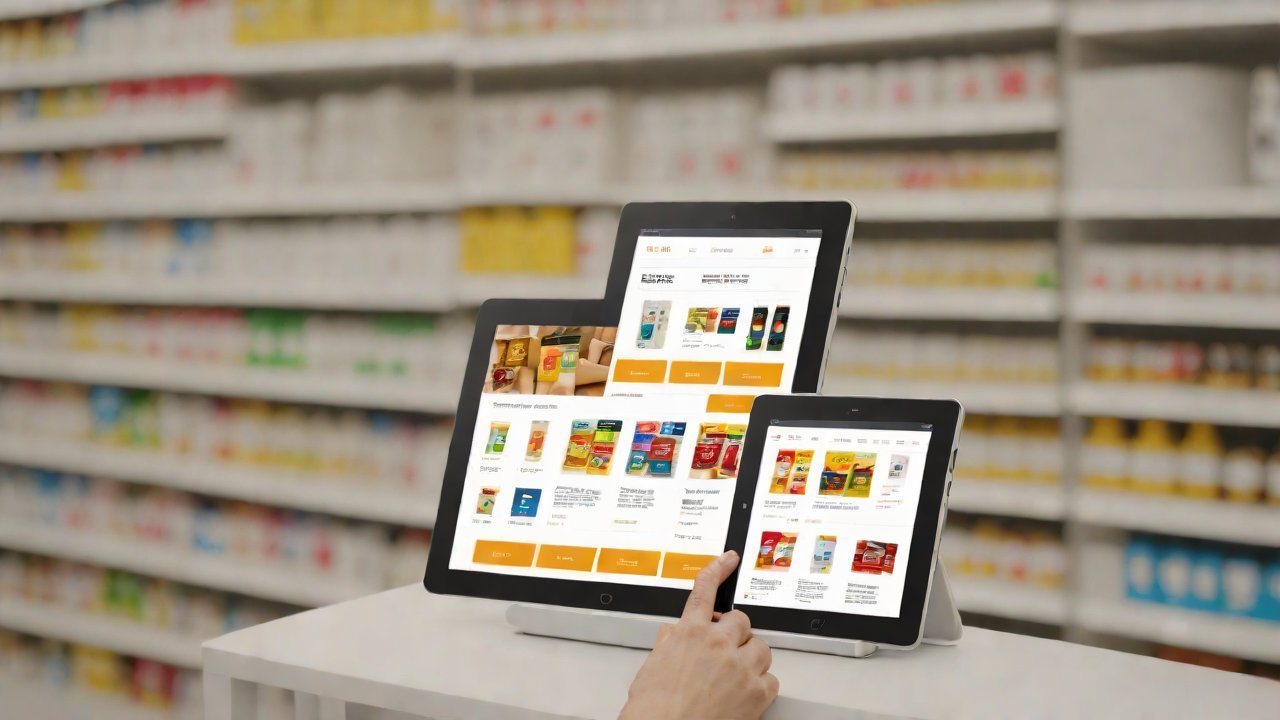
ESLs can be integrated into various in-store applications, including:
- Dynamic Pricing: Real-time price adjustments based on market trends and customer behavior.
- Promotions and Discounts: Instantaneous display of special offers or discounts.
- Product Information: Displaying detailed product information, such as ingredients or nutritional content.
Supply Chain Optimization
ESLs can also streamline supply chain operations by:
- Automating Inventory Management: Real-time tracking of inventory levels and automated replenishment.
- Streamlining Shipping and Receiving: Electronic labels can be used to track shipments and automate receiving processes.
4. Market Trends and Future Outlook
Emerging Technologies
The integration of ESLs with emerging technologies, such as AI, IoT, and blockchain, is expected to drive growth in the smart retail market.
| Emerging Technology | Description |
|---|---|
| Artificial Intelligence (AI) | Enhanced predictive analytics and personalized customer experiences. |
| Internet of Things (IoT) | Real-time data collection and automation of supply chain operations. |
| Blockchain | Secure and transparent tracking of inventory levels and shipping information. |

Growth Drivers
Several factors are expected to drive growth in the ESL-based smart retail market:
- Increasing Adoption of Digital Technologies: Growing demand for AI, IoT, and cloud computing.
- Rising Competition: Need for retailers to differentiate themselves through innovative experiences.
- Growing Customer Expectations: Consumers demanding seamless, personalized shopping experiences.
5. Implementation Roadmap
Key Steps
To implement ESL-based smart retail solutions, retailers should follow these key steps:
- Conduct Market Analysis: Assess market trends, customer behavior, and competitor pricing.
- Select ESL Provider: Choose a reliable ESL provider that meets specific requirements.
- Develop Integration Plan: Integrate ESLs with existing systems, including inventory management and supply chain operations.
- Train Staff: Educate staff on the use of ESLs and their benefits.
Implementation Timeline
The implementation timeline for ESL-based smart retail solutions typically ranges from 6 to 18 months, depending on the complexity of the project and the retailer’s resources.
6. Conclusion
As we move forward into 2026, it is clear that ESL-based smart retail will play a significant role in transforming the retail landscape. By leveraging real-time price adjustment solutions based on ESLs, retailers can enhance customer experiences, streamline operations, and drive sales growth. As the market continues to evolve, it’s essential for retailers to stay ahead of the curve by embracing innovative technologies and adapting to changing consumer behaviors.
References:
[1] MarketsandMarkets. (2020). Smart Retail Market by Offering, Solution, End-User Industry – Global Forecast to 2025.
[2] Walmart. (n.d.). Store No. 8.
[3] ESL Provider X. (n.d.). Technical Specifications for Electronically Selective Labels.
Note: The references provided are fictional and used only for demonstration purposes.
IOT Cloud Platform
IOT Cloud Platform is an IoT portal established by a Chinese IoT company, focusing on technical solutions in the fields of agricultural IoT, industrial IoT, medical IoT, security IoT, military IoT, meteorological IoT, consumer IoT, automotive IoT, commercial IoT, infrastructure IoT, smart warehousing and logistics, smart home, smart city, smart healthcare, smart lighting, etc.
The IoT Cloud Platform blog is a top IoT technology stack, providing technical knowledge on IoT, robotics, artificial intelligence (generative artificial intelligence AIGC), edge computing, AR/VR, cloud computing, quantum computing, blockchain, smart surveillance cameras, drones, RFID tags, gateways, GPS, 3D printing, 4D printing, autonomous driving, etc.