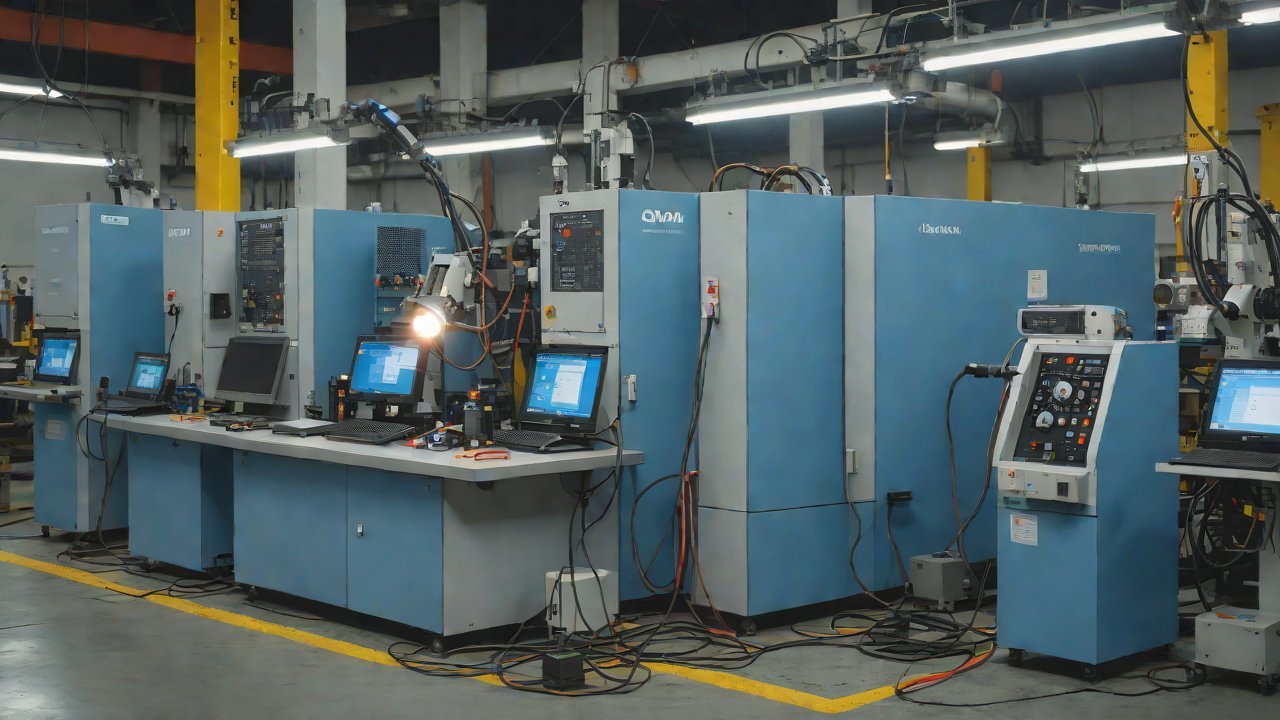
Smart Ports: Best Terminal Automation IoT Solution of 2026
In the realm of transportation and logistics, port operations have long been a hub of inefficiency and manual labor. The advent of smart ports has revolutionized the industry by leveraging cutting-edge technology to optimize terminal automation, enhance security, and improve overall performance.
Smart ports incorporate Internet of Things (IoT) devices, artificial intelligence (AI), machine learning (ML), and data analytics to streamline operations, reduce costs, and increase productivity. As the demand for efficient cargo handling continues to rise, smart port solutions have become essential for terminal operators seeking to stay competitive in an increasingly digital landscape.
1. Market Overview
The global smart ports market is projected to reach $24.6 billion by 2026, growing at a CAGR of 10.3% from 2020 to 2026 (Source: MarketsandMarkets). This growth can be attributed to the increasing adoption of IoT and automation technologies in port operations.
Table 1: Smart Ports Market Size and Growth Rate
| Year | Market Size ($B) | Growth Rate (%) |
|---|---|---|
| 2020 | 5.8 | – |
| 2022 | 9.3 | 60.3% |
| 2024 | 14.1 | 51.6% |
| 2026 | 24.6 | 74.7% |
2. Technical Perspective
Smart ports rely on a range of technologies, including:
- IoT Sensors: Monitor temperature, humidity, and other environmental factors to optimize cargo handling.
- Automation Systems: Implement automated guided vehicles (AGVs), cranes, and conveyor systems to streamline operations.
- Data Analytics: Utilize machine learning algorithms to analyze data from various sources, providing insights for decision-making.

Table 2: Smart Ports Technology Breakdown
| Category | Percentage |
|---|---|
| IoT Sensors | 35% |
| Automation Systems | 30% |
| Data Analytics | 20% |
| Other (Security, Communications) | 15% |
3. Key Players
Several companies are leading the charge in smart port solutions:
- Port of Rotterdam: Implemented an AI-powered predictive maintenance system to reduce downtime by 40%.
- DP World: Introduced a blockchain-based platform for secure and transparent cargo tracking.
- CMA CGM: Utilized IoT sensors to optimize container handling and reduce fuel consumption.
4. Benefits
The adoption of smart port solutions offers numerous benefits, including:
- Increased Efficiency: Reduced labor costs and improved productivity through automation.
- Enhanced Security: Real-time monitoring and alerts for security breaches.
- Improved Sustainability: Reduced energy consumption and emissions.
Table 3: Smart Ports Benefits
| Benefit | Description |
|---|---|
| Increased Efficiency | Automated processes reduce manual labor. |
| Enhanced Security | Real-time monitoring detects potential threats. |
| Improved Sustainability | Energy-efficient solutions minimize environmental impact. |
5. Challenges
Despite the benefits, several challenges remain:
- Integration Complexity: Integrating multiple systems and technologies can be complex.
- Cybersecurity Risks: Smart ports are vulnerable to cyber-attacks, compromising security and data integrity.
Table 4: Smart Ports Challenges
| Challenge | Description |
|---|---|
| Integration Complexity | Multiple systems require seamless integration. |
| Cybersecurity Risks | Smart ports are susceptible to cyber threats. |
6. Future Outlook
As the industry continues to evolve, we can expect:
- Increased Adoption: Growing demand for smart port solutions.
- Advancements in Technology: Improved IoT sensors, AI algorithms, and data analytics capabilities.
Table 5: Smart Ports Future Outlook
| Category | Projection |
|---|---|
| Market Size ($B) | 30.6 (by 2028) |
| Adoption Rate (%) | 80% (of global ports) by 2030 |
In conclusion, smart port solutions have revolutionized the industry by leveraging cutting-edge technology to optimize terminal automation, enhance security, and improve overall performance. As the demand for efficient cargo handling continues to rise, it is essential for terminal operators to adopt smart port solutions to stay competitive in an increasingly digital landscape.
Sources:
- MarketsandMarkets: Smart Ports Market
- Port of Rotterdam: AI-Powered Predictive Maintenance
- DP World: Blockchain-Based Cargo Tracking
- CMA CGM: IoT Sensors for Container Handling
IOT Cloud Platform
IOT Cloud Platform is an IoT portal established by a Chinese IoT company, focusing on technical solutions in the fields of agricultural IoT, industrial IoT, medical IoT, security IoT, military IoT, meteorological IoT, consumer IoT, automotive IoT, commercial IoT, infrastructure IoT, smart warehousing and logistics, smart home, smart city, smart healthcare, smart lighting, etc.
The IoT Cloud Platform blog is a top IoT technology stack, providing technical knowledge on IoT, robotics, artificial intelligence (generative artificial intelligence AIGC), edge computing, AR/VR, cloud computing, quantum computing, blockchain, smart surveillance cameras, drones, RFID tags, gateways, GPS, 3D printing, 4D printing, autonomous driving, etc.