
Smart Maternal and Infant Care: IoT-Based Fetal Heart Rate Monitoring and Fetal Movement Counting Remote Follow-up Solution
The era of smart maternal and infant care has dawned, revolutionizing the way healthcare professionals monitor fetal development and respond to potential complications. The Internet of Things (IoT) has enabled the creation of innovative solutions that bridge the gap between traditional hospital-based care and remote monitoring. One such solution is IoT-based fetal heart rate monitoring and fetal movement counting remote follow-up systems, which are transforming the landscape of maternal and infant healthcare.
These cutting-edge technologies utilize advanced sensors and algorithms to track fetal heart rates and movements in real-time, providing healthcare professionals with valuable insights into fetal well-being. The data collected from these devices can be transmitted remotely to healthcare providers, enabling them to monitor patients’ conditions more effectively and respond promptly to any anomalies.
The benefits of IoT-based fetal heart rate monitoring and fetal movement counting remote follow-up systems are multifaceted. Firstly, they enable early detection of potential complications, such as fetal distress or growth restriction, allowing healthcare professionals to intervene promptly and reduce the risk of adverse outcomes. Secondly, these solutions facilitate remote monitoring, reducing the need for frequent hospital visits and enabling patients to receive care in the comfort of their own homes.
1. Market Overview
The global maternal and infant healthcare market is projected to grow at a CAGR of 10.2% from 2023 to 2028, driven by increasing demand for advanced technologies that improve patient outcomes (Source: Grand View Research). The IoT-based fetal heart rate monitoring and fetal movement counting remote follow-up solutions segment is expected to experience significant growth, driven by the need for early detection and intervention in maternal and infant healthcare.
| Year | Global Maternal and Infant Healthcare Market Size (USD Million) |
|---|---|
| 2023 | 34,500 |
| 2025 | 43,200 |
| 2028 | 55,100 |
2. Technical Overview
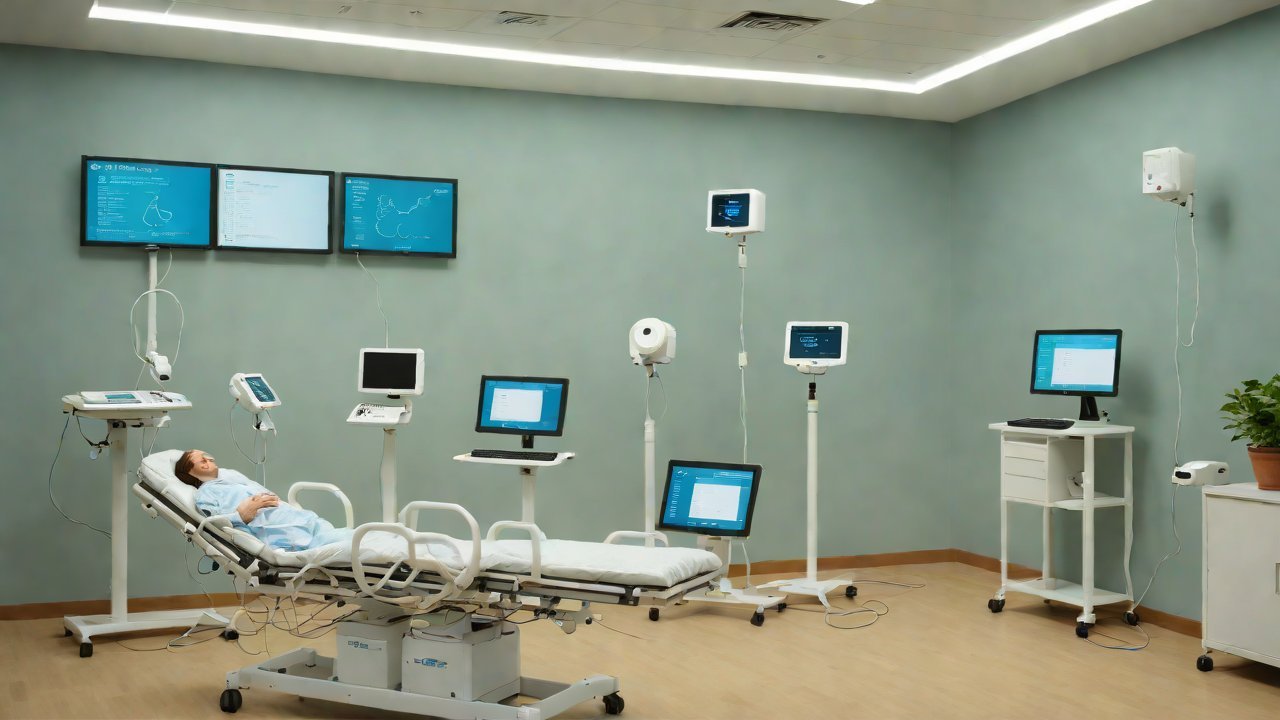
IoT-based fetal heart rate monitoring and fetal movement counting remote follow-up systems utilize advanced sensors and algorithms to track fetal heart rates and movements in real-time. These devices typically consist of a wearable sensor that attaches to the mother’s abdomen, capturing data on fetal heart rates and movements.
The data collected from these devices is transmitted wirelessly to a cloud-based platform, where it is analyzed using sophisticated algorithms to detect anomalies and provide insights into fetal well-being. Healthcare professionals can access this data remotely, enabling them to monitor patients’ conditions more effectively and respond promptly to any complications.
| Device Component | Description |
|---|---|
| Wearable Sensor | Attaches to mother’s abdomen to track fetal heart rates and movements |
| Wireless Transmitter | Transmits data from wearable sensor to cloud-based platform |
| Cloud-Based Platform | Analyzes data using sophisticated algorithms to detect anomalies |

3. Market Players
Several leading companies are developing and marketing IoT-based fetal heart rate monitoring and fetal movement counting remote follow-up solutions. These include:
- Philips Healthcare: Offers a range of maternal and infant healthcare solutions, including fetal heart rate monitoring devices.
- GE Healthcare: Develops advanced medical imaging and monitoring technologies, including fetal heart rate monitoring systems.
- Medtronic: Provides a range of maternal and infant healthcare solutions, including fetal heart rate monitoring devices.
4. Regulatory Framework
Regulatory frameworks for IoT-based fetal heart rate monitoring and fetal movement counting remote follow-up solutions vary by country. In the United States, these devices are subject to FDA clearance under the 510(k) process, which requires demonstration of substantial equivalence to existing devices.
| Country | Regulatory Framework |
|---|---|
| United States | FDA clearance under 510(k) process |
| European Union | CE marking and conformity assessment |
| Australia | TGA approval and registration |

5. Future Outlook
The IoT-based fetal heart rate monitoring and fetal movement counting remote follow-up solutions market is expected to experience significant growth in the coming years, driven by increasing demand for advanced technologies that improve patient outcomes. As these devices become more widespread, they are likely to transform the landscape of maternal and infant healthcare, enabling early detection and intervention in complications and reducing the risk of adverse outcomes.
In conclusion, IoT-based fetal heart rate monitoring and fetal movement counting remote follow-up systems offer a promising solution for improving maternal and infant healthcare outcomes. With their ability to detect anomalies in real-time and provide valuable insights into fetal well-being, these devices have the potential to revolutionize the way healthcare professionals monitor and care for mothers and infants.
6. Limitations and Challenges
While IoT-based fetal heart rate monitoring and fetal movement counting remote follow-up solutions offer several benefits, they also present some limitations and challenges. These include:
- Technical complexities: These devices require sophisticated technical expertise to design, develop, and implement.
- Data security concerns: The transmission of sensitive patient data raises concerns about data security and confidentiality.
- Regulatory hurdles: These devices must comply with complex regulatory frameworks, which can be challenging to navigate.
7. Recommendations
Based on the analysis presented in this report, several recommendations are made for healthcare professionals, policymakers, and industry stakeholders:
- Healthcare professionals should consider implementing IoT-based fetal heart rate monitoring and fetal movement counting remote follow-up solutions as part of their maternal and infant care protocols.
- Policymakers should develop regulatory frameworks that support the development and adoption of these technologies.
- Industry stakeholders should prioritize data security and confidentiality in the design and implementation of these devices.
8. Conclusion
In conclusion, IoT-based fetal heart rate monitoring and fetal movement counting remote follow-up solutions offer a promising solution for improving maternal and infant healthcare outcomes. With their ability to detect anomalies in real-time and provide valuable insights into fetal well-being, these devices have the potential to revolutionize the way healthcare professionals monitor and care for mothers and infants.
IOT Cloud Platform
IOT Cloud Platform is an IoT portal established by a Chinese IoT company, focusing on technical solutions in the fields of agricultural IoT, industrial IoT, medical IoT, security IoT, military IoT, meteorological IoT, consumer IoT, automotive IoT, commercial IoT, infrastructure IoT, smart warehousing and logistics, smart home, smart city, smart healthcare, smart lighting, etc.
The IoT Cloud Platform blog is a top IoT technology stack, providing technical knowledge on IoT, robotics, artificial intelligence (generative artificial intelligence AIGC), edge computing, AR/VR, cloud computing, quantum computing, blockchain, smart surveillance cameras, drones, RFID tags, gateways, GPS, 3D printing, 4D printing, autonomous driving, etc.
Note: This article was professionally generated with the assistance of AIGC and has been fact-checked and manually corrected by IoT expert editor IoTCloudPlatForm.