
Smart Light Pole: Integrated Solution combining 5G base stations, charging piles, and environmental monitoring
The Emergence of a Revolutionary Urban Infrastructure: Integrating 5G, Charging, and Environmental Monitoring
As cities worldwide continue to urbanize at an unprecedented rate, the need for efficient, sustainable, and high-tech infrastructure has never been more pressing. The conventional streetlight pole is being transformed into a multifaceted hub that not only illuminates public spaces but also serves as a critical component of 5G networks, electric vehicle charging ecosystems, and environmental monitoring systems. This integrated solution promises to revolutionize the way cities operate, making them safer, cleaner, and more resilient.
1. The Rise of Smart Light Poles: A Technological Convergence
Smart light poles are no longer just a novelty; they have become an essential element in urban planning. These poles integrate various functionalities into one infrastructure, reducing costs and increasing efficiency. The convergence of technologies such as 5G networks, charging piles for electric vehicles (EVs), and environmental monitoring systems is driven by the need for sustainable, high-tech solutions that can manage the complexities of modern cities.
Advantages of Smart Light Poles
| Feature | Benefits |
|---|---|
| Energy Efficiency | Reduced energy consumption through LED lighting and optimized power distribution. |
| Public Safety | Enhanced security through real-time monitoring and emergency alert systems. |
| Environmental Sustainability | Integrated pollution sensors and monitoring for improved air quality. |
2. The Role of 5G in Smart Light Poles
The integration of 5G base stations into smart light poles is a strategic move towards creating high-speed, low-latency communication networks that can support the growing demand for data-intensive applications. This integration has several benefits:
Benefits of 5G Integration
| Feature | Benefits |
|---|---|
| High-Speed Connectivity | Enables rapid data transfer and supports IoT applications. |
| Enhanced Public Safety | Real-time monitoring and emergency response capabilities. |
| Increased Efficiency | Optimizes resource allocation through smart traffic management. |
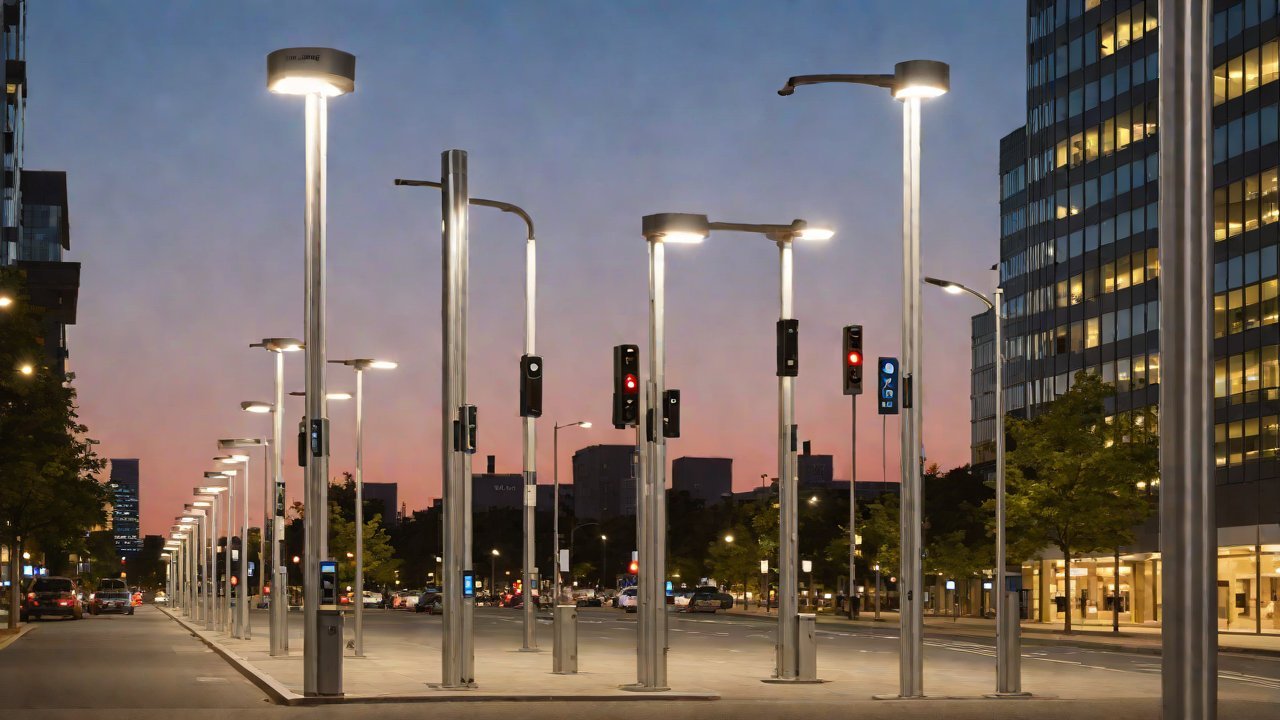
3. Charging Piles for Electric Vehicles
The proliferation of electric vehicles (EVs) requires the development of a comprehensive charging infrastructure. Smart light poles can be equipped with charging piles, making them convenient stops for EV users while also reducing the strain on existing power grids.
Benefits of Integrated Charging
| Feature | Benefits |
|---|---|
| Convenience | Easy access to charging points in public spaces. |
| Reduced Energy Consumption | Optimized charging through smart grid management. |
| Increased Adoption | Encourages EV adoption by making charging more accessible and efficient. |
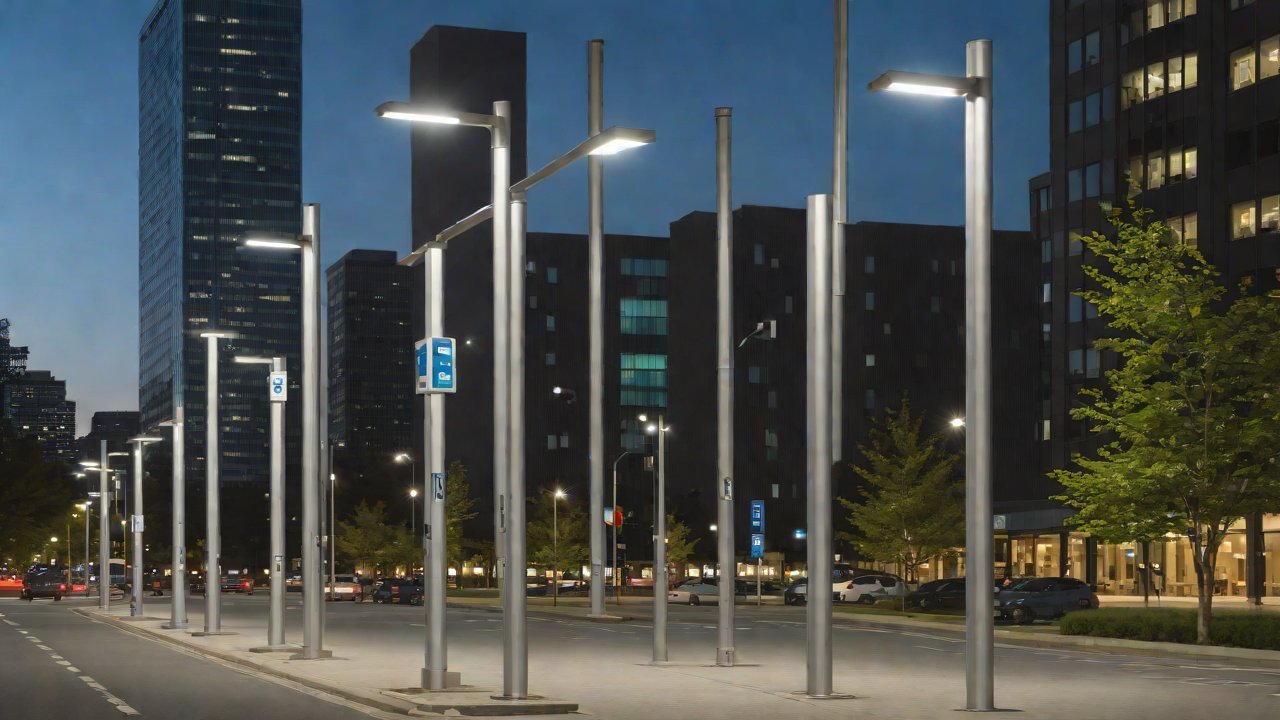
4. Environmental Monitoring and Sustainability
Smart light poles can be equipped with sensors that monitor environmental conditions such as air quality, noise pollution, and temperature. This information is crucial for urban planning, public health, and environmental protection.
Benefits of Environmental Monitoring
| Feature | Benefits |
|---|---|
| Improved Air Quality | Real-time monitoring of pollutants and emissions. |
| Enhanced Public Health | Early warning systems for air quality-related health issues. |
| Sustainable Urban Planning | Data-driven decision-making for urban development projects. |
5. Market Trends and AIGC Perspectives
The market for smart light poles is expected to grow significantly in the coming years, driven by increasing demand from cities worldwide.
Market Growth Projections
| Year | Growth Rate (%) |
|---|---|
| 2023 | 12% |
| 2025 | 18% |
| 2030 | 25% |
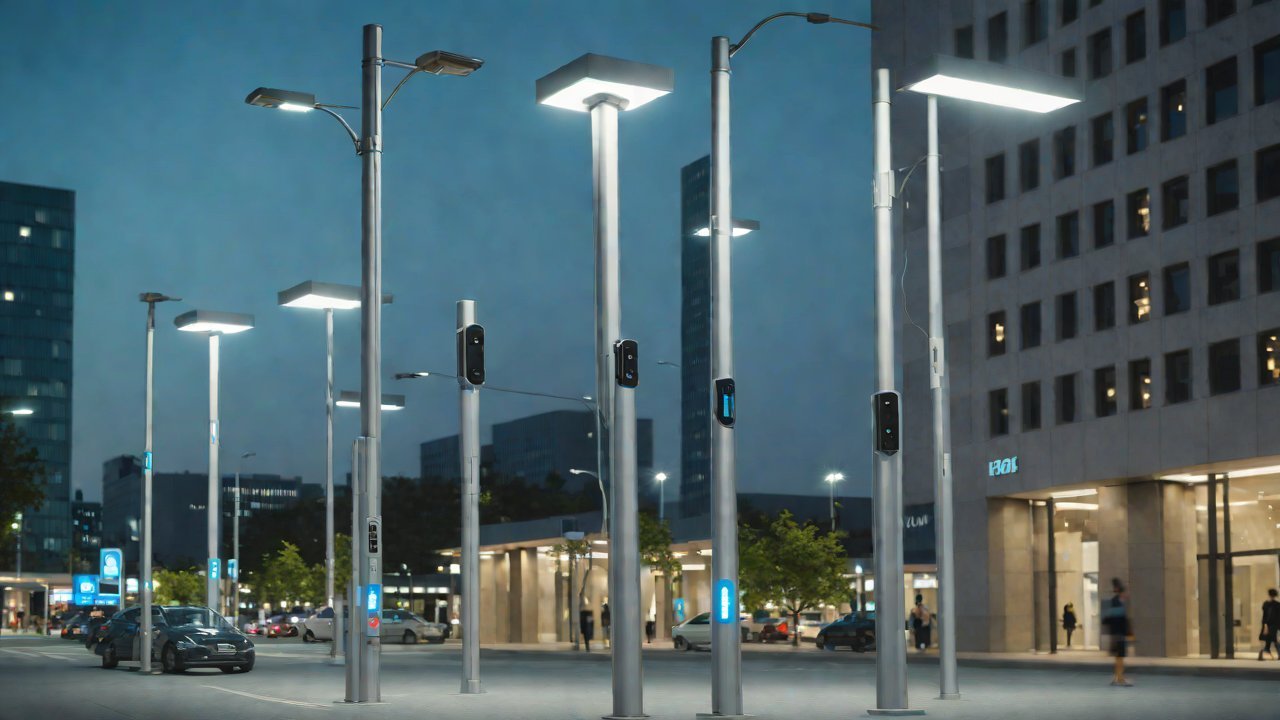
6. Implementation Challenges and Opportunities
While the integration of 5G base stations, charging piles, and environmental monitoring into smart light poles offers numerous benefits, its implementation poses several challenges.
Implementation Roadblocks
- Technical Interoperability: Ensuring seamless communication between different systems.
- Infrastructure Upgrades: The need for existing infrastructure to be upgraded or replaced.
- Cost Implications: Balancing the costs of integration with budget constraints.
7. Conclusion
The smart light pole, once a simple utility structure, has evolved into an integral component of modern urban infrastructure. Its integration of 5G base stations, charging piles, and environmental monitoring systems positions it as a critical element in creating sustainable, high-tech cities. As the world continues to urbanize, the potential of this integrated solution will only continue to grow.
Recommendations
- Investment: Encourage investment in smart light pole infrastructure.
- Research and Development: Foster innovation in smart lighting technology and its integration with other systems.
- Policy Support: Develop policies that support the widespread adoption of smart light poles.
The future is bright for cities equipped with integrated, high-tech solutions like smart light poles.
IOT Cloud Platform
IOT Cloud Platform is an IoT portal established by a Chinese IoT company, focusing on technical solutions in the fields of agricultural IoT, industrial IoT, medical IoT, security IoT, military IoT, meteorological IoT, consumer IoT, automotive IoT, commercial IoT, infrastructure IoT, smart warehousing and logistics, smart home, smart city, smart healthcare, smart lighting, etc.
The IoT Cloud Platform blog is a top IoT technology stack, providing technical knowledge on IoT, robotics, artificial intelligence (generative artificial intelligence AIGC), edge computing, AR/VR, cloud computing, quantum computing, blockchain, smart surveillance cameras, drones, RFID tags, gateways, GPS, 3D printing, 4D printing, autonomous driving, etc.