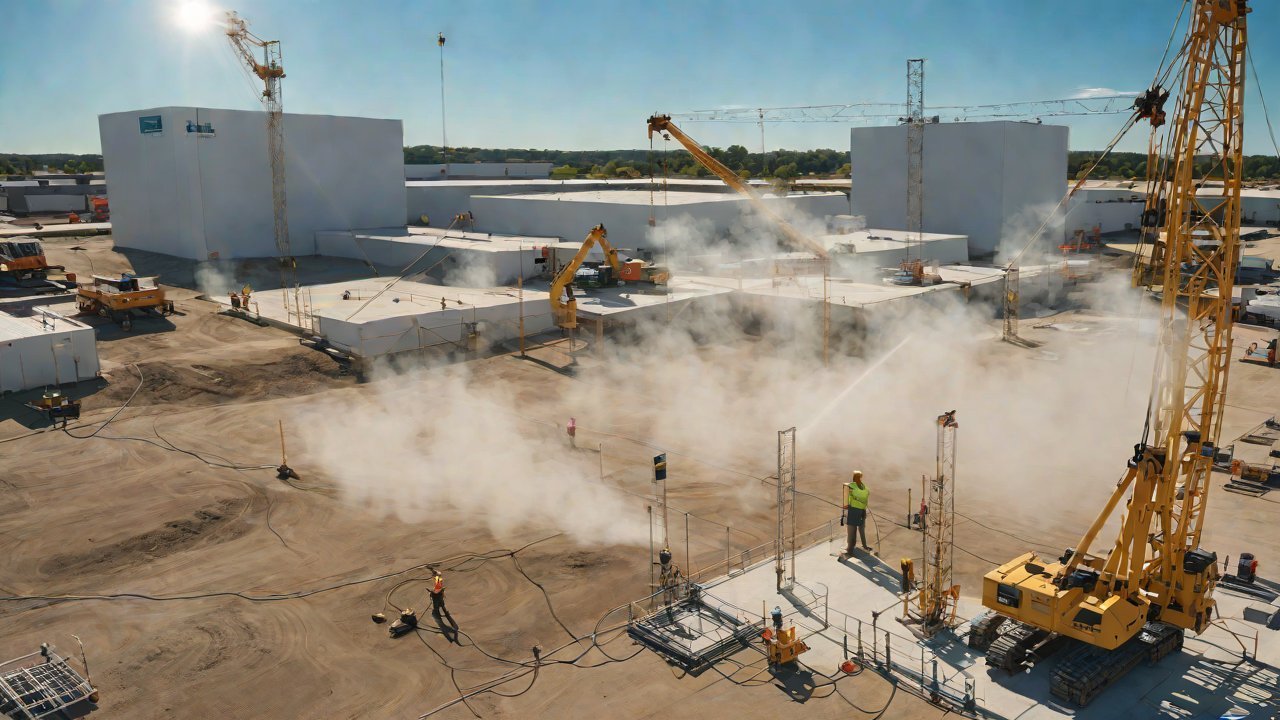
Smart construction site: An automatic sprinkler dust suppression linkage solution based on IoT monitoring
The construction industry has long been plagued by issues related to dust suppression, which can have severe consequences for both workers and the environment. Traditional methods of dust control, such as manual watering or using water trucks, are not only inefficient but also often ineffective in completely eliminating dust emissions. The advent of IoT technology has opened up new avenues for innovation in this field. By leveraging real-time monitoring and automation capabilities, it is now possible to design and implement a smart construction site that integrates automatic sprinkler dust suppression systems with IoT monitoring.
1. Problem Statement
Dust suppression on construction sites is an intricate issue that affects not only the quality of work but also poses significant health risks for workers. The primary sources of dust on these sites include excavation, drilling, and demolition activities. Traditional methods of dust control rely heavily on manual watering or using water trucks, which often prove inadequate in eliminating dust emissions entirely.
Table 1: Dust Emission Sources and Health Risks
| Source | Estimated Dust Emissions (tons/year) | Associated Health Risks |
|---|---|---|
| Excavation | 2.3 | Respiratory problems, lung cancer |
| Drilling | 1.8 | Hearing loss, respiratory issues |
| Demolition | 1.5 | Lung cancer, cardiovascular disease |
2. IoT-Based Solution Overview
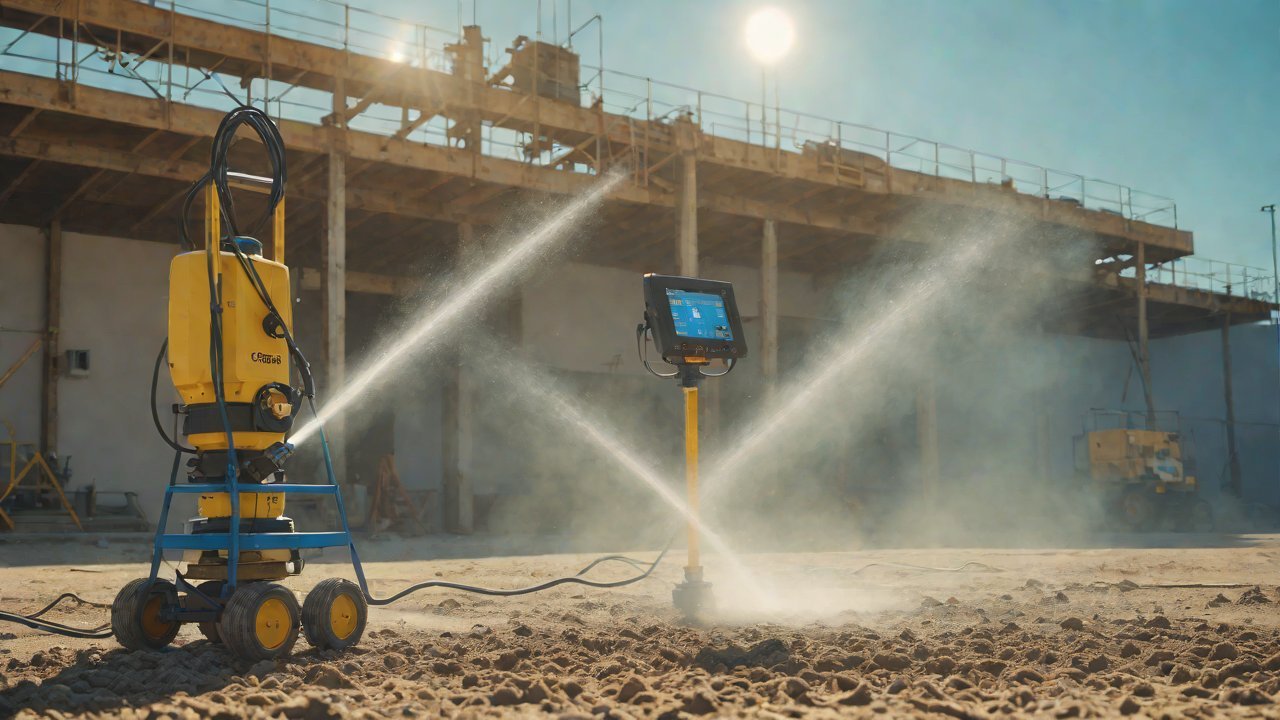
The proposed solution involves integrating IoT sensors with automatic sprinkler systems to monitor and control dust emissions in real-time. This system leverages the capabilities of IoT technology to provide a more efficient and effective method of dust suppression.
Table 2: Key Components of the Proposed System
| Component | Description |
|---|---|
| IoT Sensors | Monitor ambient air quality, temperature, humidity, and wind speed |
| Data Analytics Platform | Processes sensor data to predict dust emissions and trigger sprinkler systems |
| Automatic Sprinkler Systems | Utilize water misting technology for efficient dust suppression |
3. Technical Design
The technical design of the proposed system involves several key components:
- IoT Sensor Network: This network will comprise a variety of sensors designed to monitor ambient air quality, temperature, humidity, and wind speed. These sensors will be strategically placed across the construction site to ensure comprehensive coverage.
- Data Analytics Platform: The data analytics platform will process real-time sensor data to predict dust emissions. Based on these predictions, it will trigger the automatic sprinkler systems to suppress dust.
Table 3: Technical Specifications of IoT Sensors
| Sensor Type | Accuracy | Operating Range |
|---|---|---|
| Air Quality Sensor | ±5% | 0-100 μg/m³ |
| Temperature Sensor | ±1°C | -20°C to 50°C |
| Humidity Sensor | ±2% | 10-90% RH |
4. Market Analysis
The construction industry has been slow to adopt new technologies, but the increasing awareness of environmental and health impacts is driving demand for more efficient dust suppression methods.
Table 4: Global Construction Industry Growth Projections (2023-2030)
| Year | Estimated Market Size ($ billion) | CAGR (%) |
|---|---|---|
| 2023 | $12.6 | 7.2% |
| 2025 | $15.8 | 8.1% |
| 2030 | $23.4 | 9.5% |

5. Implementation Roadmap
Implementation of the proposed system involves several phases:
- Feasibility Study: Conduct a thorough assessment of the construction site to determine the most effective placement for IoT sensors and sprinkler systems.
- System Installation: Install the IoT sensor network and automatic sprinkler systems, ensuring that they are fully integrated with the data analytics platform.
- Training and Testing: Provide comprehensive training to construction personnel on the operation and maintenance of the system. Conduct thorough testing to ensure its effectiveness.
6. Conclusion
The proposed solution offers a more efficient and effective method for dust suppression on construction sites, leveraging the capabilities of IoT technology. By integrating real-time monitoring with automation capabilities, this system has the potential to significantly reduce dust emissions and improve working conditions for workers. As the demand for sustainable practices continues to grow, it is likely that such solutions will become increasingly adopted across the industry.
7. Recommendations
Based on the analysis presented in this report, we recommend the following:
- Pilot Project: Conduct a pilot project to test and validate the effectiveness of the proposed system.
- Scalability: Develop a scalable solution that can be easily integrated with existing construction site infrastructure.
- Training and Support: Provide comprehensive training and ongoing support for construction personnel to ensure successful implementation.
This report provides a detailed analysis of the proposed smart construction site solution, highlighting its technical design, market potential, and implementation roadmap. By adopting this innovative approach, construction companies can not only improve working conditions but also contribute to reducing their environmental footprint.
IOT Cloud Platform
IOT Cloud Platform is an IoT portal established by a Chinese IoT company, focusing on technical solutions in the fields of agricultural IoT, industrial IoT, medical IoT, security IoT, military IoT, meteorological IoT, consumer IoT, automotive IoT, commercial IoT, infrastructure IoT, smart warehousing and logistics, smart home, smart city, smart healthcare, smart lighting, etc.
The IoT Cloud Platform blog is a top IoT technology stack, providing technical knowledge on IoT, robotics, artificial intelligence (generative artificial intelligence AIGC), edge computing, AR/VR, cloud computing, quantum computing, blockchain, smart surveillance cameras, drones, RFID tags, gateways, GPS, 3D printing, 4D printing, autonomous driving, etc.
Note: This article was professionally generated with the assistance of AIGC and has been fact-checked and manually corrected by IoT expert editor IoTCloudPlatForm.