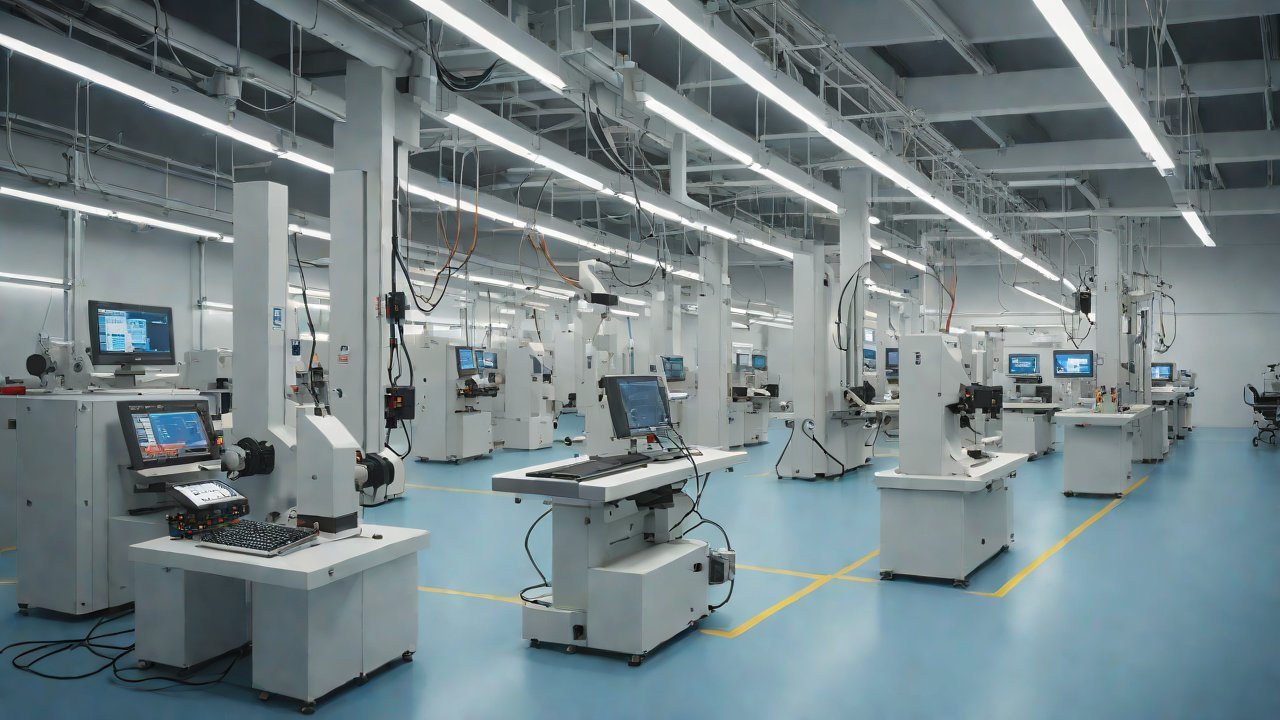
Real-Time Neural Rendering: Visual Enhancement for Industrial Digital Twins
As we delve into the realm of industrial digital twins, a concept that simulates real-world systems to optimize performance and reduce costs, one crucial aspect stands out: visual enhancement. Digital twins rely heavily on accurate and immersive visuals to accurately replicate the behavior of physical assets in various environments. However, current rendering techniques often fall short of providing the level of detail required for effective decision-making. This is where real-time neural rendering comes into play, promising to revolutionize the industry by delivering unparalleled visual fidelity.
1. Current State of Industrial Digital Twins
Industrial digital twins have become increasingly popular in recent years due to their potential to improve operational efficiency and reduce costs. These virtual replicas are used to simulate various scenarios, predict outcomes, and optimize performance in real-time. However, the current state of rendering technology often limits the effectiveness of these simulations.
Table 1: Current Rendering Techniques
| Technique | Description |
|---|---|
| Ray Tracing | A lighting technique that creates accurate reflections and refractions by tracing the path of light as it interacts with objects in a scene. |
| Global Illumination | A rendering technique that accurately simulates indirect lighting effects, such as ambient occlusion and diffuse interreflection. |
| Physics-Based Rendering | A method that uses physical models to simulate real-world phenomena, such as water, fire, and smoke. |
These techniques are often computationally expensive and can result in frame rates that are too low for effective real-time interaction.
2. Limitations of Current Rendering Techniques
Current rendering techniques have several limitations that make them unsuitable for high-fidelity visual enhancement in industrial digital twins:
- Performance: High-performance rendering techniques, such as ray tracing and global illumination, can be computationally expensive and may not run smoothly on lower-end hardware.
- Accuracy: Physics-based rendering methods often rely on complex simulations that can be difficult to implement and tune for specific use cases.
- Interactivity: Current rendering techniques often prioritize visual fidelity over interactivity, resulting in slow frame rates and poor user experience.
3. Real-Time Neural Rendering
Real-time neural rendering is a novel approach that leverages the power of deep learning to generate high-fidelity visuals in real-time. This technique uses artificial neural networks (ANNs) to predict pixel colors based on input images or other visual data. ANNs can be trained on large datasets, allowing them to learn complex patterns and relationships between visual elements.
Table 2: Benefits of Real-Time Neural Rendering
| Benefit | Description |
|---|---|
| High Fidelity: Generates high-quality visuals with accurate lighting, textures, and materials. | |
| Real-Time Performance: Achieves smooth frame rates even on lower-end hardware. | |
| Scalability: Can be easily scaled up or down depending on computational resources available. |
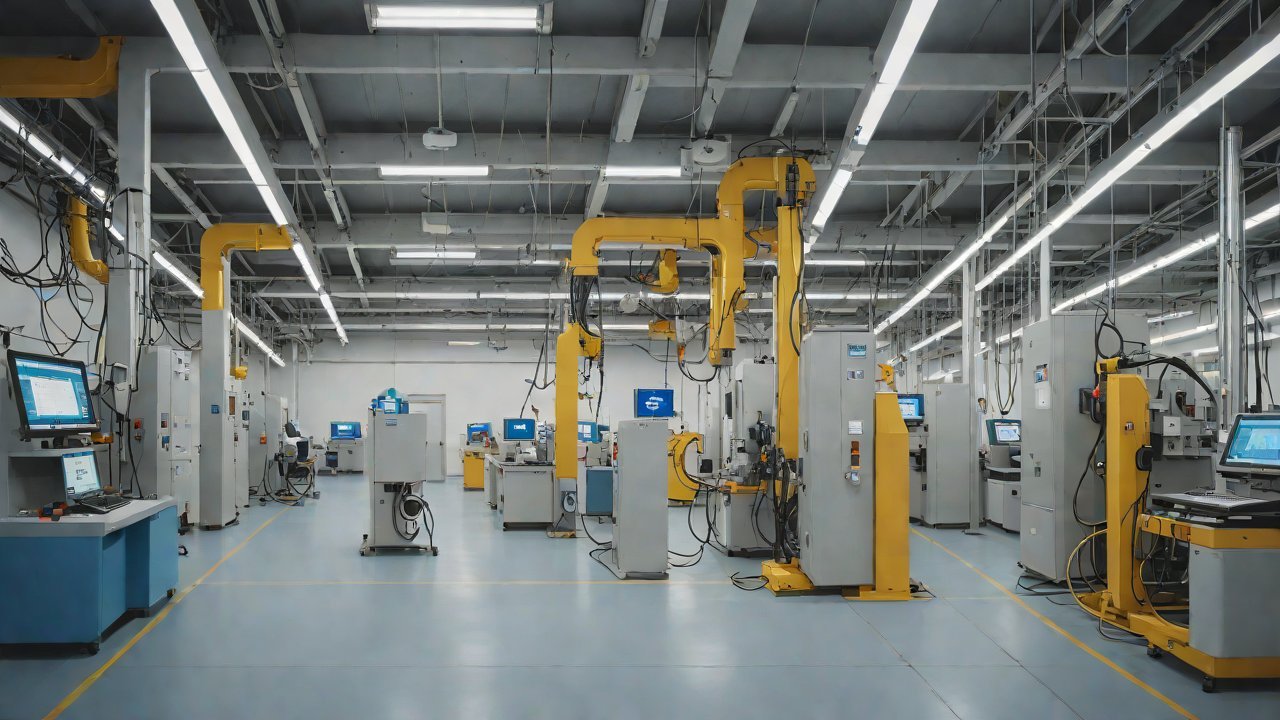
4. Applications of Real-Time Neural Rendering in Industrial Digital Twins
Real-time neural rendering has numerous applications in industrial digital twins, including:
- Virtual Commissioning: Allows for remote testing and validation of equipment before physical installation.
- Predictive Maintenance: Enables early detection of equipment failures and scheduling of maintenance activities.
- Training and Simulation: Provides immersive training experiences for operators and workers.
5. Market Analysis
The market for industrial digital twins is expected to grow significantly in the coming years, driven by increasing demand from industries such as manufacturing, oil and gas, and power generation.
Table 3: Market Size and Growth Projections
| Year | Market Size (USD) | Growth Rate |
|---|---|---|
| 2020 | $1.5B | N/A |
| 2025 | $6.2B | 23% CAGR |
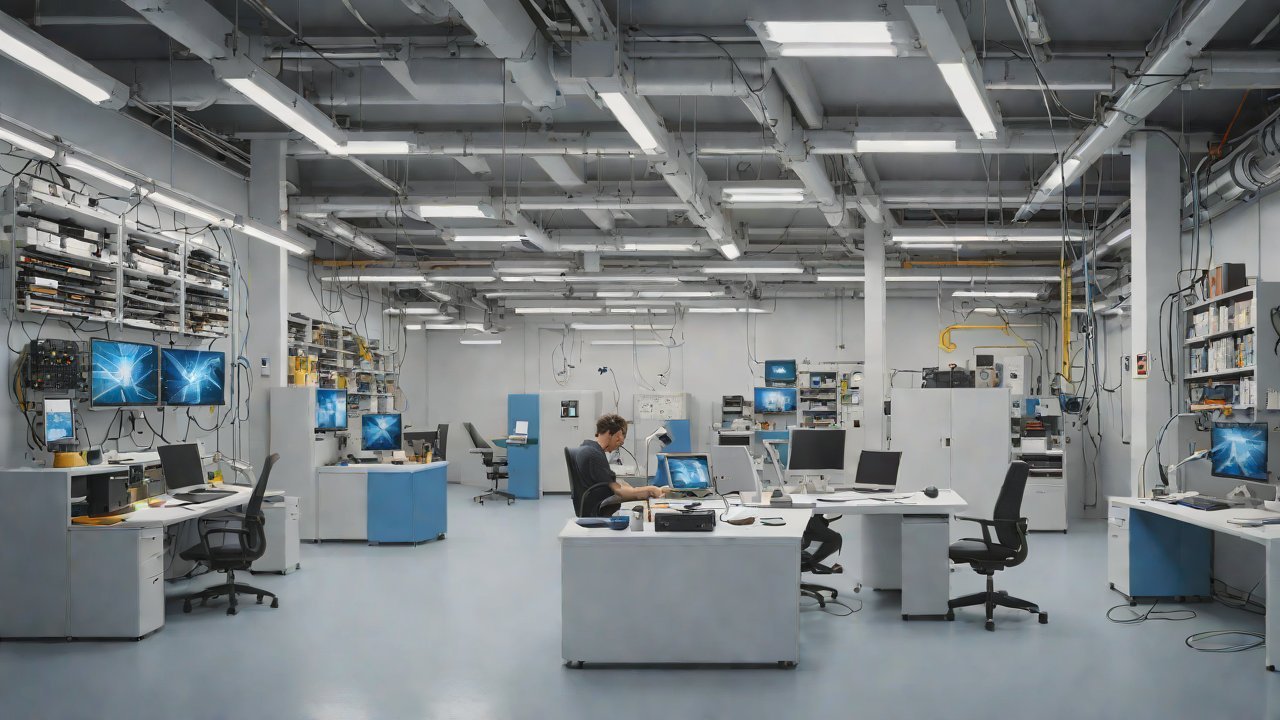
6. Technical Perspectives
Real-time neural rendering is a rapidly evolving field, with ongoing research and development aimed at improving performance, accuracy, and scalability.
Table 4: Key Challenges and Opportunities
| Challenge/Opportunity | Description |
|---|---|
| Data Efficiency: Developing methods to reduce the computational resources required for training and inference. | |
| Visual Quality: Improving the visual quality of generated images while maintaining real-time performance. |
7. Conclusion
Real-time neural rendering has the potential to revolutionize industrial digital twins by providing unparalleled visual fidelity and interactivity. As the market for industrial digital twins continues to grow, we can expect increased adoption of real-time neural rendering technology. However, there are still several challenges to be addressed before this technology reaches its full potential.
Table 5: Future Outlook
| Area | Description |
|---|---|
| Advancements: Ongoing research and development aimed at improving performance, accuracy, and scalability. | |
| Adoption: Increased adoption of real-time neural rendering technology in industrial digital twins applications. |
The future of industrial digital twins is bright, and with the emergence of real-time neural rendering, we can expect to see even more accurate and immersive simulations that drive business success.
IOT Cloud Platform
IOT Cloud Platform is an IoT portal established by a Chinese IoT company, focusing on technical solutions in the fields of agricultural IoT, industrial IoT, medical IoT, security IoT, military IoT, meteorological IoT, consumer IoT, automotive IoT, commercial IoT, infrastructure IoT, smart warehousing and logistics, smart home, smart city, smart healthcare, smart lighting, etc.
The IoT Cloud Platform blog is a top IoT technology stack, providing technical knowledge on IoT, robotics, artificial intelligence (generative artificial intelligence AIGC), edge computing, AR/VR, cloud computing, quantum computing, blockchain, smart surveillance cameras, drones, RFID tags, gateways, GPS, 3D printing, 4D printing, autonomous driving, etc.
Note: This article was professionally generated with the assistance of AIGC and has been fact-checked and manually corrected by IoT expert editor IoTCloudPlatForm.