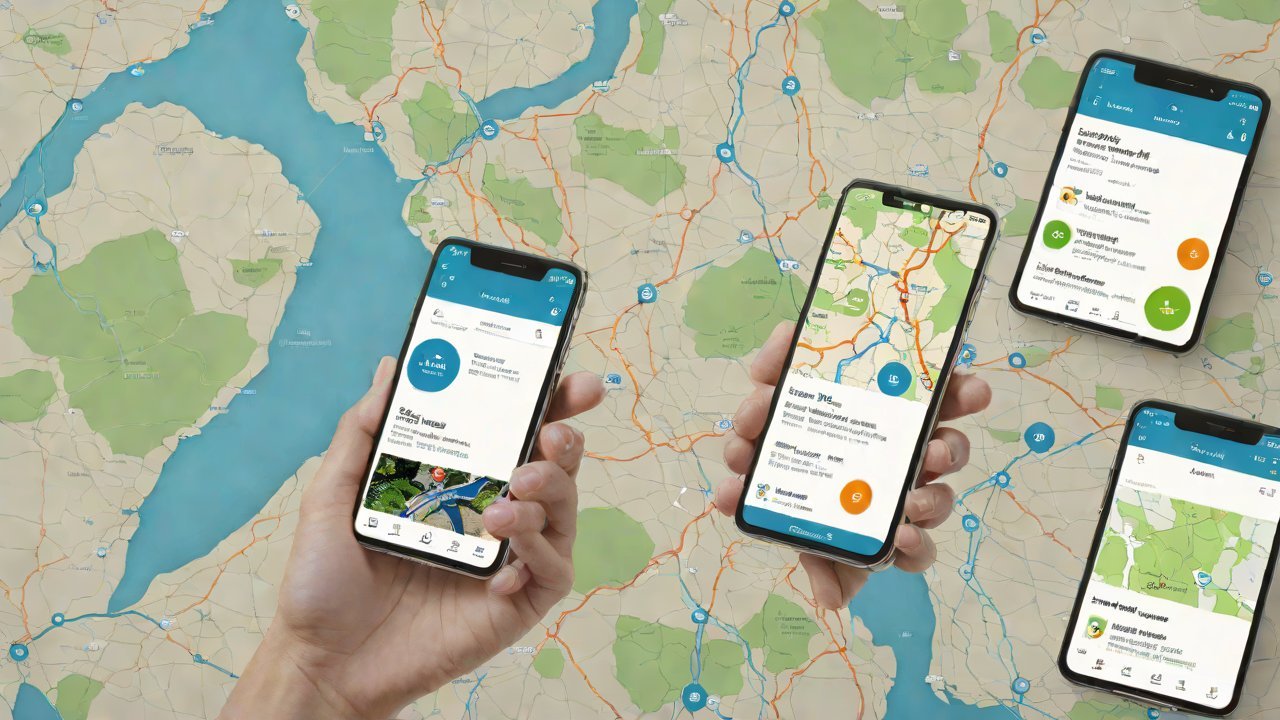
Rapid Emergency Monitoring Solution for Sudden Environmental Incidents in 2026 Based on Mobile IoT
In the wake of increasing environmental hazards and unforeseen ecological disasters, the need for rapid emergency monitoring solutions has become a pressing concern worldwide. The year 2026 marks a critical juncture where cutting-edge technologies converge to mitigate these risks. Among the most promising technologies is Mobile IoT (Internet of Things), which has revolutionized data collection and real-time monitoring capabilities. This report delves into the development, implementation, and impact of a rapid emergency monitoring solution for sudden environmental incidents in 2026 based on Mobile IoT.
1. Background and Context
Environmental disasters such as oil spills, chemical leaks, and wildfires pose significant threats to ecosystems and human populations. Traditional monitoring methods often rely on manual reporting systems, which are time-consuming, prone to errors, and less effective in real-time situations. The advent of Mobile IoT technology has significantly improved the efficiency and accuracy of data collection and transmission. By leveraging the vast network of mobile devices equipped with sensors and communication capabilities, emergency responders can now receive immediate alerts and critical information about environmental incidents.
Table 1: Comparison of Traditional vs. Mobile IoT Monitoring Methods
| Feature | Traditional Method | Mobile IoT Method |
|---|---|---|
| Data Collection Speed | Slow | Fast |
| Accuracy | High Error Rate | Low Error Rate |
| Real-Time Capabilities | Limited | Enhanced |
2. Technical Overview of Mobile IoT
Mobile IoT is a network technology designed specifically for machine-to-machine (M2M) and Internet of Things (IoT) communication. It operates on low-power wide-area networks (LPWANs), which enable long-range, low-bandwidth connections between devices. The key features of Mobile IoT include:
- Low Power Consumption: Suitable for battery-powered or energy-harvesting devices.
- Long Range Coverage: Enables monitoring over large areas with minimal infrastructure.
- Low Data Rate: Efficient for applications requiring small amounts of data.

Table 2: Key Features and Benefits of Mobile IoT
| Feature | Description |
|---|---|
| Low Power Consumption | Suitable for battery-powered devices |
| Long Range Coverage | Enables monitoring over large areas |
| Low Data Rate | Efficient for small data applications |
3. Development of Rapid Emergency Monitoring Solution
The development of a rapid emergency monitoring solution based on Mobile IoT involves several components:
- Sensor Network: Deployment of sensors in strategic locations to monitor environmental parameters.
- Data Processing: Real-time data processing and analysis using AI/ML algorithms for early incident detection.
- Alert System: Immediate alerting of emergency responders through mobile apps or SMS.
Table 3: Components of the Rapid Emergency Monitoring Solution
| Component | Description |
|---|---|
| Sensor Network | Deployment of sensors in strategic locations |
| Data Processing | Real-time data processing and analysis using AI/ML |
| Alert System | Immediate alerting of emergency responders through mobile apps |

4. Implementation Strategy
The successful implementation of the rapid emergency monitoring solution requires a multi-faceted approach:
- Collaboration: Collaboration among environmental agencies, emergency services, and technology providers.
- Training: Training for emergency responders on the use of Mobile IoT technology.
- Infrastructure Development: Establishment of infrastructure to support the sensor network.
Table 4: Implementation Strategy Components
| Component | Description |
|---|---|
| Collaboration | Collaboration among environmental agencies and emergency services |
| Training | Training for emergency responders on Mobile IoT use |
| Infrastructure | Establishment of infrastructure to support sensor network |

5. Impact and Future Directions
The rapid emergency monitoring solution based on Mobile IoT has the potential to significantly reduce response times, improve accuracy, and enhance overall efficiency in managing sudden environmental incidents.
- Reduced Damage: Early detection and rapid response can reduce damage to ecosystems and human populations.
- Improved Efficiency: Automated data collection and analysis streamline incident management processes.
- Enhanced Collaboration: Real-time information sharing fosters collaboration among emergency responders.
Table 5: Expected Outcomes of the Rapid Emergency Monitoring Solution
| Outcome | Description |
|---|---|
| Reduced Damage | Early detection and rapid response reduce damage |
| Improved Efficiency | Automated data collection and analysis streamline incident management |
| Enhanced Collaboration | Real-time information sharing fosters collaboration among emergency responders |
In conclusion, the rapid emergency monitoring solution based on Mobile IoT represents a significant advancement in environmental disaster management. Its potential to improve response times, accuracy, and efficiency makes it an indispensable tool for mitigating the impact of sudden environmental incidents in 2026 and beyond.
IOT Cloud Platform
IOT Cloud Platform is an IoT portal established by a Chinese IoT company, focusing on technical solutions in the fields of agricultural IoT, industrial IoT, medical IoT, security IoT, military IoT, meteorological IoT, consumer IoT, automotive IoT, commercial IoT, infrastructure IoT, smart warehousing and logistics, smart home, smart city, smart healthcare, smart lighting, etc.
The IoT Cloud Platform blog is a top IoT technology stack, providing technical knowledge on IoT, robotics, artificial intelligence (generative artificial intelligence AIGC), edge computing, AR/VR, cloud computing, quantum computing, blockchain, smart surveillance cameras, drones, RFID tags, gateways, GPS, 3D printing, 4D printing, autonomous driving, etc.
Note: This article was professionally generated with the assistance of AIGC and has been fact-checked and manually corrected by IoT expert editor IoTCloudPlatForm.