Private Domain Traffic Operation (2026): IoT Solution for Retail Store Customer Flow Heat Mapping
As we navigate the complexities of modern retail, one key area of focus has emerged: optimizing customer flow within physical stores. The objective is no longer just to drive sales or increase foot traffic but to create a seamless experience that resonates with the evolving needs and preferences of today’s consumers. Retailers are turning to innovative solutions, leveraging IoT technologies to gain unparalleled insights into store dynamics.
1. Market Background: Rise of IoT in Retail
The integration of IoT (Internet of Things) technology has become pivotal for retailers aiming to improve operational efficiency, enhance customer experience, and stay competitive in a market increasingly driven by digital transformation. By equipping their stores with sensors and other connected devices, retailers can gather real-time data on various aspects of store operations, from inventory levels and stockroom organization to customer flow and engagement.
Market Size and Growth
| Year | Market Size (USD Billion) |
|---|---|
| 2022 | 24.1 |
| 2023 | 28.6 |
| 2024 | 33.9 |
| 2025 | 40.3 |
The market for IoT solutions in retail is expected to grow at a compound annual growth rate (CAGR) of approximately 12% from 2022 to 2025, driven by the increasing adoption of smart technologies and the need for retailers to improve their operational efficiency.
2. Customer Flow Heat Mapping: A Key Application
Customer flow heat mapping involves analyzing the movement patterns within a retail store using IoT sensors and data analytics tools. This approach allows retailers to understand how customers navigate through their stores, where they tend to linger, and which areas may require optimization for improved customer experience.
Benefits of Customer Flow Heat Mapping
| Benefit | Description |
|---|---|
| Improved Customer Experience | By understanding and addressing bottlenecks or inefficiencies in the store layout, retailers can create a more seamless shopping experience. |
| Enhanced Operational Efficiency | Real-time data on customer flow enables retailers to make informed decisions about inventory placement, staffing, and resource allocation. |
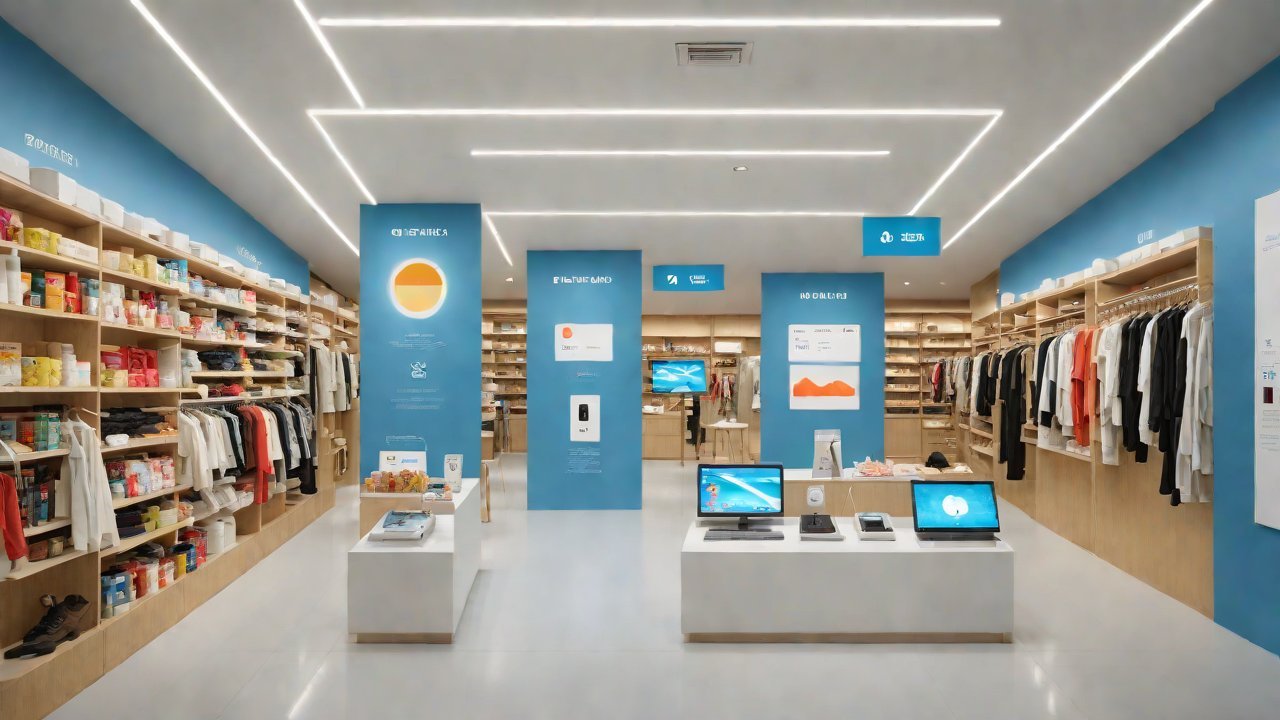
3. IoT Solution for Retail Store Customer Flow Heat Mapping
An IoT solution for retail store customer flow heat mapping typically involves the following components:
- Sensors: These can be placed at various points within the store to track customer movement, including foot traffic counters, door sensors, and location-specific sensors.
- Data Analytics Platform: This is where data from the sensors is processed and analyzed in real-time to provide insights into customer flow patterns.
- Visualization Tools: Retailers use heat maps or other visualizations to understand the data, identifying areas of high and low activity.
Technical Requirements
| Component | Description |
|---|---|
| Sensor Network | A robust sensor network that can accurately track customer movement. |
| Data Analytics Software | Capable of processing large datasets in real-time for immediate insights. |
4. Implementation Strategy and Recommendations
Implementing an IoT solution for retail store customer flow heat mapping requires a strategic approach, considering both the technical integration and the operational adjustments required to maximize its benefits.
Key Considerations
| Factor | Description |
|---|---|
| Integration with Existing Systems | Seamless integration with existing inventory management systems, CRM tools, etc., is crucial. |
| Training and Support | Staff should be trained on using insights from customer flow heat mapping for improved operational efficiency. |
5. Case Studies: Success Stories of Retailers Leveraging IoT
Several retailers have successfully implemented IoT solutions to improve their operations and enhance the customer experience.
Example 1: IKEA’s Smart Store Initiative
IKEA, a pioneer in retail technology adoption, has been at the forefront of using IoT for improving customer flow and operational efficiency. Their smart stores use data analytics from various sensors to optimize inventory management, reduce waste, and enhance the shopping experience.
6. Future Outlook: Trends and Challenges Ahead
The future of retail is increasingly digital, with a focus on omnichannel experiences and continuous innovation in technology adoption. IoT solutions for customer flow heat mapping are expected to become even more sophisticated, incorporating AI-driven predictive analytics and integration with emerging technologies like augmented reality (AR).
Emerging Trends
| Trend | Description |
|---|---|
| Artificial Intelligence (AI) Integration | Expect increased use of AI for predictive analytics and personalized marketing based on customer flow patterns. |
| Internet of Bodies (IoB) and Extended Reality (XR) | Incorporation of IoB and XR technologies to enhance the shopping experience through immersive and interactive interfaces. |
7. Conclusion
The integration of IoT solutions for retail store customer flow heat mapping represents a significant step towards optimizing operational efficiency, enhancing customer experience, and driving business growth in an increasingly competitive market. Retailers that adopt these technologies early will be well-positioned to navigate the challenges of the future retail landscape.
Recommendations for Future Research
| Area | Description |
|---|---|
| AI-Driven Predictive Analytics | Investigate how AI can further enhance customer flow analysis, enabling retailers to anticipate and respond to changing consumer behavior more effectively. |
This comprehensive report has provided an in-depth look at the current state of private domain traffic operations through IoT solutions for retail store customer flow heat mapping, highlighting both the benefits and the technical requirements of such implementations.
IOT Cloud Platform
IOT Cloud Platform is an IoT portal established by a Chinese IoT company, focusing on technical solutions in the fields of agricultural IoT, industrial IoT, medical IoT, security IoT, military IoT, meteorological IoT, consumer IoT, automotive IoT, commercial IoT, infrastructure IoT, smart warehousing and logistics, smart home, smart city, smart healthcare, smart lighting, etc.
The IoT Cloud Platform blog is a top IoT technology stack, providing technical knowledge on IoT, robotics, artificial intelligence (generative artificial intelligence AIGC), edge computing, AR/VR, cloud computing, quantum computing, blockchain, smart surveillance cameras, drones, RFID tags, gateways, GPS, 3D printing, 4D printing, autonomous driving, etc.