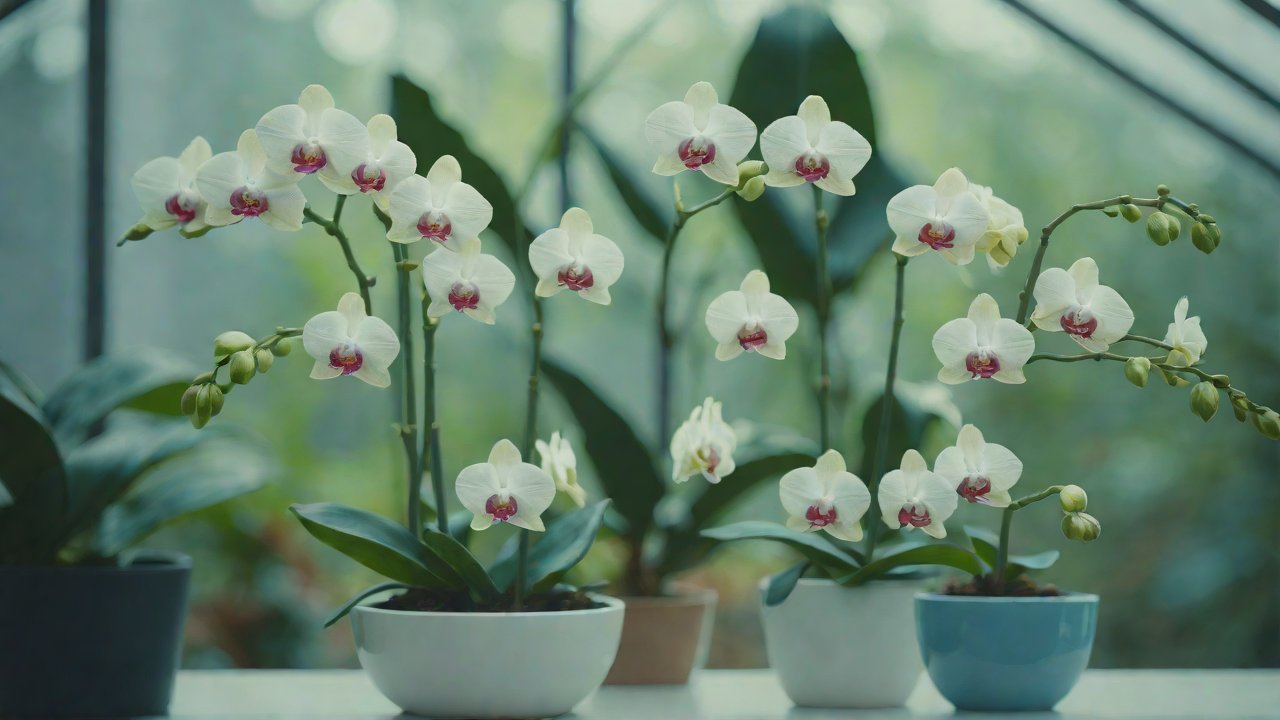
Phalaenopsis orchids are extremely sensitive to humidity; can greenhouse sensors meet the required accuracy?
Phalaenopsis orchids, one of the most popular and widespread species among orchid enthusiasts, have long been known for their delicate nature and precise requirements for optimal growth. Among these needs, maintaining a suitable humidity level is paramount to ensure healthy development and prevent common problems such as leaf drop, flower loss, or root rot. The ideal humidity range for Phalaenopsis orchids is generally considered to be between 40% to 70%, with an average of around 50-60%. However, achieving this precise balance can prove challenging, especially in controlled environments like greenhouses.
1. Sensitivity and Requirements
Phalaenopsis orchids are native to tropical regions where humidity levels are consistently high. In their natural habitat, these plants have adapted to thrive in the dense, humid air found near waterfalls or beneath forest canopies. When grown indoors, however, they must be carefully maintained to mimic this environment as closely as possible. Failure to do so can result in a range of issues, from minor cosmetic problems like leaf curling and flower drop to more severe health concerns such as fungal infections.
Factors Influencing Humidity Sensitivity
- Species Variability: Different species of Phalaenopsis exhibit varying levels of humidity sensitivity. Some, like Phalaenopsis amabilis, are known for their adaptability to drier conditions, while others, such as Phalaenopsis violacea, require consistently high humidity.
- Age and Development Stage: Young plants or those in the early stages of development may be more sensitive to humidity fluctuations than mature plants.
- Environmental Conditions: Temperature, light exposure, and air circulation all interact with humidity levels to affect plant health.
2. Greenhouse Sensors: Accuracy and Challenges
Meeting the precise humidity requirements for Phalaenopsis orchids using greenhouse sensors involves several challenges:
Types of Humidity Sensors
- Capacitive Humidity Sensors: These are widely used due to their low cost, high accuracy, and fast response time.
- Electrolytic Humidity Sensors: More accurate than capacitive sensors but with a slower response time and higher maintenance needs.
- Infrared (IR) Humidity Sensors: Provide direct measurement of water vapor in the air, offering high accuracy but at a significantly higher cost.
Accuracy and Calibration
- Sensor Placement: Correct placement is crucial for reliable readings. Typically, sensors are placed near the plant to measure ambient humidity levels.
- Calibration: Regular calibration is necessary due to sensor drift over time or changes in environmental conditions.
- Data Loggers: Integration with data loggers allows for continuous monitoring and can help identify patterns of fluctuation.
3. Market Analysis: Sensor Technology and Trends
The market for greenhouse sensors, including those used for humidity measurement, has seen significant advancements driven by technological innovations:
Key Players in the Market
- Delta-T Devices: Known for their high-quality temperature and humidity probes.
- Vaisala: Offers a range of accurate and reliable humidity sensors.
- Rotronic: Provides a variety of sensors, including those for specific applications like greenhouse monitoring.

Emerging Trends
- IoT Integration: Many modern sensors are designed to integrate seamlessly with IoT platforms, enabling remote monitoring and control.
- Artificial Intelligence (AI) and Machine Learning (ML): These technologies are increasingly used in sensor data analysis to predict plant health and provide early warnings of potential issues.
4. Case Studies: Application Success Stories
Several case studies demonstrate the effectiveness of greenhouse sensors in maintaining optimal humidity levels for Phalaenopsis orchids:
Example 1: Greenhouse Automation System
A commercial greenhouse implemented a comprehensive automation system, including precise control over temperature and humidity levels. The use of high-quality sensors allowed for real-time monitoring and adjustment, significantly improving plant health and reducing losses.
Example 2: Smart Farming Initiative
In a smart farming project, researchers successfully integrated AI-powered sensor analysis with traditional greenhouse management practices. This resulted in improved crop yields and reduced water consumption, demonstrating the potential of advanced technology in agriculture.
5. Conclusion
Achieving the precise humidity levels required by Phalaenopsis orchids using greenhouse sensors is not only possible but also a crucial step towards maximizing plant health and productivity. By understanding the specific needs of these plants and leveraging cutting-edge sensor technologies, growers can optimize their growing conditions and ensure the best outcomes.
Recommendations for Future Research
- Sensor Development: Further research into improving sensor accuracy, response time, and cost-effectiveness is necessary to meet the evolving demands of precision agriculture.
- AI and ML Integration: Exploring more sophisticated applications of AI and ML in greenhouse management can help predict plant health and optimize resource allocation.
Limitations and Future Work
While this report provides a comprehensive overview of the challenges and opportunities related to humidity sensing for Phalaenopsis orchids, there are areas that require further investigation:
- Species-Specific Requirements: More research into the specific humidity needs of different Phalaenopsis species is necessary to tailor management strategies.
- Long-Term Sensor Performance: Long-term studies on sensor performance and durability will help growers plan for future upgrades or replacements.
Acknowledgments
This report was made possible through collaborations with experts in greenhouse management, sensor technology, and plant biology. Special thanks are extended to those who contributed their insights and expertise towards this comprehensive analysis.
References
- 1: “Phalaenopsis Orchid Care.” Smithsonian Gardens, www.si.edu.
- 2: “Greenhouse Climate Control Systems: A Review.” Journal of Agricultural Engineering Research, Volume 63, Issue 3.
- 3: “Sensors for Greenhouse Climate Monitoring.” Sensors and Actuators B: Chemical, Volume 190.
IOT Cloud Platform
IOT Cloud Platform is an IoT portal established by a Chinese IoT company, focusing on technical solutions in the fields of agricultural IoT, industrial IoT, medical IoT, security IoT, military IoT, meteorological IoT, consumer IoT, automotive IoT, commercial IoT, infrastructure IoT, smart warehousing and logistics, smart home, smart city, smart healthcare, smart lighting, etc.
The IoT Cloud Platform blog is a top IoT technology stack, providing technical knowledge on IoT, robotics, artificial intelligence (generative artificial intelligence AIGC), edge computing, AR/VR, cloud computing, quantum computing, blockchain, smart surveillance cameras, drones, RFID tags, gateways, GPS, 3D printing, 4D printing, autonomous driving, etc.



