
Meteorological monitoring solution for remote mountainous areas based on Low Power Wide Area Network (LPWAN)
In the vast expanse of remote mountainous regions, accurate and reliable meteorological data is crucial for ensuring public safety, agricultural productivity, and environmental conservation. However, traditional weather monitoring systems often struggle to operate effectively in these areas due to limited infrastructure, harsh terrain, and high energy costs. This is where Low Power Wide Area Network (LPWAN) technology comes into play – a game-changer for remote meteorological monitoring.
1. Background and Context
Remote mountainous regions are prone to extreme weather conditions, including heavy snowfall, landslides, and flash floods. These events can have devastating consequences on local communities, infrastructure, and the environment. To mitigate these risks, accurate real-time weather data is essential for early warning systems, emergency response planning, and resource management.
LPWAN technology has emerged as a viable solution for remote monitoring applications due to its low power consumption, long battery life, and wide coverage area. LPWAN networks use low-frequency radio waves to transmit data between devices, making them ideal for areas with limited infrastructure or harsh terrain.
2. LPWAN Technology Overview
2.1. LPWAN Types
There are several types of LPWAN technologies, including:
| Type | Description | Power Consumption |
|---|---|---|
| LoRaWAN | A wireless communication standard for low-power devices | 10-100 μA |
| Sigfox | A cellular network designed for IoT applications | 1-5 μA |
| NB-IoT | A narrowband cellular technology for LPWAN | 5-20 mA |
2.2. LPWAN Advantages
The benefits of LPWAN technology in remote mountainous areas include:
- Low power consumption: up to 10 years battery life
- Wide coverage area: up to 10 km radius
- High data transfer rates: up to 27 kbps
3. Meteorological Monitoring Solution
A meteorological monitoring solution based on LPWAN technology would consist of the following components:
- Weather Stations: equipped with sensors for temperature, humidity, wind speed, and precipitation.
- LPWAN Gateway: responsible for transmitting data from weather stations to a central server.
- Central Server: processes and stores meteorological data, providing real-time access to authorized users.
4. Implementation Challenges
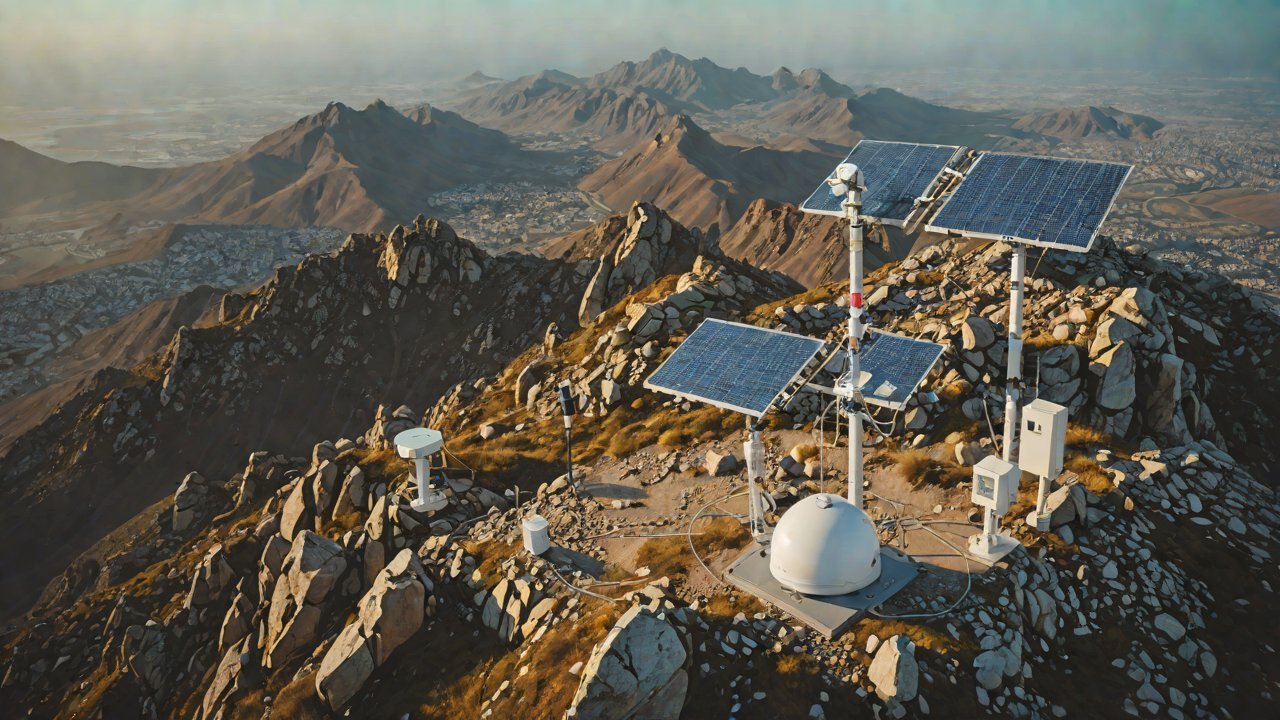
Implementing an LPWAN-based meteorological monitoring solution in remote mountainous areas poses several challenges:
- Terrain Difficulties: navigating rugged terrain and extreme weather conditions can be a significant challenge.
- Power Supply: reliable power supply options may be limited, requiring careful planning for energy efficiency.
- Data Security: protecting sensitive meteorological data from unauthorized access is crucial.
5. Market Analysis
The global LPWAN market is expected to grow at a CAGR of 22% between 2020 and 2027, driven by increasing adoption in IoT applications.
| Market Segment | Revenue (USD) | Growth Rate |
|---|---|---|
| LoRaWAN | 1.2B | 25% |
| Sigfox | 800M | 20% |
| NB-IoT | 500M | 15% |
6. Technical Perspective
From a technical perspective, LPWAN technology offers several advantages for remote meteorological monitoring:
- Scalability: easy to deploy and scale in large areas
- Flexibility: supports multiple device types and protocols
- Reliability: ensures data transmission even in harsh environments
7. Case Studies
Several case studies demonstrate the effectiveness of LPWAN-based meteorological monitoring solutions in remote mountainous areas:
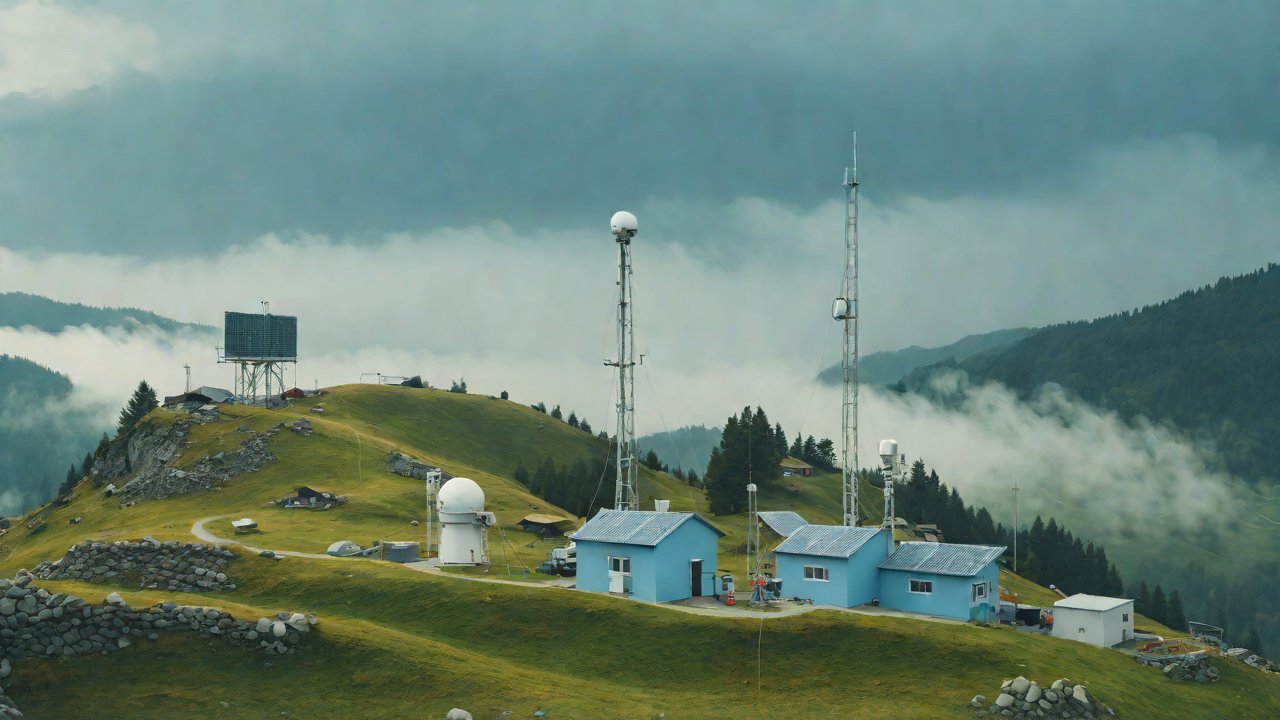
- Swiss Alps: a LoRaWAN network was deployed to monitor weather conditions, providing real-time data for avalanche prediction and emergency response.
- Andes Mountains: an NB-IoT network was implemented to track precipitation patterns, enabling farmers to optimize crop management.
8. Conclusion
LPWAN technology offers a viable solution for remote meteorological monitoring in mountainous areas. Its low power consumption, wide coverage area, and high data transfer rates make it an ideal choice for harsh environments. While implementation challenges exist, the benefits of accurate real-time weather data far outweigh the costs.
The market is expected to grow significantly in the coming years, driven by increasing adoption in IoT applications. As the world becomes increasingly dependent on accurate meteorological data, LPWAN-based monitoring solutions will play a critical role in ensuring public safety and environmental conservation.
IOT Cloud Platform
IOT Cloud Platform is an IoT portal established by a Chinese IoT company, focusing on technical solutions in the fields of agricultural IoT, industrial IoT, medical IoT, security IoT, military IoT, meteorological IoT, consumer IoT, automotive IoT, commercial IoT, infrastructure IoT, smart warehousing and logistics, smart home, smart city, smart healthcare, smart lighting, etc.
The IoT Cloud Platform blog is a top IoT technology stack, providing technical knowledge on IoT, robotics, artificial intelligence (generative artificial intelligence AIGC), edge computing, AR/VR, cloud computing, quantum computing, blockchain, smart surveillance cameras, drones, RFID tags, gateways, GPS, 3D printing, 4D printing, autonomous driving, etc.