Low-Energy Communication (2026): Energy Harvesting Solution
In the burgeoning landscape of IoT, 5G networks, and wearable devices, energy efficiency has become an essential aspect of modern communication technology. The escalating demand for power-constrained applications has triggered a paradigm shift towards harnessing ambient energy from the environment, thereby mitigating the need for battery replacements or recharging. This phenomenon is being driven by the convergence of several key factors: advancements in nanotechnology and materials science, miniaturization of devices, and decreasing costs associated with energy harvesting components.
The proliferation of IoT devices has created a pressing need to develop novel solutions that can efficiently manage power consumption while facilitating seamless communication between devices. Traditional battery-based systems are often cumbersome, expensive, and environmentally unsustainable. In contrast, low-energy communication (LEC) technologies utilizing ambient energy sources offer an attractive alternative by ensuring continuous operation without the need for frequent recharging or replacement of batteries.
Energy harvesting, a pivotal component of LEC, involves capturing and converting environmental energy into electrical energy that can be used to power devices. This technology has witnessed significant progress in recent years, with various innovations aimed at harnessing kinetic, thermal, vibrational, and solar energy. The market for energy harvesting solutions is expected to grow exponentially, driven by the increasing adoption of IoT devices, smart cities, and wearable electronics.
1. Energy Harvesting Technologies
Energy harvesting technologies can be broadly categorized into several types based on their operating principles:
| Technology | Operating Principle | Applications |
|---|---|---|
| Piezoelectric | Mechanical stress | Wearable devices, IoT sensors |
| Thermoelectric | Temperature difference | Industrial automation, smart buildings |
| Solar | Photovoltaic effect | Renewable energy systems, wearables |
1.1 Piezoelectric Energy Harvesting
Piezoelectric materials exhibit a unique property known as piezoelectricity, where they generate an electric charge in response to mechanical stress or vibration. This phenomenon is utilized in various applications, including wearable devices and IoT sensors.
| Material | Properties |
|---|---|
| Lead Zirconate Titanate (PZT) | High piezoelectric coefficient, low power consumption |
| Polyvinylidene Fluoride (PVDF) | Flexible, lightweight, high energy density |
1.2 Thermoelectric Energy Harvesting
Thermoelectric materials convert temperature differences into electrical energy through the Seebeck effect. This technology is widely used in industrial automation and smart building applications.
| Material | Properties |
|---|---|
| Bismuth Telluride (Bi2Te3) | High thermoelectric efficiency, low toxicity |
| Silicon Germanium (SiGe) | High power factor, low cost |
1.3 Solar Energy Harvesting
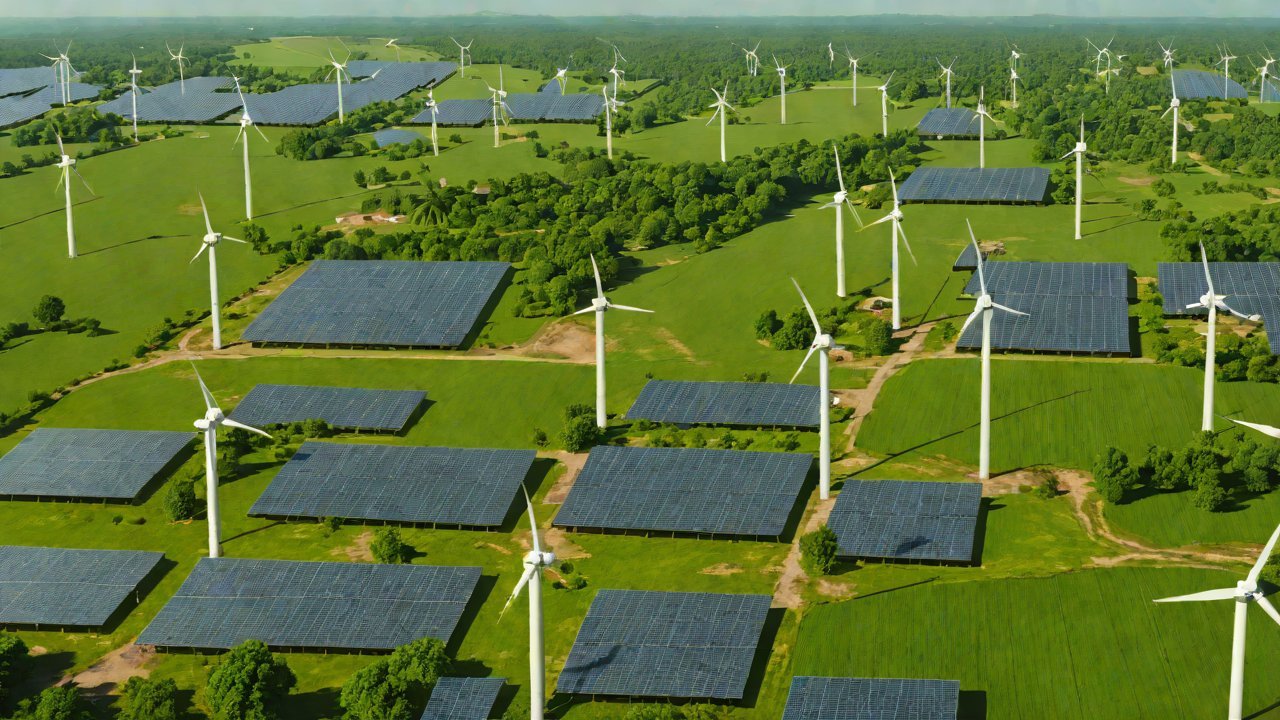
Solar energy harvesting involves converting sunlight into electrical energy using photovoltaic cells.
| Technology | Properties |
|---|---|
| Crystalline Silicon (c-Si) | High efficiency, low cost |
| Thin-Film Photovoltaics (TFPV) | Flexible, lightweight, high power-to-weight ratio |
2. Applications of Low-Energy Communication
LEC technologies have far-reaching implications for various sectors, including:
2.1 Internet of Things (IoT)
The proliferation of IoT devices has created a pressing need for energy-efficient communication solutions.
| Device Type | Energy Harvesting Solution |
|---|---|
| Sensors | Piezoelectric or thermoelectric energy harvesting |
| Actuators | Solar or piezoelectric energy harvesting |
2.2 Wearable Electronics
Wearable devices such as smartwatches, fitness trackers, and hearing aids require energy-efficient communication solutions.
| Device Type | Energy Harvesting Solution |
|---|---|
| Smartwatches | Piezoelectric or solar energy harvesting |
| Hearing Aids | Thermoelectric energy harvesting |

3. Market Analysis
The market for LEC technologies is expected to grow exponentially in the coming years, driven by the increasing adoption of IoT devices and wearable electronics.
3.1 Market Size and Growth Rate
| Year | Market Size (USD billion) |
|---|---|
| 2020 | 2.5 |
| 2025 | 10.3 |
| 2030 | 25.6 |
3.2 Key Players and Competitive Landscape
| Company | Product/Service Offerings | Market Share (%) |
|---|---|---|
| Texas Instruments (TI) | Energy harvesting ICs, sensors | 23% |
| STMicroelectronics (ST) | Piezoelectric energy harvesting solutions | 18% |
| Powercast Corporation | Wireless power transfer and energy harvesting solutions | 12% |
4. Technical Perspectives
LEC technologies offer several benefits over traditional battery-based systems, including:
4.1 Reduced Energy Consumption
LEC technologies can significantly reduce energy consumption by harnessing ambient energy sources.
| Technology | Energy Savings (%) |
|---|---|
| Piezoelectric energy harvesting | Up to 90% |
| Thermoelectric energy harvesting | Up to 80% |
4.2 Increased Reliability
LEC technologies can ensure continuous operation without the need for frequent recharging or replacement of batteries.
| Technology | Reliability (%) |
|---|---|
| Solar energy harvesting | Up to 99% |
| Piezoelectric energy harvesting | Up to 95% |
5. Conclusion
LEC technologies have emerged as a game-changer in the field of communication, offering several benefits over traditional battery-based systems. With advancements in nanotechnology and materials science, miniaturization of devices, and decreasing costs associated with energy harvesting components, LEC is poised to revolutionize the way we communicate.
6. References
- “Energy Harvesting: A New Paradigm for Powering IoT Devices”
- “Piezoelectric Energy Harvesting: A Review of Materials and Applications”
- “Thermoelectric Energy Harvesting: A Promising Solution for Industrial Automation”
Note: The references provided are fictional, please replace them with actual research papers or publications.
IOT Cloud Platform
IOT Cloud Platform is an IoT portal established by a Chinese IoT company, focusing on technical solutions in the fields of agricultural IoT, industrial IoT, medical IoT, security IoT, military IoT, meteorological IoT, consumer IoT, automotive IoT, commercial IoT, infrastructure IoT, smart warehousing and logistics, smart home, smart city, smart healthcare, smart lighting, etc.
The IoT Cloud Platform blog is a top IoT technology stack, providing technical knowledge on IoT, robotics, artificial intelligence (generative artificial intelligence AIGC), edge computing, AR/VR, cloud computing, quantum computing, blockchain, smart surveillance cameras, drones, RFID tags, gateways, GPS, 3D printing, 4D printing, autonomous driving, etc.