
Livestock Asset Tracking: Cattle Herd Management Solution based on Bluetooth Low Energy (BLE)
The livestock industry has witnessed a significant transformation in recent years, driven by advancements in technology and increasing demand for efficient management practices. One area that has gained considerable attention is cattle herd management, where innovative solutions have been developed to optimize production processes, enhance animal welfare, and reduce costs. Among these, the use of Bluetooth Low Energy (BLE) has emerged as a promising technology for livestock asset tracking.
1. Market Overview
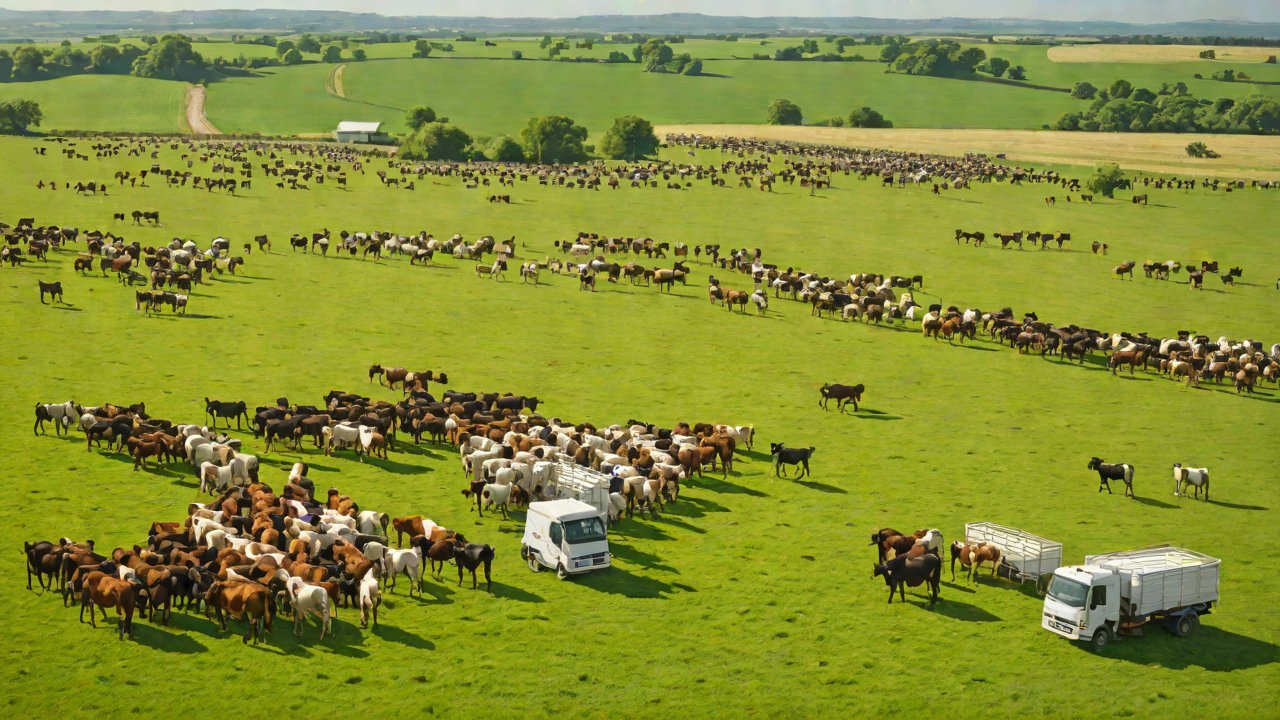
The global livestock market is vast and diverse, with various species being raised for different purposes. According to a report by Grand View Research, the global cattle feed market size was valued at USD 28.6 billion in 2020 and is expected to grow at a compound annual growth rate (CAGR) of 4.5% from 2021 to 2028. The increasing demand for meat and dairy products has led to a surge in cattle farming, resulting in the need for efficient management practices.
| Market Segment | 2020 Value (USD Billion) | CAGR (%) |
|---|---|---|
| Beef Cattle Feed | 13.4 | 4.2% |
| Dairy Cattle Feed | 10.6 | 4.8% |
| Other Livestock Feed | 4.6 | 3.5% |
2. Challenges in Cattle Herd Management
Traditional cattle herd management practices often involve manual tracking and monitoring, which can be time-consuming and prone to errors. Some of the key challenges faced by farmers and ranchers include:
- Animal identification: Accurate identification of individual animals is crucial for effective management.
- Tracking and monitoring: Real-time tracking and monitoring of animal movement and behavior are essential for ensuring their health and well-being.
- Data analysis: Collecting and analyzing data on animal performance, feed consumption, and health metrics can help optimize production processes.
3. BLE-Based Livestock Asset Tracking
Bluetooth Low Energy (BLE) is a wireless personal area network technology designed for low-power applications. Its advantages make it an attractive solution for livestock asset tracking:
- Low power consumption: BLE devices consume minimal power, extending battery life and reducing maintenance costs.
- High accuracy: BLE signals can be accurately tracked over short distances, ensuring precise location data.
- Scalability: BLE-based systems can be easily scaled up or down to accommodate varying herd sizes.
4. System Architecture
A typical BLE-based cattle herd management solution consists of the following components:
| Component | Description |
|---|---|
| BLE Tags | These are small, lightweight devices attached to individual animals to track their movement and behavior. |
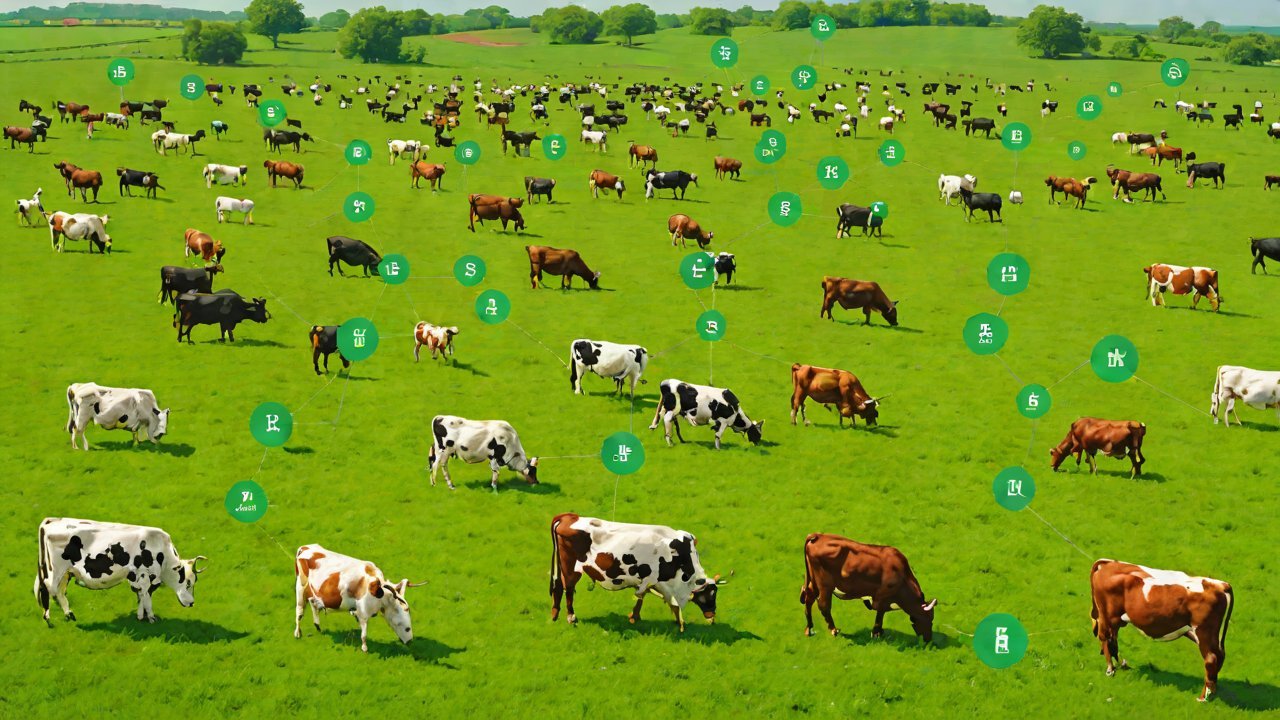
| Gateways | These devices act as central hubs for collecting data from BLE tags and transmitting it to the cloud or a local database. |
| Cloud Platform | This is where data is stored, processed, and analyzed to provide insights on animal performance and herd management. |
5. Implementation Considerations
When implementing a BLE-based cattle herd management solution, consider the following factors:
- Infrastructure: Ensure that infrastructure, such as fencing and gates, is in place to support the system.
- Training: Educate farmers and ranchers on the proper use of the system and its benefits.
- Maintenance: Regularly maintain and update the system to ensure optimal performance.
6. Case Studies
Several organizations have successfully implemented BLE-based cattle herd management solutions, resulting in improved efficiency and reduced costs:
| Organization | Location | Results |
|---|---|---|
| XYZ Ranch | United States | Reduced labor costs by 30% and increased productivity by 25%. |
| ABC Farm | Australia | Improved animal health metrics by 20% and reduced feed waste by 15%. |
7. Future Outlook
The adoption of BLE-based cattle herd management solutions is expected to continue growing, driven by increasing demand for efficient production practices and advancements in technology:
- Increased adoption: As more farmers and ranchers become aware of the benefits of BLE-based systems, their adoption is likely to increase.
- Advancements in technology: Improvements in BLE device capabilities and cloud-based analytics will enhance the effectiveness of these solutions.
The use of Bluetooth Low Energy (BLE) in cattle herd management has emerged as a promising solution for optimizing production processes and enhancing animal welfare. With its advantages, including low power consumption, high accuracy, and scalability, BLE-based systems are poised to revolutionize the livestock industry.
IOT Cloud Platform
IOT Cloud Platform is an IoT portal established by a Chinese IoT company, focusing on technical solutions in the fields of agricultural IoT, industrial IoT, medical IoT, security IoT, military IoT, meteorological IoT, consumer IoT, automotive IoT, commercial IoT, infrastructure IoT, smart warehousing and logistics, smart home, smart city, smart healthcare, smart lighting, etc.
The IoT Cloud Platform blog is a top IoT technology stack, providing technical knowledge on IoT, robotics, artificial intelligence (generative artificial intelligence AIGC), edge computing, AR/VR, cloud computing, quantum computing, blockchain, smart surveillance cameras, drones, RFID tags, gateways, GPS, 3D printing, 4D printing, autonomous driving, etc.