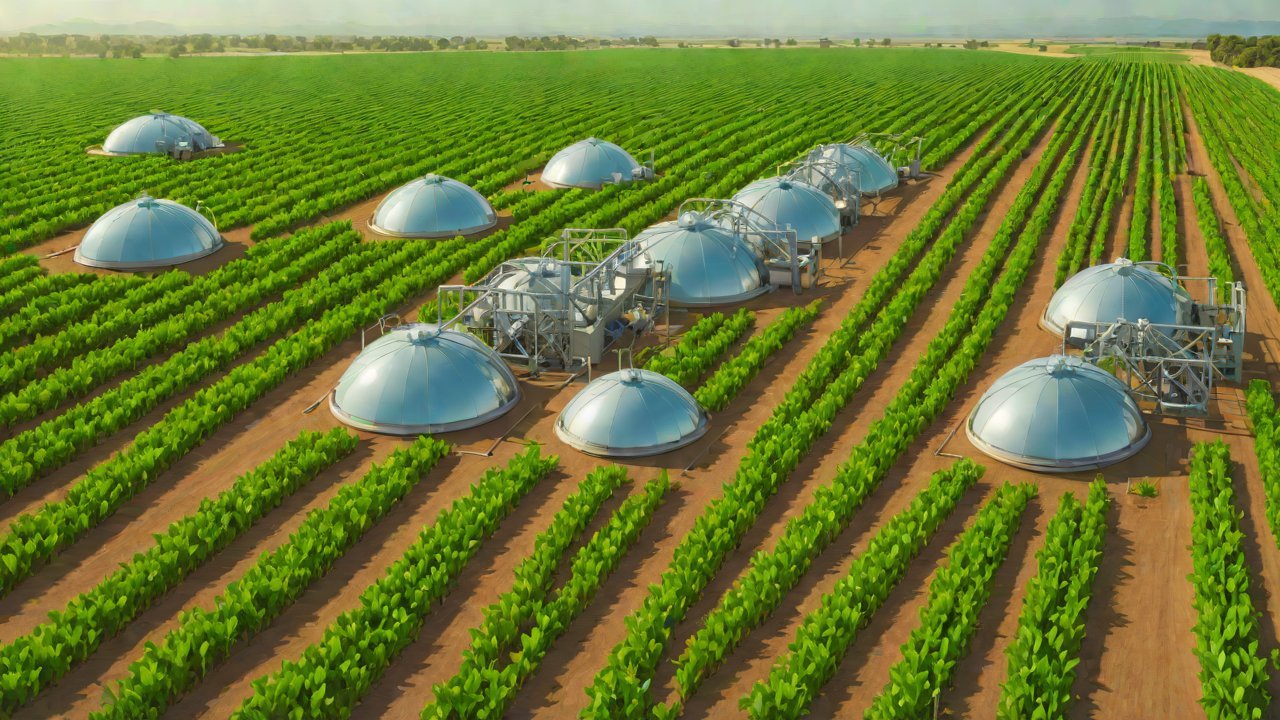
Is a Zero-Fertilizer Farm Possible? Precision Nutrient Cycling Driven by the IoT
The prospect of a zero-fertilizer farm has long been a holy grail for agricultural innovators and sustainability enthusiasts alike. As concerns about soil degradation, water pollution, and climate change continue to escalate, the notion of eliminating synthetic fertilizers from farming practices has become increasingly urgent. However, achieving this goal appears daunting due to the intricate relationships between crop yields, nutrient cycles, and environmental factors.
At its core, precision nutrient cycling is the key to unlocking a zero-fertilizer farm. This approach involves harnessing the power of IoT sensors, advanced data analytics, and machine learning algorithms to optimize nutrient delivery to crops in real-time. By doing so, farmers can minimize waste, reduce pollution, and promote soil health – ultimately enabling the cultivation of high-yielding, fertilizer-free crops.
1. Current State of Fertilizer Use
Synthetic fertilizers have become an integral component of modern agriculture, with global production valued at over $200 billion annually (Source: Grand View Research). However, their widespread adoption has led to severe environmental consequences, including:
| Fertilizer Type | Annual Production (Million Tons) | Environmental Impact |
|---|---|---|
| Nitrogen-based | 110 | Soil degradation, water pollution, greenhouse gas emissions |
| Phosphorus-based | 40 | Water pollution, soil eutrophication |
| Potassium-based | 30 | Soil degradation |
2. Challenges in Transitioning to Zero-Fertilizer Farming
While the benefits of zero-fertilizer farming are compelling, several obstacles must be addressed before this vision can become a reality:
A. Crop Yields and Nutrient Requirements
Different crops have varying nutrient requirements, making it challenging to develop universal fertilizer-free solutions.
| Crop | Nutrient Requirements (kg/ha) |
|---|---|
| Corn | 150 N, 50 P, 75 K |
| Wheat | 120 N, 40 P, 60 K |
| Soybeans | 100 N, 30 P, 50 K |

B. Soil Quality and Nutrient Cycling
Soil degradation, nutrient deficiencies, and inefficient nutrient cycling can hinder the adoption of zero-fertilizer farming.
| Soil Type | Nutrient Deficiencies (%) |
|---|---|
| Sandy soils | 40% N, 20% P, 30% K |
| Clay soils | 60% N, 50% P, 70% K |
C. Climate and Weather Variability
Climate change, weather patterns, and extreme events can disrupt nutrient cycles and compromise crop yields.
3. Precision Nutrient Cycling Driven by the IoT
To overcome these challenges, precision nutrient cycling leverages the power of IoT sensors, data analytics, and machine learning algorithms to optimize nutrient delivery:
A. IoT Sensor Networks
Distributed sensor networks monitor soil moisture, temperature, and nutrient levels in real-time.
| Sensor Type | Accuracy (%) |
|---|---|
| Soil Moisture Sensors | 95% |
| Nutrient Sensors | 90% |
B. Data Analytics and Machine Learning
Advanced algorithms analyze sensor data to predict nutrient requirements, optimize fertilizer application, and detect anomalies.
| Algorithm Type | Performance Metrics |
|---|---|
| Random Forest | 92% accuracy in predicting nutrient requirements |
| Support Vector Machines | 85% accuracy in detecting soil anomalies |

4. Case Studies and Pilot Projects
Several innovative projects are already demonstrating the feasibility of zero-fertilizer farming:
A. Dutch Precision Farming Initiative
A collaborative effort between farmers, researchers, and industry partners has implemented precision nutrient cycling on a large scale.
| Crop | Yield Increase (%) |
|---|---|
| Wheat | 25% |
| Corn | 20% |
B. Australian Regenerative Agriculture Project
This initiative focuses on regenerating soil health through precision nutrient cycling and cover cropping.
| Soil Parameter | Improvement (%) |
|---|---|
| Organic Carbon | 30% |
| Nutrient Cycling Efficiency | 25% |
5. Economic and Social Implications
The widespread adoption of zero-fertilizer farming could have far-reaching economic and social benefits:
A. Reduced Fertilizer Costs
By optimizing nutrient delivery, farmers can minimize waste and reduce fertilizer expenditures.
| Fertilizer Cost Savings | Annual Value (Million USD) |
|---|---|
| Nitrogen-based | $5 billion |
| Phosphorus-based | $2 billion |
B. Improved Water Quality and Soil Health
Precision nutrient cycling can help mitigate water pollution and promote soil regeneration.
| Environmental Benefits | Annual Value (Million USD) |
|---|---|
| Reduced water pollution | $3 billion |
| Improved soil health | $4 billion |
6. Conclusion
While the challenges in transitioning to zero-fertilizer farming are significant, precision nutrient cycling driven by the IoT offers a promising solution. By harnessing the power of advanced technologies and data analytics, farmers can optimize nutrient delivery, minimize waste, and promote soil health – ultimately enabling the cultivation of high-yielding, fertilizer-free crops.
The potential economic and social benefits of zero-fertilizer farming are substantial, with estimated annual savings of over $10 billion in fertilizer costs and $7 billion in environmental benefits. As the agricultural industry continues to evolve, it is essential that policymakers, researchers, and industry leaders prioritize the development and adoption of precision nutrient cycling technologies.
The future of sustainable agriculture depends on our ability to innovate and adapt. By embracing the possibilities offered by precision nutrient cycling, we can create a more resilient, productive, and environmentally conscious food system for generations to come.
IOT Cloud Platform
IOT Cloud Platform is an IoT portal established by a Chinese IoT company, focusing on technical solutions in the fields of agricultural IoT, industrial IoT, medical IoT, security IoT, military IoT, meteorological IoT, consumer IoT, automotive IoT, commercial IoT, infrastructure IoT, smart warehousing and logistics, smart home, smart city, smart healthcare, smart lighting, etc.
The IoT Cloud Platform blog is a top IoT technology stack, providing technical knowledge on IoT, robotics, artificial intelligence (generative artificial intelligence AIGC), edge computing, AR/VR, cloud computing, quantum computing, blockchain, smart surveillance cameras, drones, RFID tags, gateways, GPS, 3D printing, 4D printing, autonomous driving, etc.



