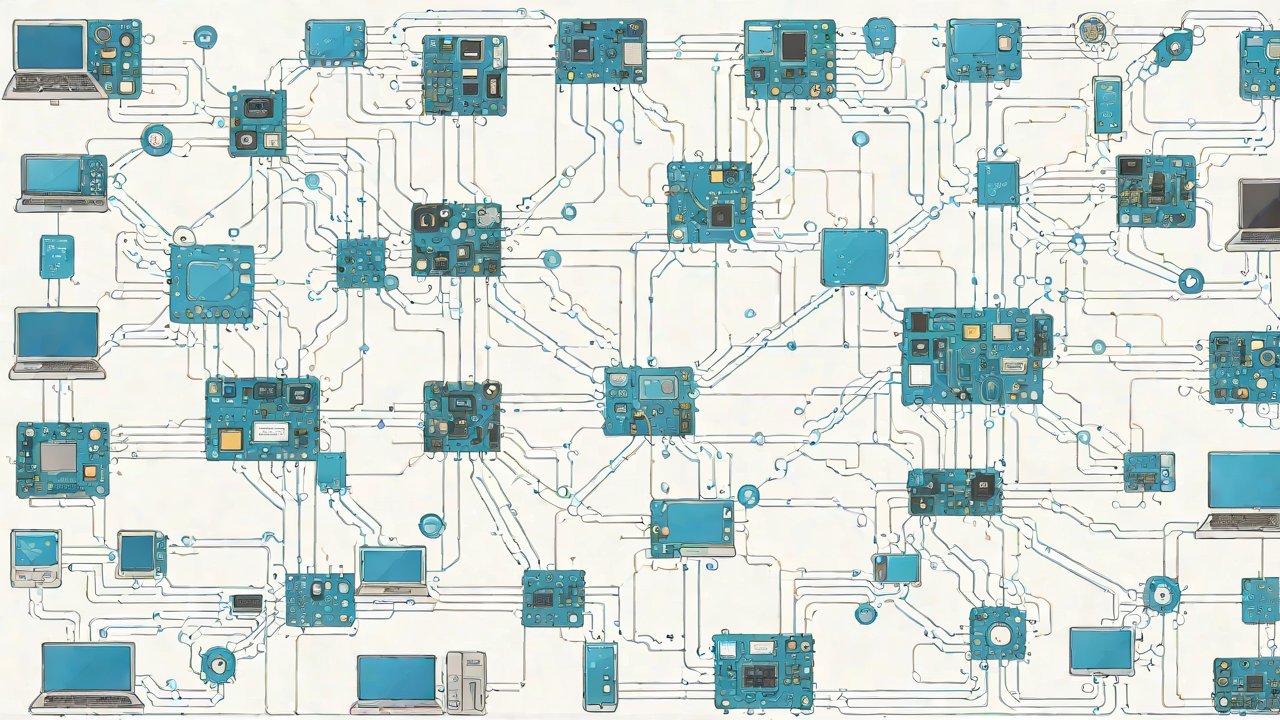
IoT Project Network Logic Structure Design
The Internet of Things (IoT) has revolutionized the way we live, work, and interact with our surroundings. The proliferation of connected devices has given rise to a vast network of interconnected systems, enabling real-time data exchange, automation, and decision-making. However, as the complexity of IoT projects increases, so does the need for robust and scalable network logic structure design.
A well-designed network logic structure is crucial for ensuring seamless communication between devices, efficient data processing, and optimal resource utilization. It provides a framework for integrating various components, protocols, and services, enabling the creation of sophisticated IoT applications that can adapt to changing environments and user needs. In this report, we will delve into the intricacies of IoT project network logic structure design, exploring its key elements, design principles, and best practices.
1. Network Topology
Network topology refers to the physical or logical arrangement of devices and connections within a network. In an IoT context, topology plays a critical role in determining the scalability, reliability, and performance of the system. There are several types of topologies, including:
| Topology | Description |
|---|---|
| Bus Topology | A single cable connects all devices in a linear sequence. |
| Star Topology | Each device is connected to a central hub or switch. |
| Ring Topology | Devices are connected in a circular configuration, with data transmitted in one direction only. |
| Mesh Topology | Each device is connected to every other device, enabling multiple paths for data transmission. |
When designing the network topology for an IoT project, it’s essential to consider factors such as:
- Device density and distribution
- Data traffic patterns and volumes
- Network latency and bandwidth requirements
A mesh topology is often preferred in IoT applications due to its flexibility, scalability, and fault tolerance.
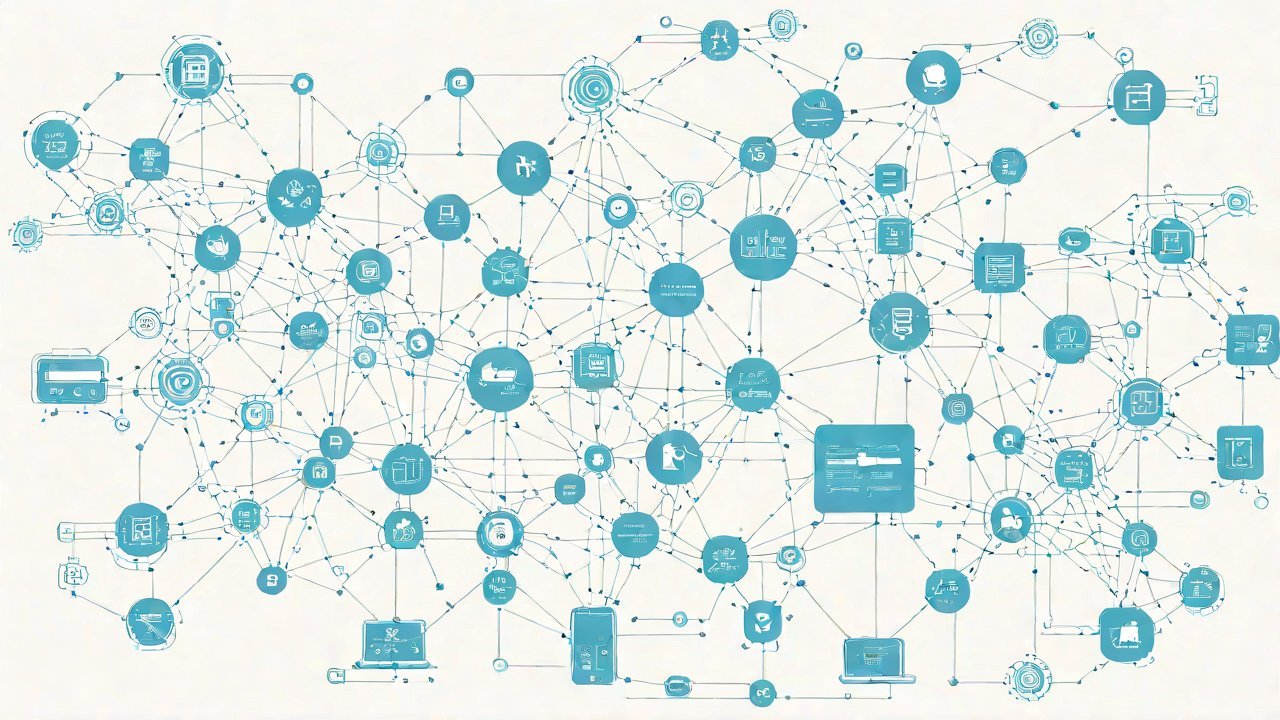
2. Network Protocols
Network protocols define the rules and standards for data communication between devices. In an IoT context, protocols such as MQTT, CoAP, and HTTP/2 are commonly used for device-to-device (D2D) and device-to-cloud (D2C) communication.
| Protocol | Description |
|---|---|
| MQTT (Message Queuing Telemetry Transport) | A lightweight, publish-subscribe-based protocol for machine-to-machine (M2M) communication. |
| CoAP (Constrained Application Protocol) | A lightweight, RESTful protocol for constrained networks and devices. |
| HTTP/2 (Hypertext Transfer Protocol 2) | A binary format for multiplexing multiple requests over a single connection. |
When selecting a network protocol for an IoT project, it’s crucial to consider factors such as:
- Device constraints (e.g., memory, processing power)
- Network bandwidth and latency requirements
- Security and authentication needs
MQTT is often preferred in IoT applications due to its low overhead, scalability, and support for multiple publish-subscribe models.
3. Data Processing and Analytics
IoT projects generate vast amounts of data, which must be processed and analyzed in real-time to enable informed decision-making. A robust data processing and analytics framework is essential for:
- Device data collection and aggregation
- Real-time data processing and filtering
- Historical data storage and retrieval
- Advanced analytics and machine learning applications
Popular data processing and analytics tools used in IoT projects include Apache Kafka, Apache Spark, and Amazon Kinesis.
| Tool | Description |
|---|---|
| Apache Kafka | A distributed streaming platform for high-throughput, fault-tolerant data processing. |
| Apache Spark | An open-source data processing engine for large-scale data analysis. |
| Amazon Kinesis | A fully managed service for real-time data processing and analytics. |

When designing the data processing and analytics framework for an IoT project, it’s essential to consider factors such as:
- Data volume, velocity, and variety
- Processing requirements (e.g., filtering, aggregation)
- Storage needs (e.g., historical data retention)
A combination of Apache Kafka and Spark is often used in IoT applications due to their scalability, fault tolerance, and support for real-time processing.
4. Security and Authentication
IoT projects are vulnerable to cyber threats, making security and authentication a top priority. A robust security framework should include:
- Device authentication and authorization
- Data encryption and secure communication protocols
- Regular software updates and patch management
- Incident response and disaster recovery planning
Popular security tools used in IoT projects include AWS IoT Core, Google Cloud IoT Core, and Microsoft Azure IoT Hub.
| Tool | Description |
|---|---|
| AWS IoT Core | A managed cloud service for securely connecting devices to the cloud. |
| Google Cloud IoT Core | A fully managed service for securely connecting devices to the cloud. |
| Microsoft Azure IoT Hub | A cloud-based service for securely connecting devices and managing data. |
When designing the security framework for an IoT project, it’s essential to consider factors such as:

- Device identity management
- Data encryption and secure communication protocols
- Regular software updates and patch management
A combination of AWS IoT Core and Microsoft Azure IoT Hub is often used in IoT applications due to their scalability, flexibility, and support for multiple device types.
5. Network Management and Monitoring
Network management and monitoring are critical components of an IoT project’s infrastructure. A robust network management framework should include:
- Device discovery and inventory management
- Real-time data monitoring and alerts
- Performance metrics and analytics
- Troubleshooting and incident response tools
Popular network management and monitoring tools used in IoT projects include Prometheus, Grafana, and Nagios.
| Tool | Description |
|---|---|
| Prometheus | A systems and service monitoring system. |
| Grafana | An open-source platform for building dashboards and visualizing data. |
| Nagios | A comprehensive IT infrastructure monitoring solution. |
When designing the network management and monitoring framework for an IoT project, it’s essential to consider factors such as:
- Device density and distribution
- Data traffic patterns and volumes
- Network latency and bandwidth requirements
A combination of Prometheus and Grafana is often used in IoT applications due to their scalability, flexibility, and support for real-time data visualization.
In conclusion, designing a robust network logic structure for an IoT project requires careful consideration of various factors, including network topology, protocols, data processing and analytics, security and authentication, and network management and monitoring. By selecting the right tools and technologies, IoT developers can create scalable, secure, and efficient systems that meet the demands of today’s connected world.
By following this report, you should now have a comprehensive understanding of the key elements, design principles, and best practices for designing an IoT project network logic structure. Remember to always consider the unique needs and requirements of your specific project when selecting tools and technologies.
IOT Cloud Platform
IOT Cloud Platform is an IoT portal established by a Chinese IoT company, focusing on technical solutions in the fields of agricultural IoT, industrial IoT, medical IoT, security IoT, military IoT, meteorological IoT, consumer IoT, automotive IoT, commercial IoT, infrastructure IoT, smart warehousing and logistics, smart home, smart city, smart healthcare, smart lighting, etc.
The IoT Cloud Platform blog is a top IoT technology stack, providing technical knowledge on IoT, robotics, artificial intelligence (generative artificial intelligence AIGC), edge computing, AR/VR, cloud computing, quantum computing, blockchain, smart surveillance cameras, drones, RFID tags, gateways, GPS, 3D printing, 4D printing, autonomous driving, etc.