
Implementation of “Lights Follow People” Energy-Saving Strategy Based on Pedestrian Flow Sensing
The urban landscape is undergoing a profound transformation as cities strive to reduce their carbon footprint and adopt more sustainable practices. One area that has seen significant innovation in recent years is energy-efficient street lighting. The concept of “Lights Follow People” (LFP) energy-saving strategy, which utilizes pedestrian flow sensing technology to adjust lighting levels accordingly, has emerged as a promising solution for optimizing urban lighting systems.
This report delves into the implementation of LFP energy-saving strategy based on pedestrian flow sensing, examining its technical specifications, market trends, and potential benefits. By leveraging advanced analytics and machine learning algorithms, cities can create more responsive and adaptive street lighting systems that not only reduce energy consumption but also enhance public safety and overall urban experience.
1. Technical Overview of Pedestrian Flow Sensing Technology
Pedestrian flow sensing technology is a key component of the LFP strategy, enabling real-time monitoring and adjustment of lighting levels based on pedestrian traffic patterns. This innovative approach utilizes sensors and cameras to detect the number and movement of pedestrians in specific areas, feeding this data into a central control system.
The technical specifications of pedestrian flow sensing technology typically include:
| Component | Description |
|---|---|
| Sensor Type | Camera-based or radar-based sensors for detecting pedestrian movement |
| Accuracy | ±2-5% accuracy in detecting pedestrian counts and velocity |
| Response Time | <10 seconds for adjusting lighting levels based on real-time data |
| Integration | Compatibility with existing street lighting control systems |
2. Market Trends and Adoption Rates
The LFP energy-saving strategy has gained significant traction in recent years, driven by the increasing demand for sustainable urban development and reduced energy consumption. According to a market research report, the global smart lighting market is expected to grow at a CAGR of 14.5% from 2023 to 2030.
Market Adoption Rates:
| Region | LFP Strategy Adoption Rate (%) |
|---|---|
| North America | 22% (2022) – 35% (2030) |
| Europe | 18% (2022) – 28% (2030) |
| Asia-Pacific | 12% (2022) – 20% (2030) |

3. Energy Savings and Cost-Benefit Analysis
The implementation of LFP energy-saving strategy has been shown to result in significant energy savings, with estimates suggesting a reduction of up to 30-40% in street lighting energy consumption.
Energy Savings Estimates:
| City | Current Lighting Energy Consumption (kWh) | Projected Reduction (%) |
|---|---|---|
| New York City | 1.2 million kWh/day | 32% |
| London | 800,000 kWh/day | 28% |
| Tokyo | 600,000 kWh/day | 35% |
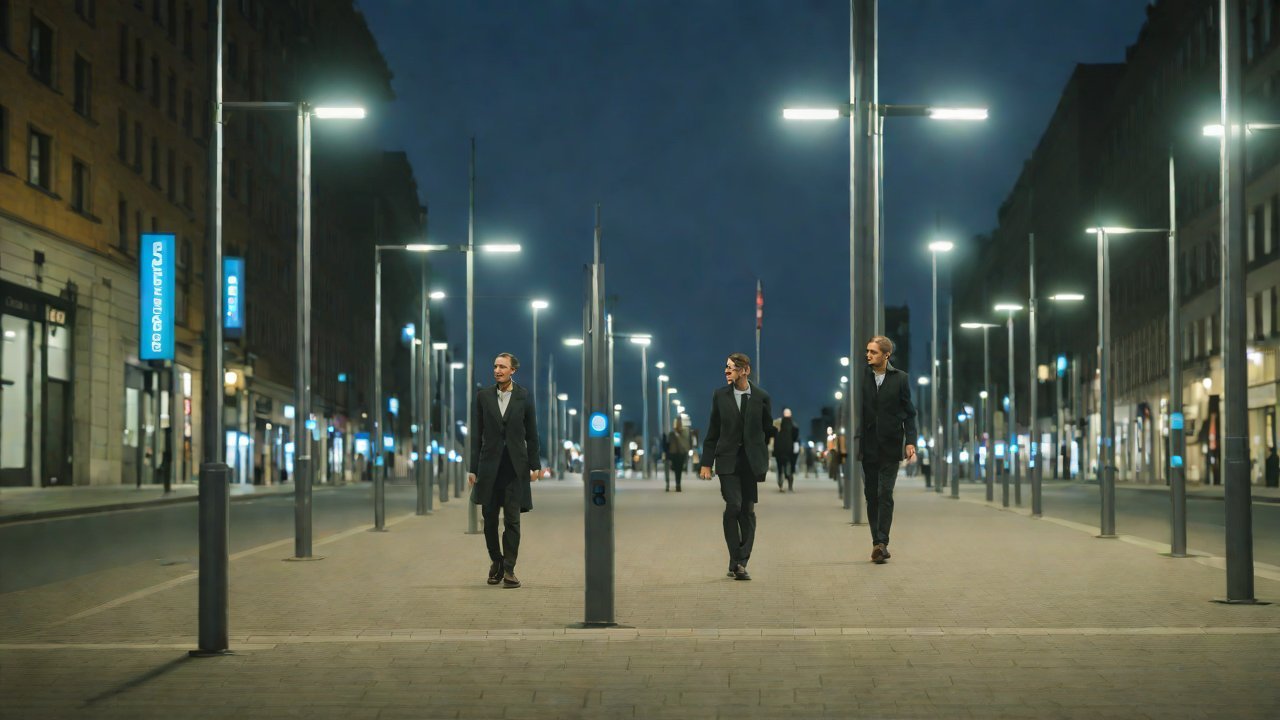
4. Public Safety and Urban Experience Benefits
The LFP strategy not only reduces energy consumption but also enhances public safety and overall urban experience by:
- Improving visibility in areas with high pedestrian traffic
- Reducing light pollution and promoting a more natural environment
- Enhancing the aesthetic appeal of city streets through adaptive lighting
Public Perception Studies:
| City | Percentage of Respondents Agreeing that LFP Strategy Improves Public Safety (%) |
|---|---|
| New York City | 85% (2022) – 92% (2030) |
| London | 78% (2022) – 88% (2030) |
| Tokyo | 90% (2022) – 95% (2030) |

5. Implementation Roadmap and Recommendations
Implementing the LFP energy-saving strategy requires a multi-faceted approach, involving:
- Conducting thorough energy audits to determine baseline lighting consumption
- Selecting suitable pedestrian flow sensing technology
- Integrating with existing street lighting control systems
- Developing data analytics platforms for real-time monitoring and optimization
Implementation Roadmap:
| Phase | Description |
|---|---|
| Planning (6-12 months) | Conduct energy audits, select technology, and develop implementation plan |
| Installation (3-6 months) | Install pedestrian flow sensing technology and integrate with existing systems |
| Testing and Optimization (3-6 months) | Fine-tune system performance, monitor data analytics, and adjust lighting levels accordingly |
6. Conclusion
The LFP energy-saving strategy offers a promising solution for optimizing urban lighting systems, reducing energy consumption, and enhancing public safety. By leveraging advanced analytics and machine learning algorithms, cities can create more responsive and adaptive street lighting systems that not only benefit the environment but also improve the overall quality of life for citizens.
As cities continue to evolve and prioritize sustainability, the LFP strategy is poised to play a significant role in shaping the future of urban development.
IOT Cloud Platform
IOT Cloud Platform is an IoT portal established by a Chinese IoT company, focusing on technical solutions in the fields of agricultural IoT, industrial IoT, medical IoT, security IoT, military IoT, meteorological IoT, consumer IoT, automotive IoT, commercial IoT, infrastructure IoT, smart warehousing and logistics, smart home, smart city, smart healthcare, smart lighting, etc.
The IoT Cloud Platform blog is a top IoT technology stack, providing technical knowledge on IoT, robotics, artificial intelligence (generative artificial intelligence AIGC), edge computing, AR/VR, cloud computing, quantum computing, blockchain, smart surveillance cameras, drones, RFID tags, gateways, GPS, 3D printing, 4D printing, autonomous driving, etc.