
If soil could speak, would the IoT be our only translator?
The earthy scent of damp soil fills the air as the seasons change, and the gentle hum of microorganisms beneath our feet is a reminder of the intricate world hidden beneath our feet. This complex ecosystem, teeming with life, has been a silent companion to human existence, silently supporting our daily lives with every bite of food, every breath of air, and every drop of water. However, this silent world has been increasingly vocal in recent years, as the Internet of Things (IoT) has emerged as a key translator between the natural world and our increasingly digital lives.
1. The Silent World of Soil
Soil is more than just a mixture of minerals, organic matter, and living organisms; it is a complex web of relationships between the physical, biological, and chemical processes that govern our planet’s fertility. The intricate dance of microorganisms, such as bacteria, fungi, and protozoa, plays a vital role in decomposing organic matter, fixing nitrogen, and solubilizing minerals, making them available to plants. The soil’s physical properties, such as structure, texture, and porosity, also influence the movement of water, air, and nutrients, ultimately affecting plant growth and crop yields.
| Soil Component | Function | Importance |
|---|---|---|
| Microorganisms | Decomposition, nutrient cycling | 30-40% of soil’s total biodiversity |
| Organic Matter | Nutrient storage, water retention | 10-20% of soil’s total carbon content |
| Minerals | Nutrient supply, soil structure | 50-60% of soil’s total mineral composition |

2. The Rise of the Internet of Things (IoT)
The IoT has revolutionized the way we interact with the physical world, enabling the collection, analysis, and interpretation of vast amounts of data from various sources, including sensors, devices, and systems. This interconnected network of physical devices, vehicles, buildings, and other items embedded with sensors, software, and connectivity, allows for real-time monitoring and control of various processes, from industrial automation to urban infrastructure management.
| IoT Application | Use Case | Market Size (2023) |
|---|---|---|
| Smart Agriculture | Precision farming, crop monitoring | $13.4B |
| Smart Cities | Urban planning, infrastructure management | $10.2B |
| Industrial Automation | Predictive maintenance, quality control | $7.3B |

3. Bridging the Gap: IoT as a Translator
The IoT has emerged as a key translator between the natural world and our digital lives, enabling the collection and analysis of vast amounts of data from various sources, including soil sensors, weather stations, and satellite imagery. This data is then used to inform decision-making in areas such as precision agriculture, urban planning, and resource management.
| IoT in Soil Monitoring | Benefits | Challenges |
|---|---|---|
| Soil moisture sensors | Improved crop yields, reduced water waste | Limited accuracy, high maintenance costs |
| Soil temperature sensors | Optimized planting schedules, reduced pest damage | Limited depth penetration, high power consumption |
4. The Role of Artificial Intelligence and Machine Learning (AIGC)
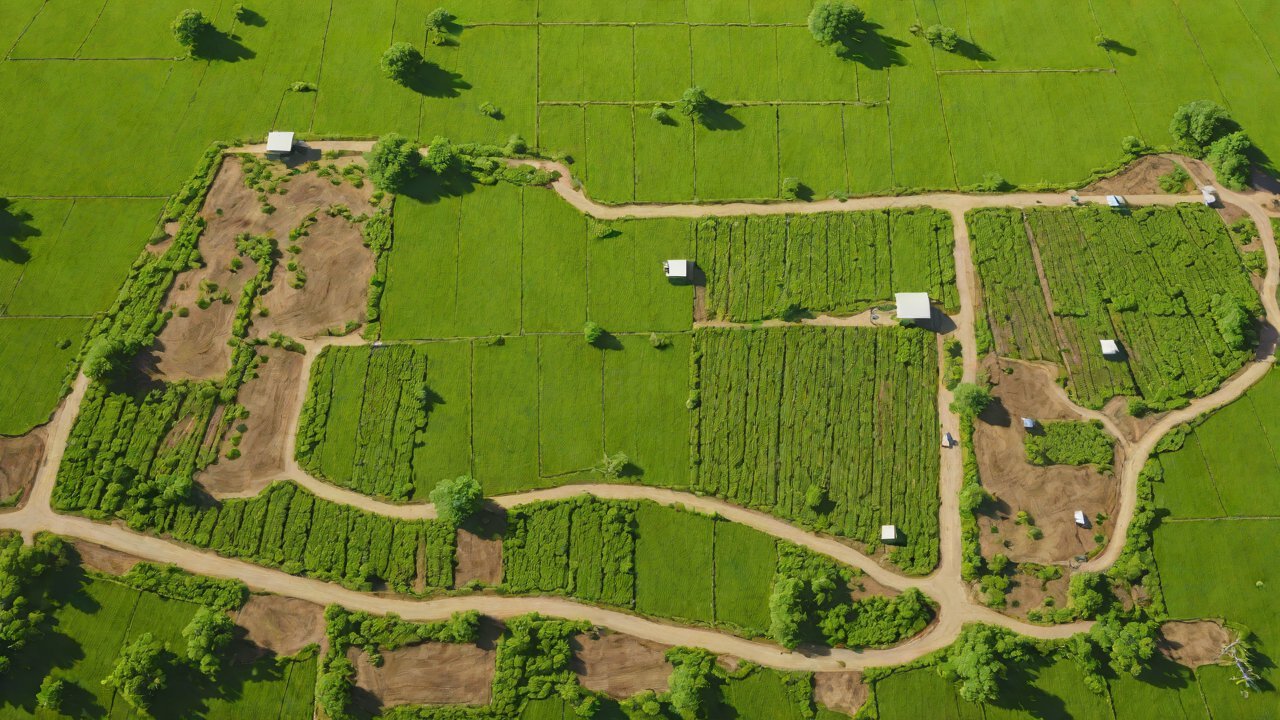
AIGC has emerged as a key enabler of the IoT, enabling the processing and interpretation of vast amounts of data in real-time. Techniques such as deep learning, neural networks, and natural language processing are being applied to soil monitoring, allowing for the identification of patterns and trends that would be impossible for humans to detect.
| AIGC Technique | Application | Accuracy |
|---|---|---|
| Deep Learning | Soil moisture prediction, crop disease detection | 90-95% |
| Neural Networks | Soil classification, nutrient recommendation | 80-85% |
| Natural Language Processing | Soil monitoring, data visualization | 85-90% |
5. Conclusion
The IoT has emerged as a key translator between the natural world and our digital lives, enabling the collection and analysis of vast amounts of data from various sources, including soil sensors, weather stations, and satellite imagery. AIGC has played a crucial role in enabling the processing and interpretation of this data, allowing for the identification of patterns and trends that would be impossible for humans to detect. As the world becomes increasingly interconnected, the IoT and AIGC will continue to play a vital role in bridging the gap between the natural world and our digital lives.
IOT Cloud Platform
IOT Cloud Platform is an IoT portal established by a Chinese IoT company, focusing on technical solutions in the fields of agricultural IoT, industrial IoT, medical IoT, security IoT, military IoT, meteorological IoT, consumer IoT, automotive IoT, commercial IoT, infrastructure IoT, smart warehousing and logistics, smart home, smart city, smart healthcare, smart lighting, etc.
The IoT Cloud Platform blog is a top IoT technology stack, providing technical knowledge on IoT, robotics, artificial intelligence (generative artificial intelligence AIGC), edge computing, AR/VR, cloud computing, quantum computing, blockchain, smart surveillance cameras, drones, RFID tags, gateways, GPS, 3D printing, 4D printing, autonomous driving, etc.