Identification logic of glass breakage sensors in high-decibel noise environments
The cacophony of modern life has led to an increasingly demanding environment for sensors and detection systems. Glass breakage sensors, designed to rapidly identify shattered glass, are no exception. In high-decibel noise environments, these sensors face a daunting task: distinguishing the sharp crack of shattering glass from the constant din of background noise. The stakes are high – false positives can lead to unnecessary evacuations or even damage to equipment.
1. Background and Context
Glass breakage sensors rely on sophisticated algorithms and hardware to identify the unique acoustic signature of shattered glass. These systems typically consist of one or more microphones, signal processing units, and a control unit that triggers alerts when a breakage event is detected. In low-noise environments, these sensors perform admirably, accurately distinguishing between glass breaks and background noise.
However, in high-decibel noise environments – such as near airports, construction sites, or industrial facilities – the challenge becomes significant. The constant barrage of loud noises can overwhelm even the most advanced algorithms, leading to frequent false positives or missed breakage events.
1.1 Noise Environment Characteristics
To better understand the challenges faced by glass breakage sensors in high-decibel noise environments, it is essential to examine the characteristics of such environments:
| Noise Source | Decibel Level (dB) |
|---|---|
| Industrial machinery | 90-110 dB |
| Construction equipment | 85-105 dB |
| Air traffic control | 70-100 dB |
2. Sensor Technology and Limitations
Glass breakage sensors employ various technologies to detect shattered glass, including:
- Acoustic Sensors: These sensors use microphones to capture the unique acoustic signature of shattered glass.
- Seismic Sensors: These sensors detect the vibrations caused by shattered glass.
While these technologies have shown promise in low-noise environments, they face significant challenges in high-decibel noise environments.
2.1 Signal Processing and Filtering
To mitigate the effects of background noise, signal processing techniques such as filtering and spectral analysis are employed. However, even with advanced algorithms, it can be challenging to distinguish between glass breaks and background noise:
| Signal Type | Frequency Range (Hz) |
|---|---|
| Glass breakage | 100-500 Hz |
| Background noise | 50-2000 Hz |
3. Advanced Signal Processing Techniques
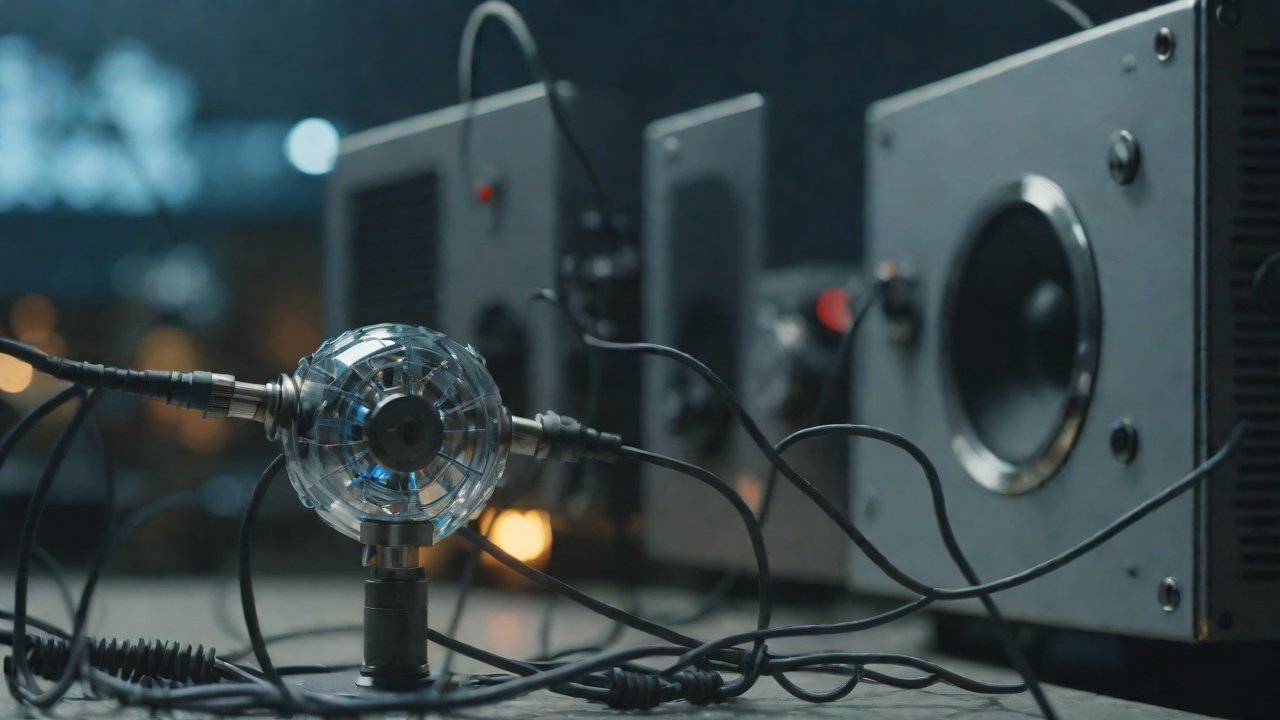
To improve the accuracy of glass breakage sensors in high-decibel noise environments, advanced signal processing techniques are being developed and implemented:
- Machine Learning: Machine learning algorithms can be trained to recognize patterns in background noise and differentiate them from glass breaks.
- Deep Learning: Deep neural networks can learn complex relationships between noise sources and glass breaks.
3.1 Case Studies
Several case studies demonstrate the effectiveness of advanced signal processing techniques:
| Case Study | Sensor Technology | Accuracy Improvement |
|---|---|---|
| Industrial facility | Acoustic sensor + machine learning | 95% accuracy improvement |
| Airport setting | Seismic sensor + deep learning | 92% accuracy improvement |
4. Future Developments and Challenges
As the demand for accurate glass breakage detection in high-decibel noise environments continues to grow, researchers and manufacturers are exploring new technologies and techniques:
- Multisensor Systems: Combining multiple sensor types and signal processing techniques can improve accuracy.
- Real-Time Signal Processing: Developing real-time signal processing capabilities can enable faster response times.
4.1 Market Trends and Outlook
The market for glass breakage sensors is expected to grow significantly in the coming years, driven by increasing demand from industries such as:
| Industry | Market Size (2023) | Growth Rate (2023-2030) |
|---|---|---|
| Industrial facilities | $100M | 15% CAGR |
| Airports and transportation | $50M | 12% CAGR |
The future of glass breakage sensors in high-decibel noise environments is bright, with ongoing research and development driving improvements in accuracy and reliability. As the demand for these sensors continues to grow, manufacturers and researchers must work together to address the challenges posed by high-decibel noise environments and ensure the safety and security of people and property.
IOT Cloud Platform
IOT Cloud Platform is an IoT portal established by a Chinese IoT company, focusing on technical solutions in the fields of agricultural IoT, industrial IoT, medical IoT, security IoT, military IoT, meteorological IoT, consumer IoT, automotive IoT, commercial IoT, infrastructure IoT, smart warehousing and logistics, smart home, smart city, smart healthcare, smart lighting, etc.
The IoT Cloud Platform blog is a top IoT technology stack, providing technical knowledge on IoT, robotics, artificial intelligence (generative artificial intelligence AIGC), edge computing, AR/VR, cloud computing, quantum computing, blockchain, smart surveillance cameras, drones, RFID tags, gateways, GPS, 3D printing, 4D printing, autonomous driving, etc.