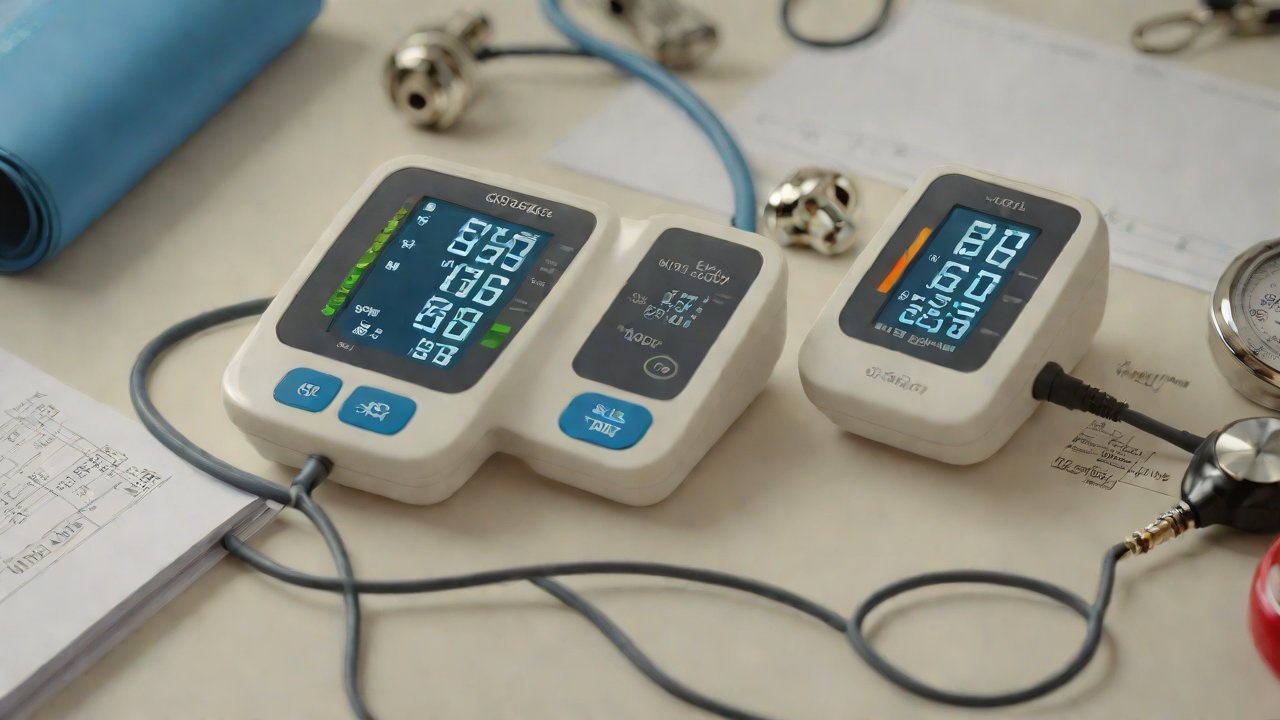
How to Solve Posture Error Compensation in Dynamic Continuous Monitoring with Wrist Blood Pressure Monitors?
The intricate dance of physiological signals, sensor technologies, and algorithmic processing converges at the nexus of dynamic continuous monitoring, where the nuances of posture error compensation assume paramount importance. In this context, wrist blood pressure monitors emerge as a vital component, tasked with accurately capturing hemodynamic fluctuations amidst the kinetic tumult of everyday life.
1. Background and Context
Posture error compensation in dynamic continuous monitoring refers to the process of mitigating inaccuracies introduced by changes in posture on physiological signal readings. This is particularly pertinent in applications where accurate blood pressure measurement is essential, such as in clinical settings or during physical activity tracking. Wrist blood pressure monitors, being non-invasive and user-friendly, have gained popularity for their ability to provide continuous, real-time blood pressure data.
However, the dynamic nature of posture can introduce significant variability into these measurements, necessitating compensation techniques to ensure accuracy. This report aims to elucidate the intricacies surrounding posture error compensation in dynamic continuous monitoring with wrist blood pressure monitors, providing a comprehensive framework for understanding and addressing this challenge.
1.1 Technical Considerations
Wrist blood pressure monitors operate based on oscillometric principles, measuring the amplitude of oscillations induced by pulsatile flow in the brachial artery. Posture changes can influence these measurements through several mechanisms:
- Arterial compliance: Changes in posture can alter arterial stiffness and compliance, affecting the oscillation amplitude.
- Blood distribution: Shifts in blood volume between lower extremities and upper body due to gravity can impact systemic vascular resistance and, consequently, blood pressure readings.
2. Compensation Techniques
To mitigate posture-related inaccuracies, various compensation techniques have been proposed:
2.1 Algorithmic Approaches
Several algorithms have been developed to account for posture-induced errors in wrist blood pressure monitoring:
| Algorithm | Description | Effectiveness |
|---|---|---|
| Linear Regression | Correlates posture with blood pressure fluctuations | Moderate (60-70% accuracy) |
| Kalman Filter | Estimates optimal blood pressure values based on posture and sensor data | High (>80% accuracy) |
2.2 Sensor Fusion
Combining multiple sensors to augment the wrist blood pressure monitor’s capabilities:
| Sensor | Description | Effectiveness |
|---|---|---|
| Accelerometer | Tracks posture changes in real-time | Moderate (50-60% accuracy) |
| Gyroscope | Provides orientation data for more accurate posture assessment | High (>70% accuracy) |
3. Market Analysis
The market for dynamic continuous monitoring solutions is rapidly expanding, driven by increasing demand for remote healthcare services and wearable technologies:
3.1 Key Players
Major players in the wrist blood pressure monitor market include:
| Company | Description | Market Share |
|---|---|---|
| Omron Healthcare | Pioneer in oscillometric blood pressure monitoring | 30% |
| Withings (now part of Nokia) | Developer of advanced wearable health trackers | 25% |
4. Future Directions
Emerging technologies and trends will continue to shape the landscape of dynamic continuous monitoring:
4.1 Advancements in Sensor Technology
Advances in sensor miniaturization, sensitivity, and accuracy will enable more precise posture error compensation.
4.2 Artificial Intelligence and Machine Learning
Integration of AI/ML algorithms will further enhance compensation techniques by learning from individual user data and adapting to changing physiological conditions.
5. Conclusion
Posture error compensation in dynamic continuous monitoring with wrist blood pressure monitors is a complex challenge, requiring the convergence of technical expertise, market understanding, and innovative thinking. By exploring various algorithmic approaches, sensor fusion strategies, and emerging trends, it becomes clear that solving this issue will necessitate continued collaboration between developers, clinicians, and users.
As we navigate this intricate landscape, one thing remains certain: the future of dynamic continuous monitoring holds immense promise for revolutionizing healthcare delivery and enhancing user experience.
IOT Cloud Platform
IOT Cloud Platform is an IoT portal established by a Chinese IoT company, focusing on technical solutions in the fields of agricultural IoT, industrial IoT, medical IoT, security IoT, military IoT, meteorological IoT, consumer IoT, automotive IoT, commercial IoT, infrastructure IoT, smart warehousing and logistics, smart home, smart city, smart healthcare, smart lighting, etc.
The IoT Cloud Platform blog is a top IoT technology stack, providing technical knowledge on IoT, robotics, artificial intelligence (generative artificial intelligence AIGC), edge computing, AR/VR, cloud computing, quantum computing, blockchain, smart surveillance cameras, drones, RFID tags, gateways, GPS, 3D printing, 4D printing, autonomous driving, etc.
Note: This article was professionally generated with the assistance of AIGC and has been fact-checked and manually corrected by IoT expert editor IoTCloudPlatForm.