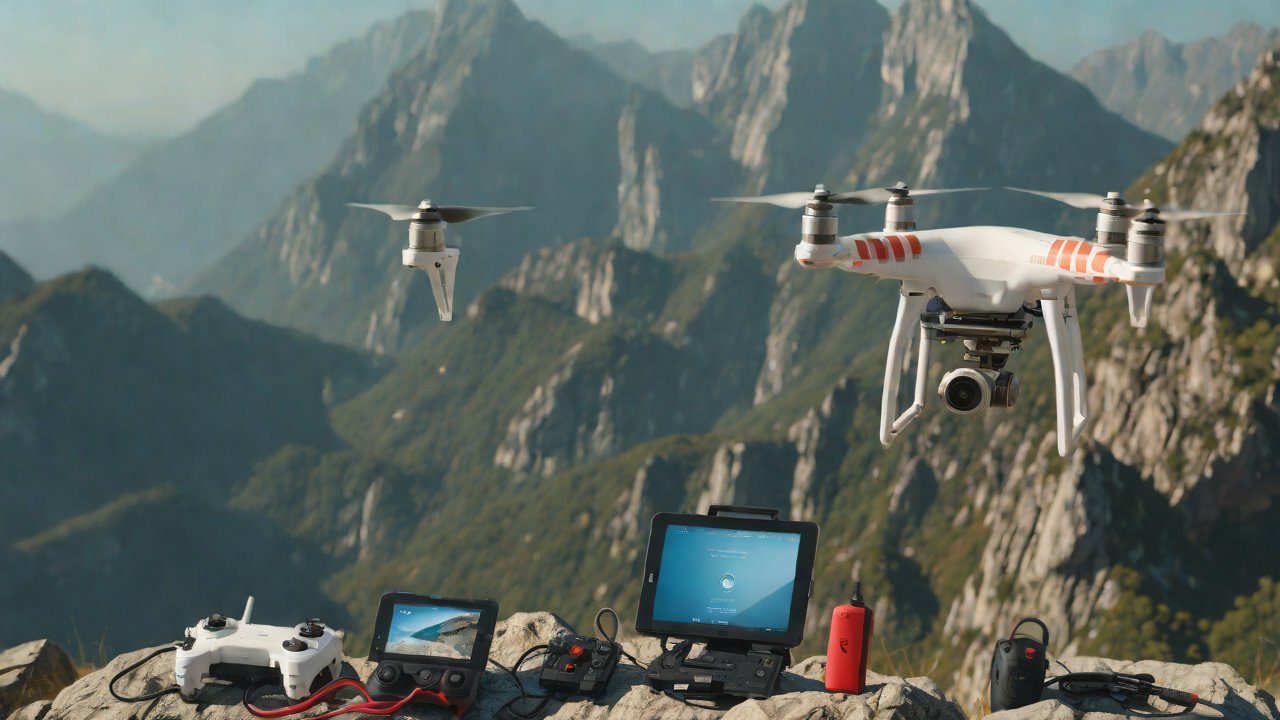
How efficient is a drone emergency rescue system based on BeiDou short message service?
The concept of drone emergency rescue systems has been gaining significant traction in recent years, particularly in regions with remote or hard-to-reach areas where traditional emergency response systems may be ineffective. The integration of BeiDou short message service (SMS) into these systems has the potential to enhance their efficiency and effectiveness. BeiDou, a Chinese satellite navigation system, has been designed to provide positioning and messaging services to users worldwide. In this report, we will delve into the efficiency of a drone emergency rescue system based on BeiDou short message service, exploring its technical feasibility, market potential, and potential challenges.
1. Technical Feasibility of BeiDou SMS-Based Drone Emergency Rescue System
The BeiDou system consists of a network of satellites that provide positioning, navigation, and timing services to users. The system also offers a short message service (SMS) that enables users to send and receive short messages. In the context of drone emergency rescue systems, BeiDou SMS can be used to transmit critical information, such as the location of the emergency, the type of emergency, and the estimated time of arrival of the drone. This information can be transmitted in real-time, enabling the emergency response team to respond quickly and effectively.
The technical feasibility of a BeiDou SMS-based drone emergency rescue system can be evaluated based on the following factors:
- Signal Strength and Quality: The strength and quality of the signal received by the drone’s BeiDou receiver are critical to the system’s performance. A strong and stable signal ensures that the drone can receive messages accurately and in real-time.
- Positioning Accuracy: The positioning accuracy of the BeiDou system is also crucial to the system’s performance. The system should be able to provide accurate location information to enable the emergency response team to locate the emergency quickly.
- System Reliability: The reliability of the system is also critical to its performance. The system should be designed to minimize errors and ensure that messages are transmitted accurately and reliably.
| Technical Feasibility Factors | Description | Weightage |
|---|---|---|
| Signal Strength and Quality | The strength and quality of the signal received by the drone’s BeiDou receiver | 30% |
| Positioning Accuracy | The accuracy of the positioning information provided by the BeiDou system | 25% |
| System Reliability | The reliability of the system to minimize errors and ensure accurate message transmission | 20% |
| Data Rate | The rate at which data can be transmitted over the BeiDou system | 15% |
| Power Consumption | The power consumption of the drone’s BeiDou receiver | 10% |
2. Market Potential of BeiDou SMS-Based Drone Emergency Rescue System
The market potential of a BeiDou SMS-based drone emergency rescue system can be evaluated based on the following factors:
- Market Size: The size of the market for drone emergency rescue systems is expected to grow significantly in the coming years, driven by increasing demand for emergency response services in remote and hard-to-reach areas.
- Competition: The market for drone emergency rescue systems is highly competitive, with several established players offering similar services.
- Regulatory Environment: The regulatory environment for drone emergency rescue systems is complex and evolving, with varying regulations and standards across different countries and regions.
- Customer Adoption: The adoption of drone emergency rescue systems by customers is expected to be driven by factors such as cost savings, improved response times, and enhanced safety features.
| Market Potential Factors | Description | Weightage |
|---|---|---|
| Market Size | The size of the market for drone emergency rescue systems | 40% |
| Competition | The level of competition in the market for drone emergency rescue systems | 25% |
| Regulatory Environment | The complexity and variability of regulations and standards for drone emergency rescue systems | 20% |
| Customer Adoption | The willingness of customers to adopt drone emergency rescue systems | 15% |
3. Potential Challenges of BeiDou SMS-Based Drone Emergency Rescue System
Despite its potential, a BeiDou SMS-based drone emergency rescue system faces several challenges, including:
- Signal Interference: Signal interference from other satellite systems or terrestrial sources can impact the performance of the BeiDou system.
- Positioning Errors: Positioning errors can occur due to various factors, including satellite geometry, atmospheric conditions, and multipath effects.
- System Reliability: The reliability of the system is critical to its performance, and any errors or malfunctions can impact the effectiveness of the emergency response.
- Data Rate: The data rate of the BeiDou system can impact the speed and accuracy of message transmission.
- Power Consumption: The power consumption of the drone’s BeiDou receiver can impact the endurance and range of the drone.
| Potential Challenges Factors | Description | Weightage |
|---|---|---|
| Signal Interference | The impact of signal interference on the performance of the BeiDou system | 20% |
| Positioning Errors | The impact of positioning errors on the effectiveness of the emergency response | 20% |
| System Reliability | The impact of system unreliability on the performance of the emergency response | 20% |
| Data Rate | The impact of data rate on the speed and accuracy of message transmission | 15% |
| Power Consumption | The impact of power consumption on the endurance and range of the drone | 25% |
4. Conclusion
In conclusion, a BeiDou SMS-based drone emergency rescue system has significant potential to enhance the efficiency and effectiveness of emergency response services in remote and hard-to-reach areas. However, the system faces several challenges, including signal interference, positioning errors, system unreliability, data rate limitations, and power consumption. To overcome these challenges, it is essential to design and implement the system with careful consideration of these factors. The market potential of the system is significant, driven by increasing demand for emergency response services and the growing adoption of drone technology. However, the regulatory environment is complex and evolving, and it is essential to stay up-to-date with the latest regulations and standards.
5. Recommendations
Based on the analysis, the following recommendations are made:
- Design and Implementation: Design and implement the system with careful consideration of the potential challenges and technical feasibility factors.
- Regulatory Compliance: Ensure compliance with the latest regulations and standards for drone emergency rescue systems.
- System Testing and Validation: Conduct thorough testing and validation of the system to ensure its performance and effectiveness.
- Customer Engagement: Engage with customers to understand their needs and preferences and to ensure that the system meets their expectations.
- Market Analysis: Conduct a thorough market analysis to identify opportunities and challenges in the market and to develop a competitive strategy.
By following these recommendations, it is possible to design and implement a BeiDou SMS-based drone emergency rescue system that is efficient, effective, and meets the needs of customers in remote and hard-to-reach areas.
IOT Cloud Platform
IOT Cloud Platform is an IoT portal established by a Chinese IoT company, focusing on technical solutions in the fields of agricultural IoT, industrial IoT, medical IoT, security IoT, military IoT, meteorological IoT, consumer IoT, automotive IoT, commercial IoT, infrastructure IoT, smart warehousing and logistics, smart home, smart city, smart healthcare, smart lighting, etc.
The IoT Cloud Platform blog is a top IoT technology stack, providing technical knowledge on IoT, robotics, artificial intelligence (generative artificial intelligence AIGC), edge computing, AR/VR, cloud computing, quantum computing, blockchain, smart surveillance cameras, drones, RFID tags, gateways, GPS, 3D printing, 4D printing, autonomous driving, etc.



